Forty years on two clubfeet
Everything on this site carries my name and a review date, which only means something if you know what is behind the name. So: bilateral clubfoot (club foot, or talipes equinovarus), casts and surgery as an infant, years of bracing, a relapse, a fusion at sixteen, the Army, and a great deal of running.
The record
Decade by decade
Not a story arc. What my chart says happened, when, and the photographs that survived it.
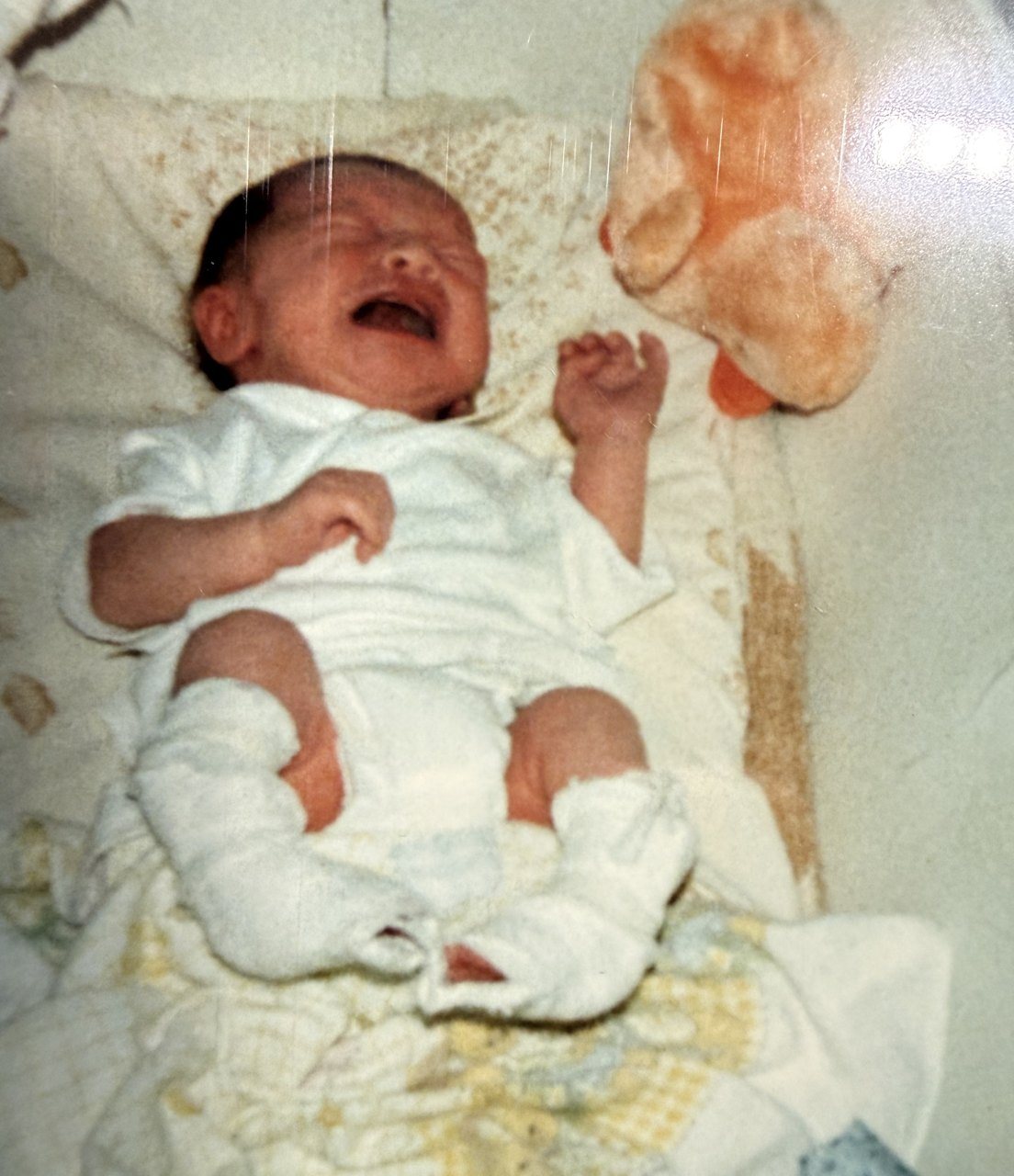
Casts before I left the hospital
Bilateral clubfoot. Casting started before I left the hospital I was born in: three times a week at first, then weekly, about fifteen cast changes in four months.
At four months both feet had a posteromedial release, an extensive operation that frees tight ligaments and lengthens tendons along the inner and back side of the foot, with a pin in each foot and more casts afterward. That was ordinary for 1985. The Ponseti method existed and was not yet standard in most places.
Braced twenty-three hours a day
After the casts, my chart lists straight laced shoes, derotation bars and twister cables, worn 23 of every 24 hours. In this portrait the shoes are bolted to a single bar underneath. The rest of the setup ran metal uprights from the shoes up both legs to a waistband.
I first walked at fifteen months. At twenty-three hours a day, that means I learned to walk in them. The twister cables came off in December 1986.

The left one came back
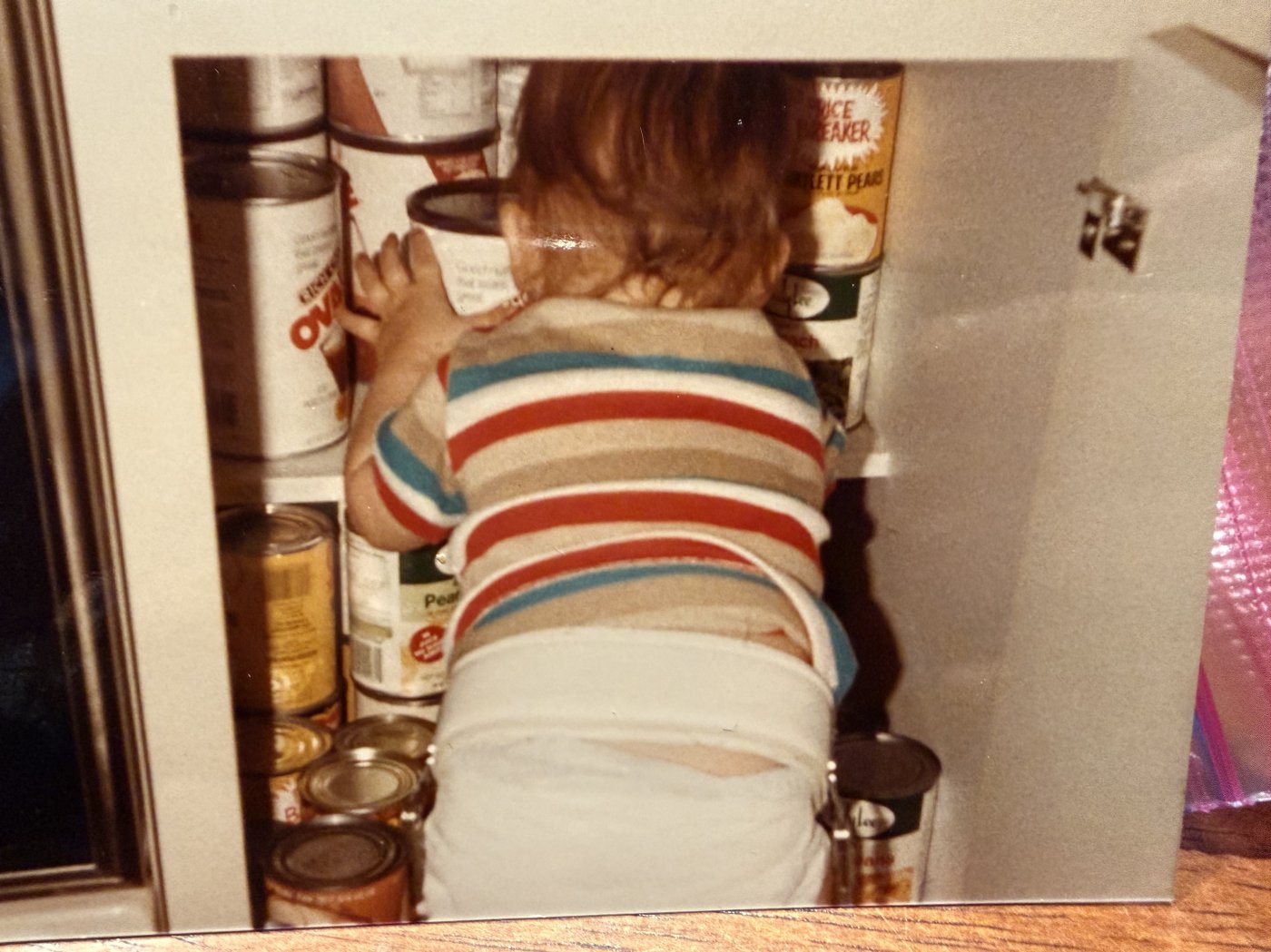
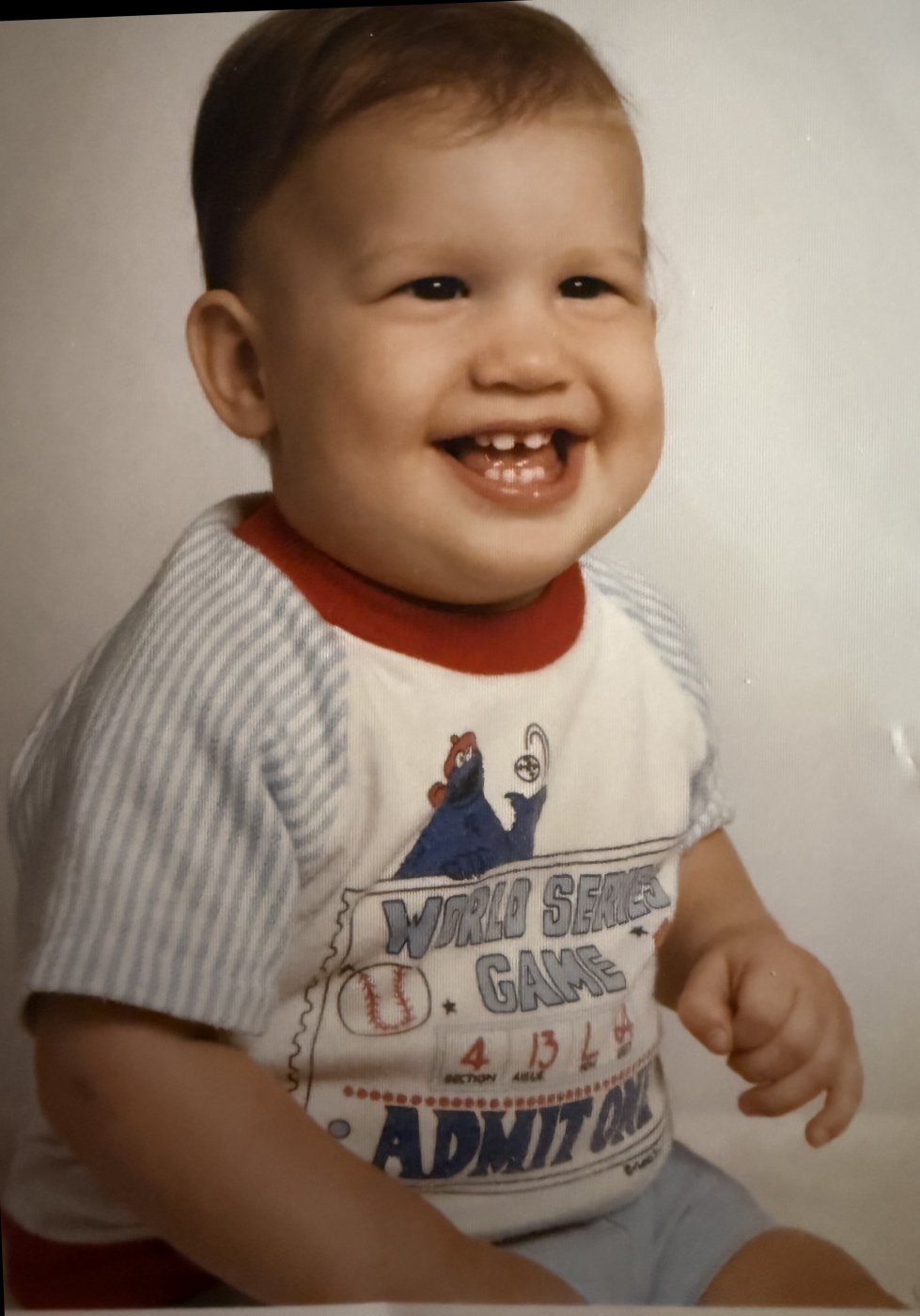
In January 1988 the left foot needed a second release. The pin placed that time worked its way out and was removed a month later.
From November 1988 to October 1989 I slept in a Miami brace, the red, yellow and blue one, for an inward twist of the shinbones called internal tibial torsion. It was judged corrected.
In 1994, at nine, the chart records “really no subtalar motion,” meaning the joint under the ankle that tilts the heel had essentially stopped moving, and raises a fusion for the first time. The same year’s note says I made the all-star team.

Fused at sixteen
The fusion was put off until I stopped growing. A stress fracture of the fourth metatarsal in October 2000, then six months of pain that limited everything, settled it.
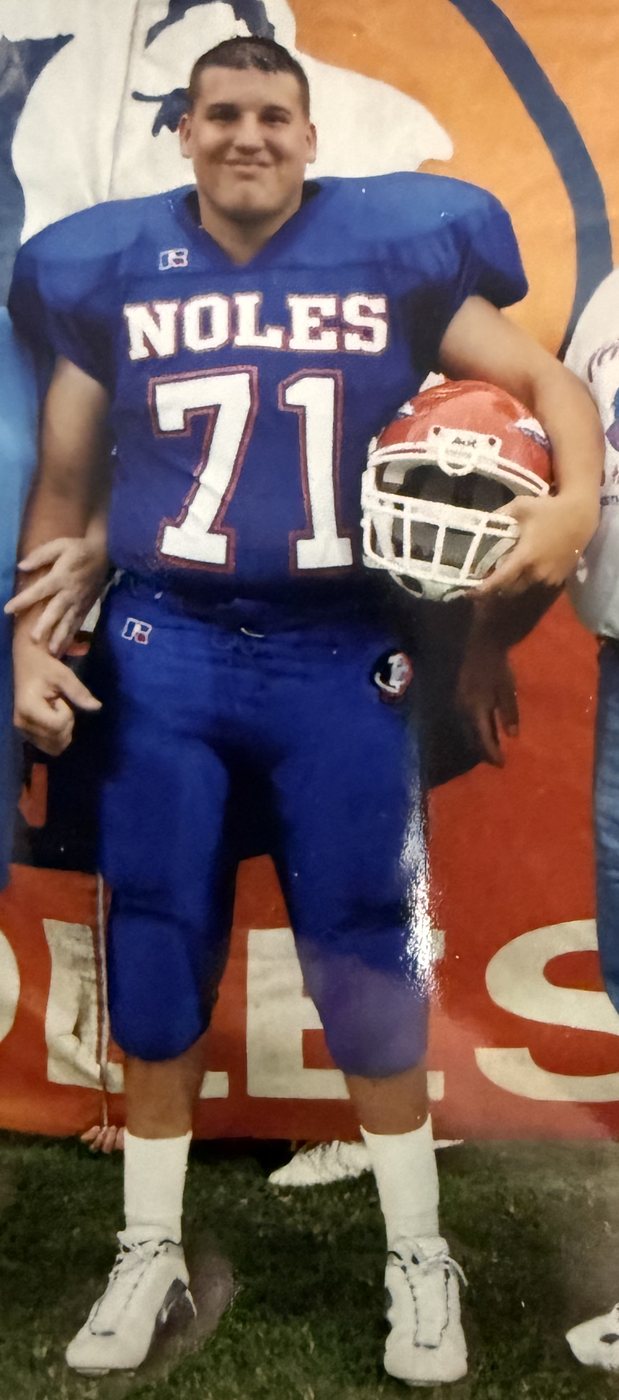
In August 2001, the summer before junior year, my left foot had a triple arthrodesis: three hindfoot joints fused and held with staples. Twelve weeks in a cast, six of them non-weight-bearing, and the first half of that football season missed.
At five months I was released to full activity and playing baseball in a neoprene ankle support. The hardest thing to relearn was catching and squatting. I was discharged in March 2003, almost eighteen, with a closing note that the foot was “extremely functional and should serve him well as an adult.”
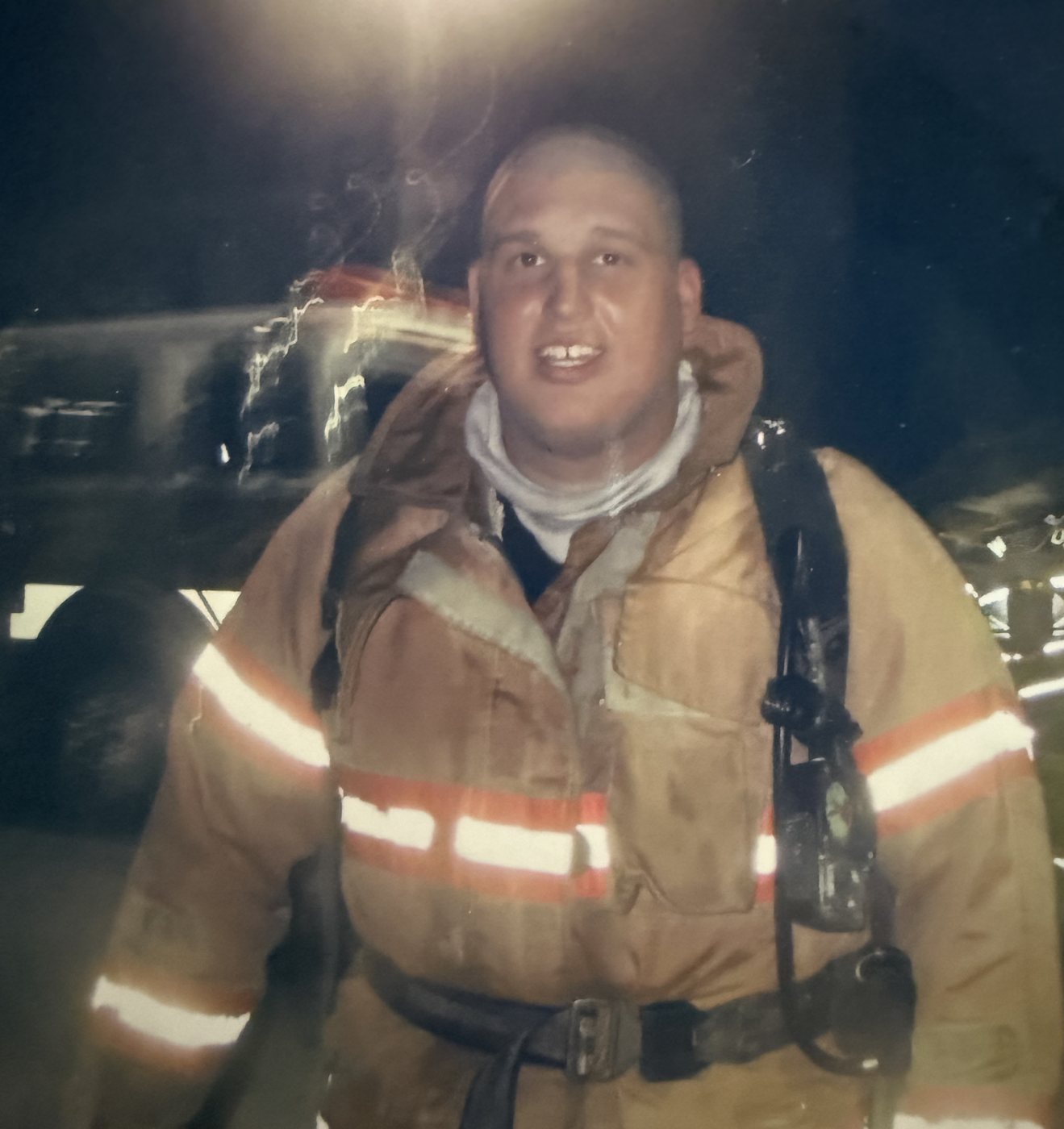
Turnout gear
Straight out of high school, around 2003 and 2004, I was firefighting. The left foot had been fused for about two years.
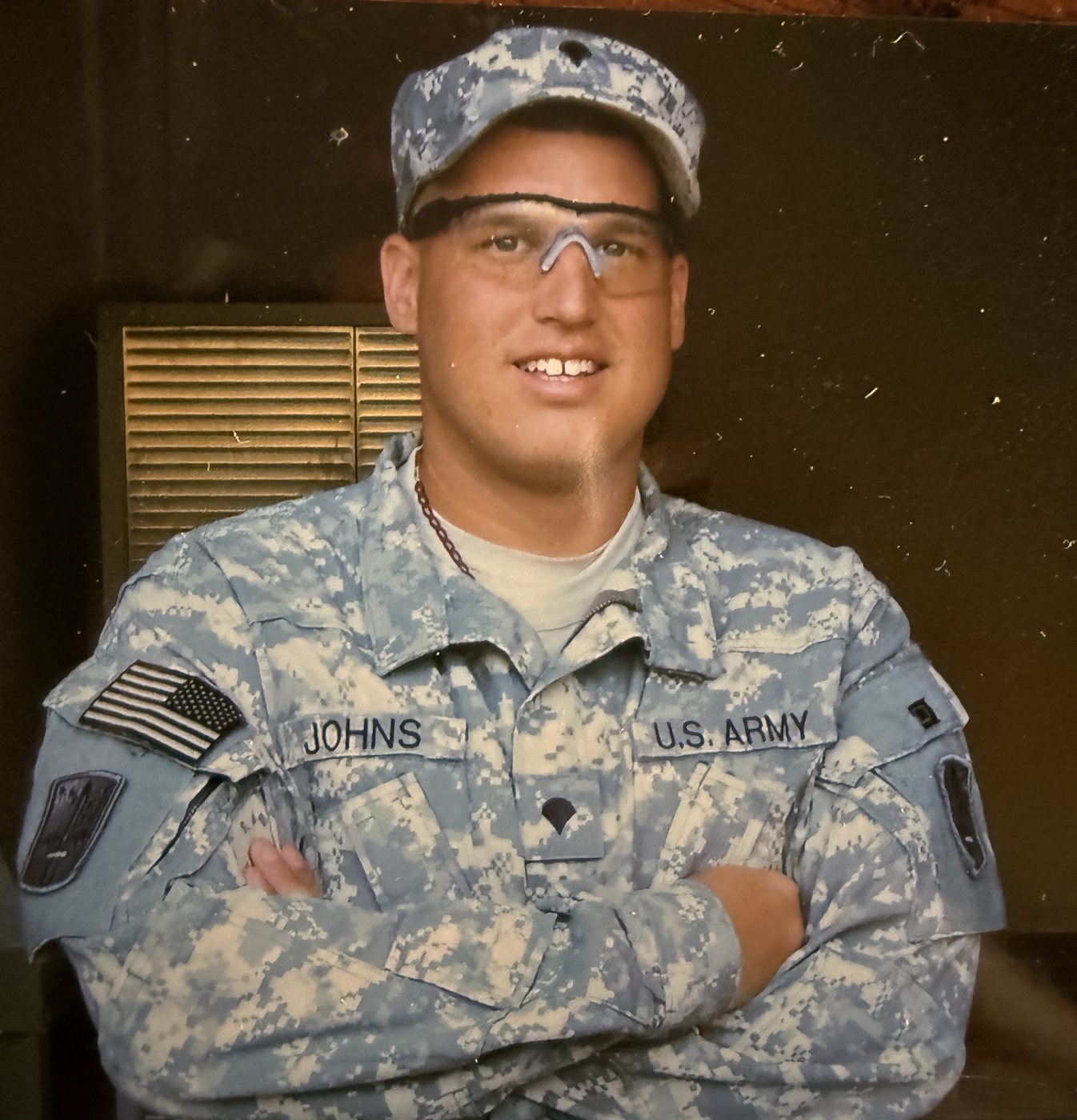
Standard-issue boots
I joined the US Army in 2007, six years after the fusion. No profile, no duty restriction and no accommodation for the foot. Standard-issue boots, unmodified, with no orthosis or insert, and the same physical standards as everyone else.
I was later medically retired for injuries sustained on deployment and their after-effects. Not the feet: they were not among the conditions evaluated, and they appear on no military or VA paperwork.
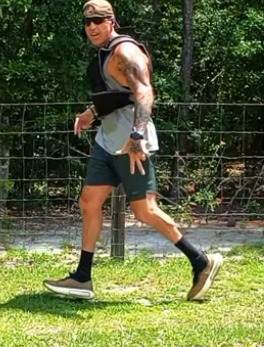
Twenty-five years on a fused foot
I run distance. Six years of Garmin data hold 2,147 miles across 652 runs, and nearly all of the recent miles are on a treadmill, because flat ground is unremarkable and uneven ground is where the fusion shows.
In September 2026 I filled out the FAOS, a standard foot and ankle questionnaire. Daily function scored 98.5 out of 100 and sport 90. Symptoms scored 50, and that is the operation doing its job: a fused hindfoot is not supposed to bend. Squatting is the one sport item I lose points on.
Barefoot walking hurts, in both feet, including the right one that was never fused. An X-ray in 2023, taken for a bruise, described osteoarthritis in the left hindfoot. One data point, not a promise.
What this does and does not qualify me for
What I can offer
- Four decades inside the condition, both feet
- Experience of the surgical era most adults were treated in
- A relapse on one side and not the other
- Life after a triple arthrodesis
- Military service and load carriage with it
- The questions, in the order they actually arrive
What I cannot
- Any medical qualification whatsoever
- An opinion on your foot, or your child’s
- Anything useful from a photograph
- A judgment on your clinician’s plan
- A prediction about how you will do
- Advice on medication or on surgery for you
The right-hand column is not modesty. It is the actual boundary, and it is why every page ends with a line telling you what it is and is not. If a page ever reads like it is crossing that line, it is a fault in the writing and I would like to know.
Lived experience is a real credential and a narrow one. It is worth exactly as much as it is worth, and no more.
How this is paid for
Paid guides, readers who choose to chip in, Amazon affiliate commissions on some links, and the app, which is free, carries banner advertising, and has an optional subscription that removes it. The privacy policy details all of it.
What does not fund it: no manufacturer, clinic, brace maker, shoe brand or charity, and no page recommends a product that I sell.
It matters because clubfoot has an unusual amount of commerce attached to it (braces, shoes, insoles, private clinics) and a resource that takes money from any of them cannot be trusted on precisely the questions people most need answered. The editorial policy sets out the disclosure rules; the support page covers where reader money goes.
People also ask