Clubfoot as an adult
Adult clubfoot is the part of this condition almost nobody plans for. Clubfoot care is built for babies. Almost everyone is discharged in their teens, and then nothing. Until a decade or three later, when something starts hurting and there is nobody obvious to ask. This is the part of the site written for that.

What brought you here?
Eleven pages. Pick whatever is closest and the list narrows. Ignore the chips entirely and browse the lot if you would rather.
All eleven pages
Nothing here matches that combination. Clear the filters to see all nine, or start with where it hurts. It routes onward better than anything else on the site.
The gap, and why you fell into it
Why adult clubfoot is so poorly researched
Clubfoot is one of the best-studied conditions in pediatric orthopedics and one of the least-studied in adult orthopedics. The research follows children to skeletal maturity and then largely stops. Services do the same.
So the common experience is discharge at fifteen or sixteen, a decade or two of the foot simply being your foot, and then a gradual arrival of symptoms with no obvious door to knock on. Nothing about that sequence means you were forgotten or that you did something wrong. It means the system was built around the part of the problem that could be fixed early.
There is a sentence in my own file that I did not read until I was forty-one.
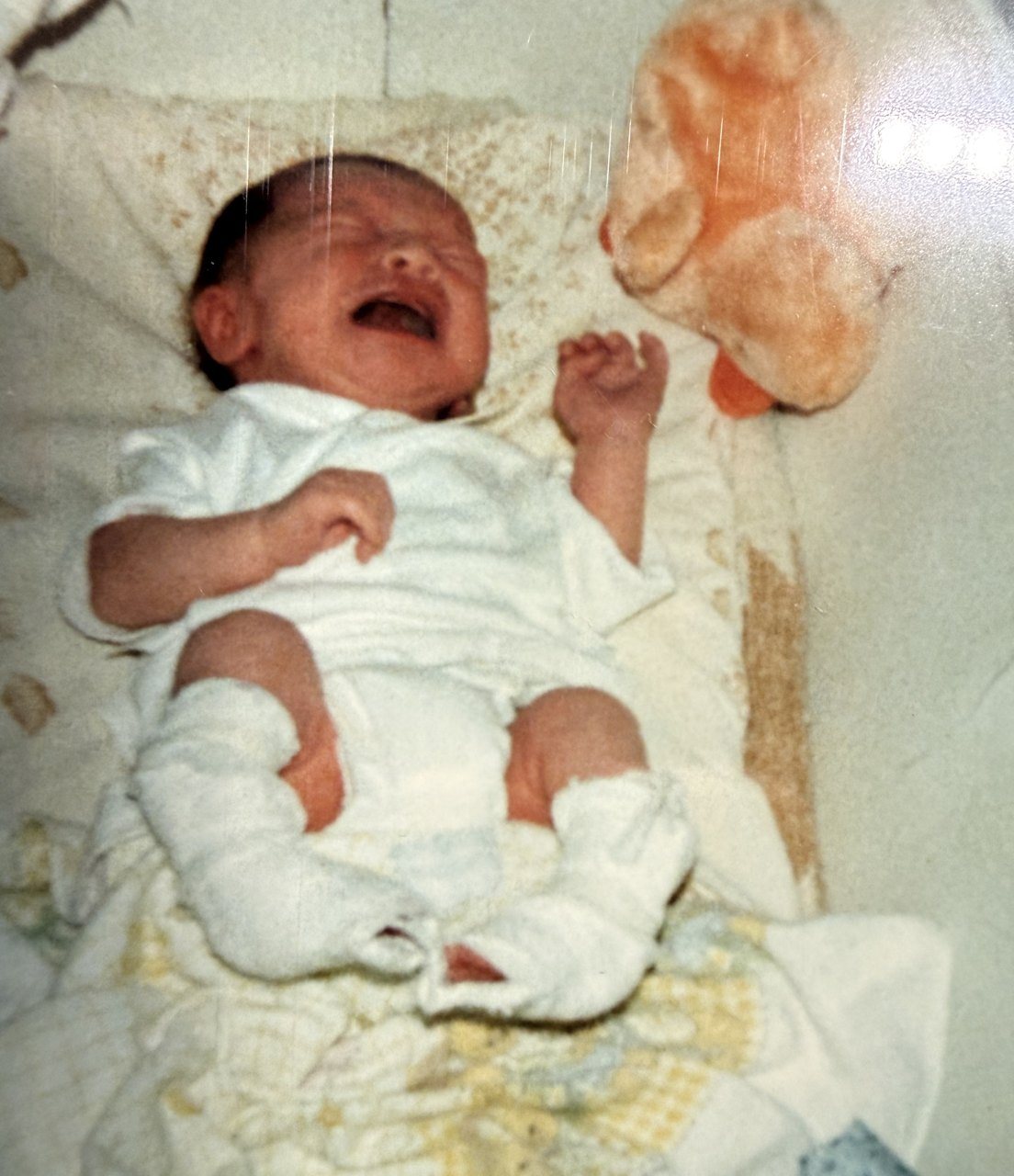
In 1985, when I was four months old and about to have both feet operated on, the surgeon wrote down what he had explained to my parents. He listed the risks one by one. Then he wrote that this infant may require later surgery depending on the results of the current surgery, and the lack of predictability of what the feet will look like years later.
That was typed in 1985 and it is still the honest answer. The uncertainty this entire side of the site exists to sit inside was put in writing to my family before I could walk. Nobody concealed it. It simply never got handed forward, and I spent three decades assuming the silence meant the question had been settled.
If you take one thing from this hub: symptoms arriving in your thirties or forties are the ordinary pattern, not a sign that something has gone badly wrong.
What is still there in an adult clubfoot
Treatment corrects the position of a clubfoot, written club foot by plenty of people and talipes equinovarus in the clinical record. It does not turn it into a foot that was never affected, and the differences that remain are consistent enough that most adults recognize their own in a list.
Less movement at the clubfoot ankle
Reduced dorsiflexion is close to universal, and it is the difference that costs the most, because it is what a foot needs to roll over at the end of a step. How much remains depends partly on how the clubfoot was treated: Ponseti casting preserves noticeably more ankle plantar flexion range than extensive surgical release does.1
A smaller calf on the clubfoot side
The clubfoot calf is smaller and stays smaller, and no amount of training fully equalizes it. In bilateral clubfoot both are affected, so there is nothing to compare against and the difference goes unnoticed for years.
A shorter, wider clubfoot
Usually a size or so shorter on the treated side in one-sided clubfoot, and often broader through the midfoot. This is the difference that turns buying shoes into a lifelong negotiation.
Some residual clubfoot shape
A degree of cavus, adductus or heel varus is common even after a technically good result, and it is not the same thing as a clubfoot relapse. It has been there all along.
Where adult clubfoot pain actually turns up
Thirty-year follow-up work identified where the pain concentrates, and it is a short and specific list: around the ankle, along the plantar fascia, under the metatarsal heads, and at the insertion of the Achilles.2
Why clubfoot pain lands in those four places
Each is somewhere the clubfoot is compensating for the movement the ankle no longer has. A stiff clubfoot ankle pushes load forward onto the metatarsal heads, drags on the plantar fascia, and asks more of the Achilles at every step.
Why it starts in your thirties and forties
Not because the clubfoot suddenly deteriorates. The mechanics have been the same since childhood; what changes is that the spare capacity absorbing them runs down. The timing reflects accumulated load, which is why it so often coincides with a heavier job, a new sport, or weight gain.
What most adults with clubfoot report
Function in ordinary daily activity, with pain after a full day of it. Young adults followed up after treatment were functional in everything ordinary living asked of them and still reported foot pain after a day of walking, standing and stairs.3 That gap between capable and comfortable is the honest description.
Adult clubfoot arthritis, and what the long follow-ups found
This is the question adults ask most and the one where the numbers are genuinely useful, because two long studies looked at the same thing in differently treated groups.
Clubfoot after Ponseti casting
At thirty years, early degenerative change was described in about 35 percent of feet treated by the Ponseti method, and characterized as minimal.2
Clubfoot after extensive surgical release
At thirty-one years, foot and ankle arthritis was found in about 56 percent of feet treated surgically.2
What that comparison is worth
It is the strongest practical argument for why casting displaced surgery as the default, and it matters to adults reading this because it says something about which group you are in. If you were treated before roughly the 1990s, extensive release was standard and the second figure is the more relevant one.
I am in the second group. Both feet had an extensive release at four months, and the operative note records that the subtalar joints were opened on both sides as well, because the deformity would not come out otherwise. The left was fused at sixteen. So when I read 56 percent I am not reading a forecast. I am reading the cohort I belong to, and what it changes is the questions I ask rather than the outcome I expect.
What it does not mean
Neither figure is a prognosis for an individual. Radiographic change and symptoms are different things, and plenty of people with visible degeneration on an image walk comfortably.
What can actually be offered to an adult with clubfoot
Clubfoot footwear and orthotics first
A rocker sole, extra depth and a firm heel counter change how load moves through a stiff foot, and they do it without a recovery period. This is the least glamorous intervention and the one that helps the most adults.
Targeted strength, not general fitness
Hip and calf work reduces what the foot has to supply. It does not restore ankle range that the joint does not have, and any program promising that is worth being skeptical about.
Surgery, when the trade is worth it
Fusion of the affected joints is the commonest operation offered to adults with congenital clubfoot, and it trades movement for a stable, better-aligned, less painful foot.4 It is a real trade, not a repair, which is why it is a decision and not a recommendation.
Who an adult with clubfoot should see
An adult foot and ankle specialist, ideally one who has seen treated clubfoot before. A pediatric team corrects a foot that is still forming; an adult team manages decades of accumulated compensation in one that has finished. Asking for the wrong one is the commonest wasted referral in this whole area.
Sources
Where this comes from
On your phone
One place for decades of it
Surgeries with their dates, documents, photos over time, footwear that worked, and quick pain check-ins. Built first for adults, because that is the part that stops being recorded when the pediatric file closes.
Get it on the App Store → Get it on Google Play →
Free on iPhone and Android. No account, and what you put in stays on your phone.
People also ask
Adults with clubfoot
Is adult clubfoot a recognized thing?
Is it normal for problems to start decades later?
Where should I start if everything hurts?
Is any of this preventable?
Do adults with clubfoot need lifelong specialist care?
Does untreated clubfoot in an adult get handled differently?
Elsewhere on the site
Other hubs
Wondering who else has this? Athletes with clubfoot sets out which names are actually documented.