Adult Clubfoot Running Guide
Pain After Running With Clubfoot
Why It Happens, Where It Shows Up, and When It Means More
Pain after running with clubfoot can happen for several reasons, including altered loading, reduced push-off, ankle stiffness, calf fatigue, compensation patterns, shoe mismatch, or the long-term effects of prior surgery. Sometimes it is a manageable flare that settles with recovery. Sometimes it is a sign that the body is no longer tolerating a compensation pattern as well as it used to.
This page explains those pain patterns in plain language for adults with clubfoot who run and for parents trying to understand what later-life pain can and cannot mean. The goal is not to scare people out of running. It is to help them understand the difference between expected soreness, repeated mechanical overload, and the kinds of changes that deserve closer attention.
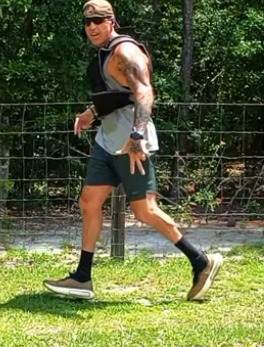
Clubfoot Forward is in a strong position to write this because Heath brings long-term bilateral clubfoot experience to a question that many adults face quietly. Pain after running is rarely just about pain. It is often one of the clearest clues to how the whole system is handling load.
Start Here
If pain shows up after running rather than during it, start with where it hurts and what mechanical pattern may be loading that area. If the pain pattern is new, worsening, or spreading, start with the warning-sign section.
Part Of
This page is a supporting page under the running biomechanics cluster. It connects pain patterns to push-off loss, ankle stiffness, calf atrophy, compensation, surgery history, and adult function instead of treating pain like an isolated symptom.
Quick answer: Pain after running with clubfoot often comes from the way the foot, ankle, calf, and rest of the body handle repeated load. The pain may show up in the foot itself, but it can also show up at the calf, knee, hip, or back because compensation patterns often spread the stress farther up the chain.
Jump To
Why it happens | Where it shows up | Common mechanical causes | Warning signs | What parents should know | External references
Why Pain After Running Happens With Clubfoot
Pain after running often reflects how the body handled load during the run, not just how it felt in the moment. With clubfoot, the foot and ankle may not move or share force the same way as a typical stride. That means the tissue stress of the run may show up later, once the body cools down and the compensation patterns have had time to catch up.
This is one reason runners with clubfoot often say a run felt manageable at the time, but the cost showed up later that day or the next morning.
Where Pain After Running Often Shows Up
Not all running pain with clubfoot stays in the foot. The pain location often reflects where the load ended up, not just where the original mechanics began.
- lateral foot or outer border pain
- ankle stiffness or aching after the run
- calf fatigue, tightness, or cramping
- knee pain from repeated compensation
- hip or low-back discomfort when asymmetry builds up
For more on location-specific pain, continue with Adult Clubfoot Pain by Location.
The Useful Shift in Thinking
Pain after running is not always proof that running is wrong for you.
Often it is information about which part of the system is absorbing more load than it can currently tolerate.
Common Mechanical Reasons Pain Shows Up After Running
There are a few recurring patterns that explain a lot of post-run pain in people with clubfoot.
- reduced push-off can overload the opposite side
- limited dorsiflexion can make the stride feel blocked and less efficient
- calf atrophy can reduce how well force is handled and recycled
- compensation can shift stress to the knee, hip, pelvis, or back
- shoe mismatch or poor support can amplify loading patterns already present
- older surgery history can change motion, load sharing, or pain sensitivity
For the mechanics behind those issues, see Push-Off With Clubfoot While Running, Limited Dorsiflexion With Clubfoot While Running, Clubfoot Compensation Patterns While Running, and Clubfoot Calf Atrophy and Running.
Expected Flare vs. More Concerning Pattern
Some pain flares are short, familiar, and settle with normal recovery. Others represent a more important change in how the body is tolerating load.
- expected flares are usually familiar, limited, and settle reasonably
- more concerning pain tends to feel newer, sharper, more persistent, or more disruptive
- pain that keeps returning earlier or harder may mean the load tolerance has changed
- pain that spreads up the chain may suggest a compensation pattern is worsening
That is one reason it helps to compare pain not to someone else’s body, but to your own usual baseline.
Warning Signs That Deserve More Attention
Not every flare needs alarm, but some patterns deserve a closer look.
- pain that is new and clearly different from your usual pattern
- pain that lasts longer or returns more quickly after each run
- worsening lateral foot loading or border pain
- reduced confidence in the foot or ankle during ordinary activity
- pain paired with swelling, limping, or major loss of function
If that sounds familiar, continue with Adult Clubfoot Pain Flares and Relief and When Adults With Clubfoot Should See Ortho.
How Surgery History Can Change Post-Run Pain
Surgery history matters here too. Some adults with clubfoot have pain after running because of residual stiffness, others because of arthritic change, and others because of the tradeoffs that come with tendon transfer, osteotomy, arthrodesis, or later-life salvage procedures.
That is why the same pain location can mean different things in different runners. The full history matters.
For advanced surgery context, see Adult Clubfoot Surgery Later in Life, Clubfoot Arthrodesis Surgery, and Triple Arthrodesis for Clubfoot: Real Long-Term Outcome.
What Parents Should Actually Take From This
Parents often hear that an adult with clubfoot has pain after running and assume running was a bad idea from the start. That is too simple. Many active people with clubfoot run, adapt, flare, recover, and continue. Pain does not automatically mean failure.
The more useful lesson is that clubfoot can change how the body handles repeated load. That means pain patterns deserve attention, but they should be interpreted with context, not panic.
For the simpler parent-facing sports question, read Can My Child Play Sports With Clubfoot?.
If You Need the Bigger Running Picture
Go back to Running Biomechanics With Clubfoot and Running With Clubfoot.
If You Need the Mechanics Behind the Pain
Continue with Push-Off With Clubfoot While Running, Limited Dorsiflexion With Clubfoot While Running, and Clubfoot Compensation Patterns While Running.
If Relief Is the Bigger Priority
Read Adult Clubfoot Pain Flares and Relief, Adult Clubfoot Shoes and Orthotics, and When Adults With Clubfoot Should See Ortho.
Related Pages
External Medical References
For broader medical background, compare this page with AAOS OrthoInfo: Clubfoot and research on three-dimensional alignment and adult residual deformity after Ponseti treatment.
These sources add medical context, but they should be read alongside your own orthopedic history, symptoms, and function.
Where to Go Next
If this page helped explain why post-run pain happens, the next best step is the broader mechanics page that connects pain to push-off, stiffness, calf asymmetry, and compensation.
Continue with Running Biomechanics With Clubfoot or return to the Adult Clubfoot Life Hub.
Critical Disclaimer
This page shares educational summaries and lived-experience framing only. It is not medical care, diagnosis, gait analysis, or individualized treatment. New pain, worsening pain, or a major drop in function should be discussed with a qualified orthopedic or sports medicine professional who understands your clubfoot history. For site standards, see the Clubfoot Editorial Policy.