
Six years of my own running data, and the year the surface changed everything
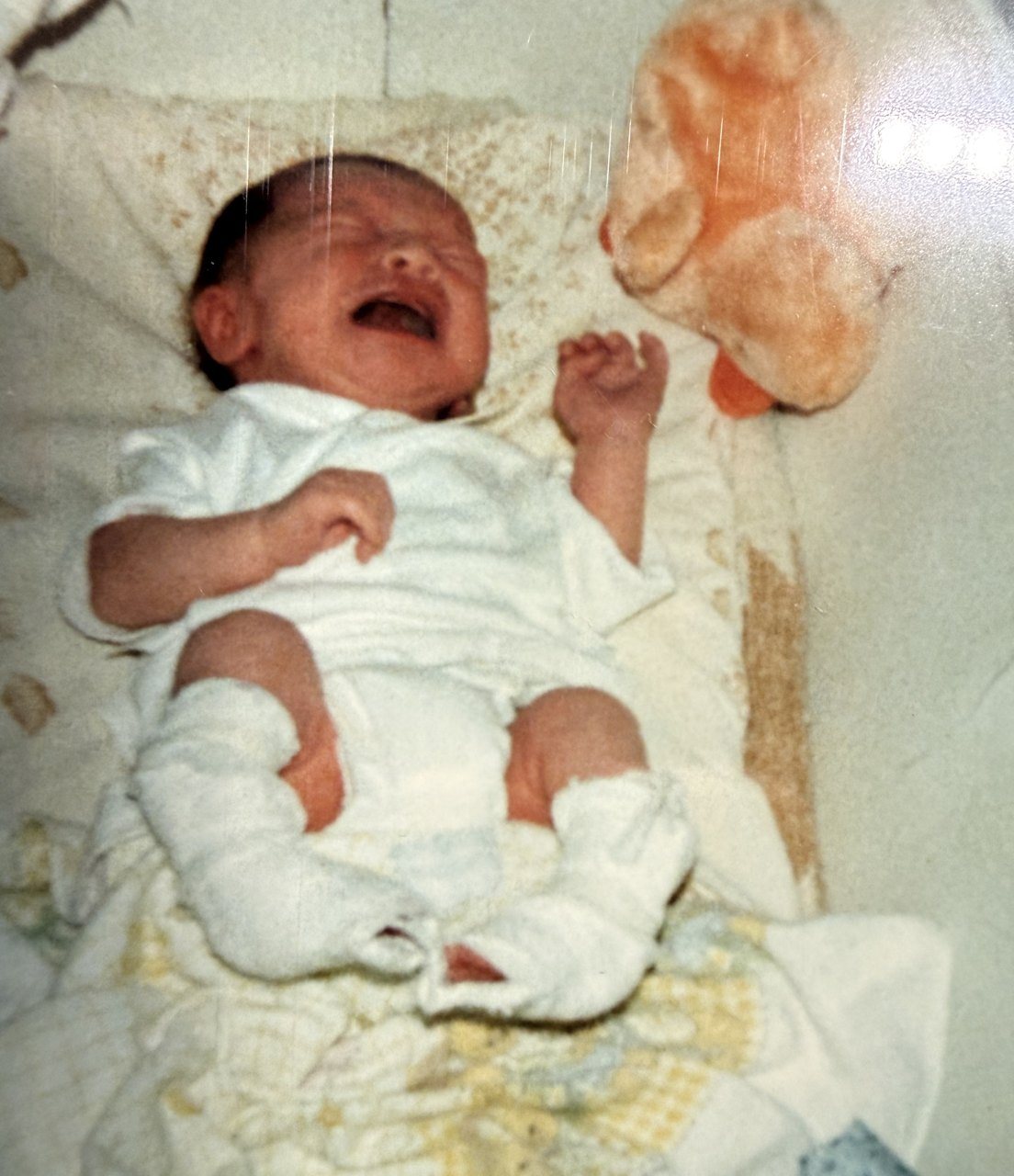
I wear a watch. It has been recording since May 2020, and I have a left triple arthrodesis performed when I was sixteen. This page is the whole record with the tables attached. Including the parts that make me look worse than the headline number does, because the honest version turned out to be more interesting than the flattering one.

First, a retraction
Eighteen pages came down to make room for this one
This site used to carry eighteen study pages, thirteen numbered studies, two microstudies, three secondary studies, each proposing a hypothesis about adaptive envelopes or cadence protection or ecological narrowing. In September 2026 they were taken out of search and removed from navigation.
Three reasons, all of them mine. They shared between 11 and 21 percent of their text with each other. They were built partly on derived tables that contained sentinel values I had mistaken for real measurements. And they rested on running-dynamics metrics that turn out to exist for only fourteen months of a six-year archive.
This one page replaces all eighteen, and it is deliberately smaller than the thing it replaces.
The number
1,561 miles, not 2,147
I have quoted the bigger figure before. It is the wrong one and here is why.
Across six years, 652 sessions totaling 2,147 miles are logged under a running activity type. Apply a cadence threshold of 140 steps per minute. The conventional floor for running gait, and only 383 sessions and 1,561 miles qualify. The rest is walking.
That is not sloppiness on my part. Until the end of September 2021 my watch had no walking activity type in use at all. Walks had nowhere to go but the running label.
| Year | Logged miles | Miles at running cadence | Share | Median cadence |
|---|---|---|---|---|
| 2020 | 292 | 59 | 20% | 120 spm |
| 2021 | 17 | 12 | 70% | 144 |
| 2022 | 97 | 34 | 35% | 124 |
| 2023 | 327 | 218 | 67% | 142 |
| 2024 | 442 | 403 | 91% | 154 |
| 2025 | 460 | 335 | 73% | 148 |
| 2026 to 4 Jun | 512 | 500 | 98% | 168 spm |
The low years are not injury. 2021 and 2022 I was mostly in a gym: 41 indoor cardio and 33 strength sessions in 2022 alone, against 47 runs. That is a training choice, not a foot.
2023
The year I moved indoors, and the year I started running
Strip out the walking entirely and look only at sessions that clear the cadence threshold. Something happens in 2023 that I did not notice at the time and cannot attribute to any decision.
| Year | Median pace | Longest run | Treadmill | Outdoor |
|---|---|---|---|---|
| 2020 | 14:23 /mi | 4.5 mi | 0 | 129 |
| 2022 | 15:00 | 3.3 | 5 | 42 |
| 2023 | 9:33 | 5.7 | 103 | 10 |
| 2024 | 8:02 | 10.0 | 97 | 0 |
| 2026 | 9:53 | 9.5 | 118 | 2 |
In 2020 this was an outdoor activity, entirely. From 2023 it is a treadmill activity, almost entirely. The switch is abrupt, it lands in the same year the pace drops by five and a half minutes a mile, and I cannot point to an injury, a decision or a piece of equipment that caused it.
Running volume and running pace both changed when the surface stopped varying, and not before.
Move through it
Six years, one year at a time
The same figures as the two tables above, laid out a year at a time. Watch the treadmill bar arrive in 2023.
2020
Logged miles292
At running cadence59
Median cadence120 spm
Treadmill runs0Outdoor runs129
Median pace 14:23 a mile. Longest run 4.5 miles.
Before late September 2021 the watch had no walking activity in use, so walks were logged as runs. That is why most of this year is below running cadence.
2021
Logged miles17
At running cadence12
Median cadence144 spm
Mostly a gym year. A training choice, not the foot.
2022
Logged miles97
At running cadence34
Median cadence124 spm
Treadmill runs5Outdoor runs42
Median pace 15:00 a mile. Longest run 3.3 miles.
Still mostly gym: 41 indoor cardio and 33 strength sessions against 47 runs.
2023
Logged miles327
At running cadence218
Median cadence142 spm
Treadmill runs103Outdoor runs10
Median pace 9:33 a mile. Longest run 5.7 miles.
The switch. Running moves almost entirely onto the treadmill, and median pace drops by about five and a half minutes a mile, with no injury, decision or equipment to point to.
2024
Logged miles442
At running cadence403
Median cadence154 spm
Treadmill runs97Outdoor runs0
Median pace 8:02 a mile. Longest run 10.0 miles.
Every running-cadence session indoors.
2025
Logged miles460
At running cadence335
Median cadence148 spm
Pace, longest run and surface are not broken out for this year in the table above.
2026 to June
Logged miles512
At running cadence500
Median cadence168 spm
Treadmill runs118Outdoor runs2
Median pace 9:53 a mile. Longest run 9.5 miles.
To 4 June, when the archive ends. Nearly every mile at running cadence.
Three sources
I said this before I looked at the data, and so did a published cohort
Long before I ran this analysis I had written on this site that level ground is close to unremarkable for me, and that uneven ground is where the missing hindfoot motion shows, because the joints that let a foot mold to the ground are the ones that were fused.
A published series of triple arthrodesis patients reports the same thing from a cohort rather than from one person: two thirds described significant limitation walking on uneven ground.1
This archive is a third line, and none of the three was collected to support the other two. My own account came first, the cohort literature I only read afterwards, and the watch was recording the whole time without being asked a question.
Limits
Why this is an observation and not a conclusion
It is badly confounded and the confounds are obvious. A treadmill is easier than a road for reasons that have nothing to do with a fused hindfoot: the pace is imposed rather than chosen, the belt is cushioned, there is no weather, no camber, no traffic and no navigation. Any runner improves moving indoors. Nothing here isolates my foot as the reason.
It is one person, and there is no control. Both my feet were operated on in infancy, so I do not even have an untreated side to compare against.
Six years of training would improve pace anyway, surface or no surface.
And the causation may run backwards. I may have moved to a treadmill because I wanted to run more, rather than run more because I moved to a treadmill. I genuinely do not know which.
What survives all of that is narrow: in someone whose own account and whose cohort literature both point at uneven ground as the limiting factor, six years of activity data show running becoming possible at volume in the year the surface stopped varying.
Not analyzed
Why there is nothing here about stride or ground contact
The watch is on my wrist. Stance time, vertical oscillation, step length and running power are estimated from arm and trunk movement. They are not specific to either foot, and they cannot tell a fused side from an unfused one.
The one field that could have separated the two, stance time balance, was never recorded once across the entire archive. Those fields also only exist from 2025, so they cover fourteen months of a six-year record.
Analyzing them would mean describing an estimate of a body and calling it a measurement of a foot. That is most of what was wrong with the eighteen pages this one replaces.
Questions
What people ask about this
Can you run with a triple arthrodesis?
Why does the total say 2,147 miles in some places and 1,561 in others?
What happened in 2023?
Does that prove the fused foot needs a flat surface?
What happened to the eighteen study pages?
Why is there no analysis of stride or ground contact time?
Keep going
Related
My twenty-five year record is the clinical companion to this page. The operative history, an incidental x-ray and a scored outcome questionnaire. Running after an arthrodesis is the practical side. Uneven ground covers the surface problem properly. Research is where the rest of it lives.
Sources
Where this comes from
All figures on this page are computed from my own device export, May 2020 to 4 June 2026, using distance, duration, heart rate, cadence, activity type and timestamp. The session-level table behind every number is available on request. This is one person’s activity record. It is not medical advice and it predicts nothing about anyone else’s foot.
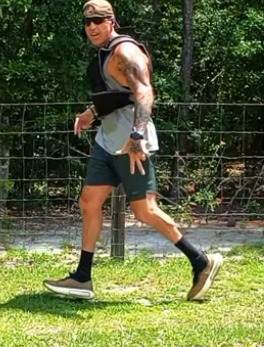
I filmed why I moved to a treadmill long before I had any of this data to explain it . Watch it on YouTube, or browse the channel.