Adult Clubfoot Running Guide
Stride Asymmetry With Clubfoot While Running
Stride asymmetry with clubfoot while running often means one side of the body moves, loads, pushes, or recovers differently than the other. That difference may show up as a shorter stride, weaker push-off, uneven rhythm, earlier fatigue, or the strong feeling that one side is more natural than the other.
This page explains stride asymmetry in plain English for adults with clubfoot who run and for parents trying to understand what “running differently” can mean over time. The goal is not to treat asymmetry like automatic failure. The goal is to explain why asymmetry happens, what usually drives it, and when it is part of a functional adaptation versus when it deserves closer attention.
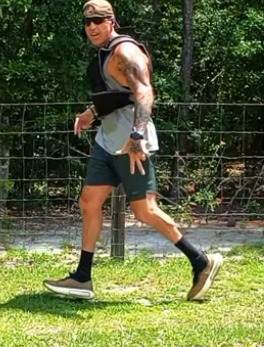
Clubfoot Forward is especially suited to this topic because Heath brings long-term bilateral clubfoot experience to a question many runners can feel before they can describe it. Stride asymmetry is often one of the clearest signs that the body is adapting around a mechanically different foot, ankle, calf, and treatment history.
Quick Answer
One side may not do the same job
Stride asymmetry usually happens because one side cannot move, absorb force, or push off the same way as the other.
Functional Reality
Uneven does not always mean broken
Many runners with clubfoot use adapted mechanics and remain functional, even when the stride is visibly or physically different.
What To Watch
Change matters more than difference
New pain, worsening asymmetry, limping, swelling, or reduced recovery matters more than asymmetry that has always been stable.
Start Here
If one side feels stronger, smoother, or more reliable while running, start with why asymmetry develops and how it connects to push-off, stiffness, calf size, and compensation.
Part Of
This page supports the Running Biomechanics With Clubfoot cluster. It ties together push-off, limited dorsiflexion, calf atrophy, compensation patterns, pain, and surgery history so the uneven stride makes sense as one system.
Plain-language quick answer: stride asymmetry with clubfoot while running usually happens because one side of the foot-ankle-calf system cannot move or produce force the same way as the other. That can make one leg feel smoother, stronger, or more efficient, while the other feels shorter, stiffer, flatter, less stable, or more tiring.
Jump To
What stride asymmetry means | Why it happens | What it feels like | Main drivers | Compensation and pain | When it matters more | Surgery history | Parents | Evidence | FAQ | Quick links
What Stride Asymmetry Means in Plain English
Stride asymmetry means both sides of the running pattern are not doing the same job in the same way. That can show up in stride length, timing, push-off, loading, rhythm, cadence strategy, confidence, or how much work one side has to do compared with the other.
With clubfoot, asymmetry is not surprising. The foot, ankle, calf, and lower leg often develop and function differently. Even after good treatment, the body may still run through that side with a different set of mechanics than the opposite leg.
That difference is not automatically a failure. It may be the body’s long-term solution for keeping you moving with a foot and ankle that were never mechanically typical.
Why Stride Asymmetry Happens With Clubfoot
Stride asymmetry usually develops because the clubfoot side does not move, absorb force, or create propulsion the same way. The body still has to keep the stride going, so one side often becomes the smoother or stronger side while the other becomes the side that needs more adaptation.
- reduced push-off can shorten or flatten one side of the stride
- limited dorsiflexion can make the ankle feel blocked
- calf atrophy can reduce force and endurance on one side
- residual deformity can change how the foot contacts and leaves the ground
- pain can make the runner protect one side without realizing it
- compensation patterns can spread work to the opposite leg, knee, hip, pelvis, trunk, or back
- older surgery history can change motion, loading, and confidence in the stride
For the broader overview, return to Running Biomechanics With Clubfoot.
What Stride Asymmetry Can Feel Like While Running
Most runners do not describe stride asymmetry with technical words. They describe sensation. One side may feel more natural, more stable, or more powerful. The other may feel flatter, stiffer, shorter, less smooth, or more tiring under pace and repeated load.
- one side feels like the “real” running side
- the clubfoot side feels shorter, flatter, or less fluid
- one side feels like it pushes while the other side just gets through
- fatigue makes the asymmetry more obvious
- the stride feels uneven even if it still works well enough overall
- pace changes expose the asymmetry more than easy running does
- hills or treadmill incline make one side feel more limited
- the body feels like it is working harder than the pace suggests
For the mechanics behind that feeling, see Push-Off With Clubfoot While Running, Limited Dorsiflexion With Clubfoot While Running, and Clubfoot Calf Atrophy and Running.
The Important Reframe
Stride asymmetry does not automatically mean something is wrong.
Often it means the body has found a workable way to keep moving with a mechanically different foot and ankle.
The Main Drivers Behind an Uneven Stride
Stride asymmetry usually has more than one cause. It is often a chain reaction between foot shape, ankle motion, calf capacity, pain, prior surgery, shoes, and compensation.
Push-Off
One side may not propel the same way
If one side has weaker or delayed push-off, the stride may feel shorter, flatter, or less powerful on that side.
Dorsiflexion
The ankle may feel blocked
Limited dorsiflexion can change landing, stride length, hill tolerance, and how smoothly the body moves over the foot.
Calf Capacity
The smaller side may fatigue faster
Calf atrophy or calf asymmetry can make one side feel less springy and less able to hold form under repeated load.
How Stride Asymmetry Connects to Compensation and Pain
Stride asymmetry and compensation are closely linked. If one side of the stride does less well, the rest of the body often picks up the difference. That is why an uneven stride can contribute to pain not only in the foot, but also at the calf, knee, hip, pelvis, back, or opposite leg.
In other words, asymmetry is often the visible shape of a deeper compensation pattern.
- the opposite leg may produce more force to maintain pace
- the hip may help pull the leg through when ankle motion is limited
- the knee may absorb impact the foot and ankle do not share well
- the trunk may rotate or stabilize differently to keep rhythm
- the back may become part of the compensation system
- fatigue may make the compensation pattern more painful or more visible
Continue with Clubfoot Compensation Patterns While Running and Pain After Running With Clubfoot.
When Stride Asymmetry May Matter More
Not every asymmetry needs alarm. But it deserves more attention when it becomes more obvious over time, when it is paired with growing pain, or when it reflects a real drop from your own normal baseline.
- the asymmetry feels newer or more pronounced than before
- pain is increasing in the foot, ankle, calf, knee, hip, back, or opposite leg
- running tolerance is dropping
- one side feels less trustworthy under ordinary load
- the pattern changed after surgery, flare, injury, shoe change, or mileage jump
- you are limping during the run or the next day
- the body no longer returns to baseline between runs
- swelling, sharp pain, or focal bone pain appears
If that sounds familiar, continue with Adult Clubfoot Pain Flares and Relief and When Adults With Clubfoot Should See Ortho.
How Surgery History Can Change Stride Symmetry
Surgery history can affect stride asymmetry in different ways. Some procedures improve alignment or pain while still leaving the stride mechanically different. Others trade motion for stability and may change where the asymmetry shows up.
A tendon transfer may change dynamic control. An osteotomy may change alignment and loading. Arthrodesis or fusion may reduce painful motion but create permanent stiffness that affects transition, shock absorption, and push-off. Revision surgery may change the entire running question because the adult foot is already carrying a long treatment history.
That is why no one should judge the running pattern without considering the full treatment history.
For advanced surgery context, see Running After Clubfoot Surgery, Running With Clubfoot After Arthrodesis, Adult Clubfoot Surgery Later in Life, and Triple Arthrodesis for Clubfoot.
What Parents Should Actually Take From This
Parents often notice that a child runs a little differently and worry that something must be failing. That is not always the right conclusion. Many children and adults with clubfoot run with some stride asymmetry and still remain very active and highly functional.
The more useful question is not whether both sides look perfectly equal. It is whether the child is functioning well, adapting well, tolerating activity well, and staying within their own stable baseline over time.
Different running can still be successful running. The warning signs are worsening pain, reduced activity, repeated injuries, progressive limp, loss of confidence, or a clear decline in what the child can normally do.
For the simpler parent-facing sports question, read Can My Child Play Sports With Clubfoot?.
Best Related Pages to Read Next
Running Hub
Running Biomechanics With Clubfoot
Best if you need the bigger running map behind push-off, stiffness, compensation, fatigue, pain, and recovery.
Push-Off
Push-Off With Clubfoot While Running
Best if one side feels flat, weak, delayed, or less springy.
Pain
Pain After Running With Clubfoot
Best if the uneven stride is tied to soreness, flares, or recovery problems.
Evidence Snapshot
Stride asymmetry with clubfoot should be understood through function, not appearance alone. Treated clubfoot can leave differences in motion, alignment, calf size, pain, stiffness, and load tolerance, and those differences can become more obvious during running.
Medical and functional clubfoot literature supports evaluating treated clubfoot by gait, movement, alignment, pain, participation, and long-term function rather than assuming a corrected foot always moves identically to a typical foot. Adult residual deformity literature also reinforces that structural differences can remain even after treatment.
That supports the practical point of this page: an uneven stride is not automatically a crisis, but it is worth understanding when it changes, becomes painful, reduces function, or starts driving compensation elsewhere.
- AAOS OrthoInfo: Clubfoot overview and treatment context
- PMC: Functional evaluation of the treated clubfoot
- PMC: Three-dimensional alignment and adult residual deformity after Ponseti treatment
- PMC: Long-term follow-up of surgically treated clubfoot
- PubMed: The adult sequelae of treated congenital clubfoot
Authority takeaway: stride asymmetry with clubfoot should be judged by stability, pain response, recovery, compensation, and whether the runner remains within a sustainable baseline.
Common Questions About Stride Asymmetry With Clubfoot
What is stride asymmetry with clubfoot while running?
Stride asymmetry with clubfoot while running means the two sides of the running pattern are not doing the same job in the same way. It may show up as a shorter stride, different rhythm, weaker push-off, uneven loading, one side feeling smoother, or one side tiring faster.
Why does one side feel different when running with clubfoot?
One side may feel different because the clubfoot side may have less ankle motion, less calf power, altered foot loading, residual deformity, pain, or surgery history. The opposite side may also become the more trusted or more powerful side during running.
Does stride asymmetry mean something is wrong?
Not always. Many people with clubfoot run with some asymmetry and remain functional. Asymmetry deserves more attention when it is new, worsening, painful, causing limping, reducing tolerance, or changing recovery.
Can limited dorsiflexion cause an uneven stride with clubfoot?
Yes. Limited dorsiflexion can make the ankle feel blocked and can change stride length, landing, push-off, cadence, and compensation through the knee, hip, trunk, or opposite leg.
Can weak push-off cause stride asymmetry with clubfoot?
Yes. Weak or delayed push-off can make one side feel flatter, shorter, or less powerful. The opposite leg may then do more work to maintain pace, rhythm, or forward drive.
Why does one leg get tired faster when running with clubfoot?
One leg may get tired faster because the clubfoot side may have less calf capacity, reduced ankle motion, altered loading, or less efficient propulsion. The non-clubfoot side may also fatigue if it is compensating for the weaker or stiffer side.
Can stride asymmetry cause knee, hip, back, or opposite-leg pain?
Yes. If one side is not absorbing or producing force the same way, the knee, hip, pelvis, trunk, back, or opposite leg may take on more work. Pain outside the foot can still be connected to clubfoot running mechanics.
How does surgery history affect stride asymmetry with clubfoot?
Surgery history can affect motion, alignment, stiffness, pain, push-off, and load sharing. Tendon transfer, osteotomy, arthrodesis, fusion, and revision surgery can each change where asymmetry shows up during running.
When should adults with clubfoot get asymmetry evaluated?
Evaluation is reasonable if asymmetry is new or worsening, pain is increasing, swelling appears, limping develops, running tolerance is dropping, one side feels less trustworthy, or recovery no longer returns to baseline.
What should parents know if a child with clubfoot runs unevenly?
Parents should know that uneven running does not automatically mean treatment is failing. Many children and adults with clubfoot run with some asymmetry. The bigger concern is worsening pain, reduced activity, repeated injuries, progressive limp, or function that declines over time.
Quick Path Links
- Clubfoot Resources Guide
- Adult Clubfoot Life Hub
- Adult Clubfoot Gait Compensation Hub
- Running With Clubfoot
- Running Biomechanics With Clubfoot
- Stride Asymmetry With Clubfoot While Running
- Push-Off With Clubfoot While Running
- Limited Dorsiflexion With Clubfoot While Running
- Clubfoot Compensation Patterns While Running
- Clubfoot Calf Atrophy and Running
- Clubfoot Running Fatigue on One Leg
- Pain After Running With Clubfoot
- Adult Clubfoot Running Pace, Pain, and Progress
- Return to Running With Clubfoot
- Running After Clubfoot Surgery
- Running With Clubfoot After Arthrodesis
- Adult Clubfoot Pain Flares and Relief
- Adult Clubfoot Pain by Location
- Adult Clubfoot Shoes and Orthotics
- Best Running Shoes for Adult Clubfoot
- Adult Clubfoot Surgery Later in Life
- When Adults With Clubfoot Should See Ortho
- Can My Child Play Sports With Clubfoot?
- Clubfoot FAQ
- Featured Clubfoot Videos and Resources
- Clubfoot Article Archive
- About Clubfoot Forward
- Clubfoot Editorial Policy
Best Next Step After This Page
If this page helped explain why one side of the stride feels different, the next best step is the broader mechanics page that connects stride asymmetry to push-off, stiffness, calf size, pain, and compensation.
Continue with Running Biomechanics With Clubfoot or return to the Adult Clubfoot Life Hub.
Critical Disclaimer
This page shares educational summaries, published medical context, and lived-experience framing only. It is not medical care, diagnosis, gait analysis, physical therapy, surgical advice, orthotic fitting, running prescription, or individualized treatment.
New pain, worsening asymmetry, swelling, limping, suspected stress injury, compensation pain, major change in running function, or recovery that no longer returns to baseline should be discussed with a qualified orthopedic, sports medicine, physical therapy, podiatry, or orthotic professional who understands your clubfoot history. For site standards, see the Clubfoot Editorial Policy.