
Study 000J | Mechanism Branch | N=1 Wearable Archive
Study 000J: Embedding vs Bout Structure in Outside Running
Study 000J asks whether low-burden outside running was better explained by the surrounding training ecology, or by the structure of the outside bout itself.
The archive did not support one universal winner. The stronger reading is a state-conditional model: long settled bout structure carried the clearer protective signal in the direct divergence case, while embedding support remained highly relevant inside the later specialized state.
This study belongs to the broader altered-mechanics research program. Clubfoot and fusion define the case context. The study itself tests how support conditions and bout structure shaped successful expression inside a documented constrained system.
Primary Finding
Study 000J found that low-burden outside expression was not controlled by one global support mechanism. In the clearest divergence case, a longer settled outside bout stayed low burden despite only modest embedding support. In the later specialized state, dense embedding support remained strongly associated with low-burden expression.
The stronger interpretation is that embedding support and bout structure matter differently depending on envelope state.
Why This Study Exists
Earlier studies showed that outside running was not simply successful or unsuccessful. Study 000F introduced the successful operating envelope construct. Study 000H suggested that embedding support mattered: outside runs appeared easier to tolerate when surrounded by a more stabilized training ecology. Study 000I then pushed the model further into adaptive-envelope logic.
Study 000J asks a narrower question: when embedding support and bout length diverge, which factor carries more weight in preserving low-burden outside expression?
Bout Structure Carried The Clearer Signal
The most important divergence case was the early low-burden outdoor run that remained successful despite only modest embedding support. That case strengthens the argument that long settlement can sometimes protect low-burden expression even when the local ecology is not densely supportive.
Embedding Support Still Mattered
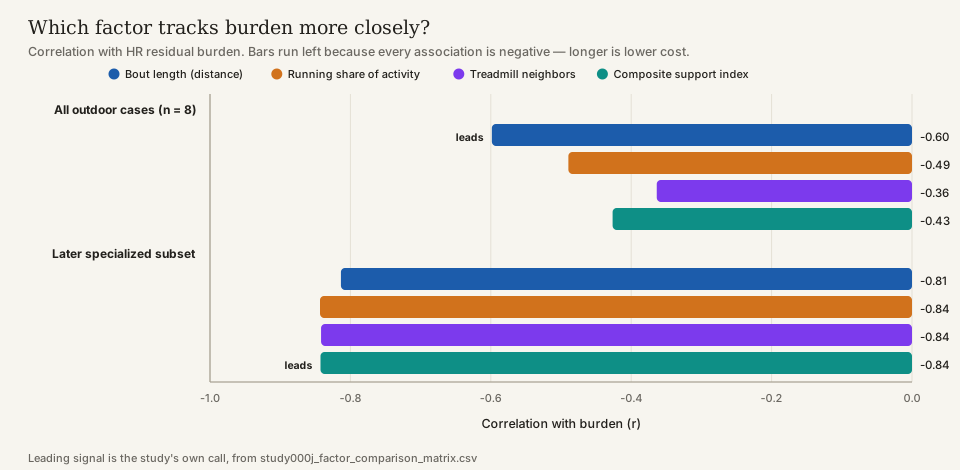
Study 000J did not overturn Study 000H. Inside the later mature specialized state, dense treadmill neighbor support and a high recent running-share context still organized lower-burden boundary expression better than the low-support outside cluster.
Factor Comparison
Direct Divergence Evidence
- Low-burden long settled case: 10.2265 miles, 28.2459% running-share context, 3 treadmill neighbors, -3.7503 bpm burden.
- High-burden short low-support cluster: 2.091 mile mean, 5.1299% running-share context, 1.75 treadmill neighbors, 13.8844 bpm burden.
- Main implication: Long settled bout structure can protect expression even when embedding is only modest.
Later Specialized State
- Supported boundary run: 5.4541 miles, 91.0839% running-share context, 32 treadmill neighbors, 0.6887 bpm burden.
- Main implication: Dense embedding still matters strongly inside the later specialized state.
- Best reading: The archive supports a state-conditional support architecture, not one rigid support hierarchy.
What This Study Adds
It Refines Embedding Support
Embedding support remains real, but it is not always the dominant protective factor in every successful mode.
It Elevates Bout Structure
The archive now supports the idea that a long settled run can sometimes carry protective value of its own.
It Strengthens Multi-Mode Logic
Study 000J is one of the steps that pushes the archive away from a single-route success model and toward multiple successful low-burden modes.
Plain-Language Summary
This study asked what mattered more when outside running stayed low burden: the surrounding training environment, or the structure of the run itself.
The answer was not one clean winner. In one clear case, a long outside run stayed low burden even though it was not strongly embedded. But later, dense support around an outside run still appeared very important.
The practical takeaway is that this system probably does not use one universal strategy. Different successful pathways can appear depending on the state the body is operating in.
Study Files
Core Reading
Methods and Results
Audit and Outputs
Figures
Figure 01
Bout versus embedding scatter.
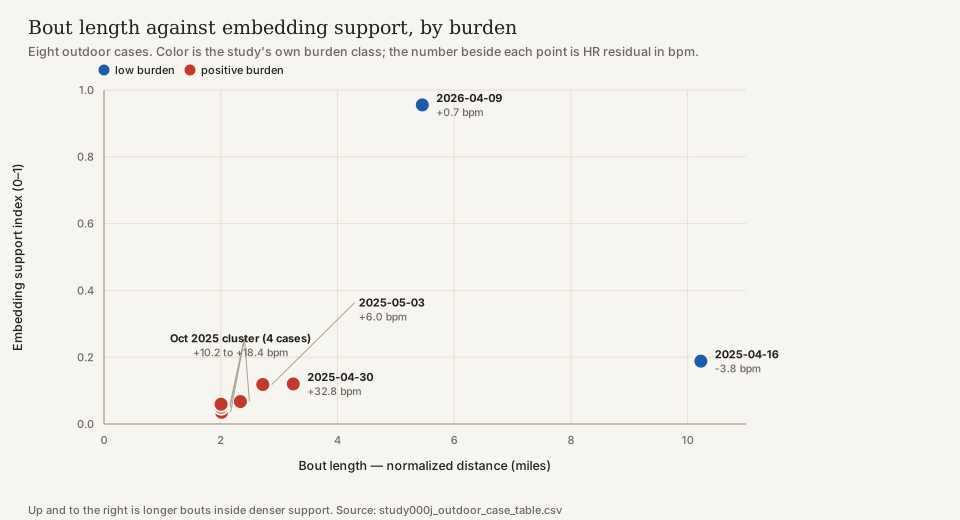
Figure 02
Subgroup burden bars.
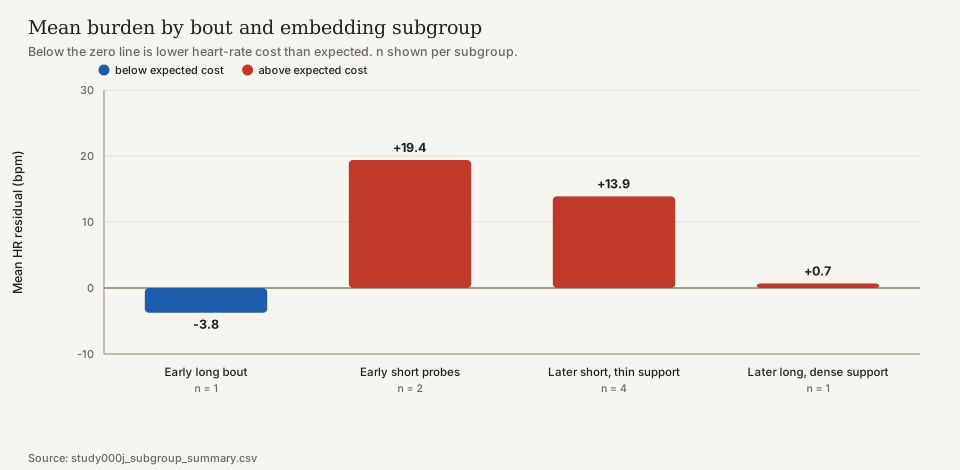
Figure 03
Factor ranking matrix.
E-E-A-T And Source Context
Author Experience
This research is authored from the perspective of a single subject with documented altered lower-limb mechanics and a long-term wearable activity archive. The purpose is not to generalize to all runners, but to study adaptation patterns inside one deeply documented case.
Evidence Boundary
The data are wearable-derived and observational. This study uses HR residual burden, outside boundary-expression cases, bout structure, and embedding-context measures. It does not claim joint-level biomechanics or medical causation.
Study Boundaries
- This is an N=1 mechanism study.
- It uses the outside boundary-expression archive created from earlier work.
- It does not claim universal rules for all runners.
- It does not claim that clubfoot, fusion, or anatomy caused a specific Garmin metric pattern.
- It supports a state-conditional model, not a single global support hierarchy.
- There is no high-embedding short outside case in the current archive.
- The direct divergence evidence is strongest in early 2025.
Related Research
FAQ
What is embedding support?
Embedding support refers to how strongly an outside run is surrounded by a stabilized running ecology, such as nearby treadmill sessions, higher recent running share, and a more specialized training context.
What is bout structure?
Bout structure refers to the characteristics of the run itself, especially whether the outside run was a short probe or a longer settled expression.
Which factor mattered more?
The answer was state-conditional. Bout structure carried the clearer protective signal in the direct divergence case, while embedding support remained highly relevant inside the later specialized state.
Does this mean outside running is bad?
No. The study suggests outside running burden depends on context. Some outside expressions were costly, while others were low burden when bout structure or embedding conditions were favorable.
Important Note
This page summarizes a single-subject longitudinal analysis using wearable-derived data. It is not medical advice, not a clinical guideline, and not a substitute for evaluation by a qualified medical professional. The study describes observed patterns in one documented archive and should be interpreted within those limits.