What is still there, and what it is called
Cavus, adductus, varus, equinus. Residual deformity is those four separate components in whatever mix your foot ended up with, and knowing which ones you have explains most of what your foot does all day.

Four components. Open the ones that sound like your foot. Most adults have two or three to some degree, and almost nobody has all four badly.
Cavus . The arch sits too high The one people notice least and blame least, and it starts the chain. Component 12 min
The front of the foot is pushed down relative to the back, so the arch is exaggerated and not flattened. In a clubfoot (club foot, talipes) this comes from the first ray sitting lower than the rest, which tips the whole forefoot.
It is the first thing Ponseti casting corrects, precisely because leaving it in place makes everything else resist correction. In an adult foot, whatever remains of it is doing the same job it always did: concentrating your weight into a smaller area.
Cavus is the component that responds best to a well-made orthotic, because the problem is pressure distribution and an insole can genuinely redistribute pressure. That is covered on the footwear page.
Adductus (the front of the foot points inward) The component most visible in a footprint and in a shoe. Component 22 min
Draw a line down the middle of the heel and continue it forward. In a straight foot it exits between the second and third toes. With adductus it exits well toward the little toe, because the forefoot has swung inward at the midfoot.
This is the component behind the “bean-shaped” or “kidney-shaped” appearance, and it is the one that makes shoe fitting genuinely difficult instead of merely annoying.
| Degree | What you notice | Usual approach |
|---|---|---|
| Mild | Shoes wear unevenly, otherwise unremarkable | Nothing, or width fitting |
| Moderate | Visible curve, pressure on the outer border | Wide or straight-lasted shoes, padding |
| Severe | Difficulty fitting any shoe, skin problems on the outer edge | Custom footwear, sometimes surgical |
Adductus alone is generally well tolerated. Adductus combined with varus is what puts your body weight onto the outer border of the foot, and that combination is the usual explanation for the pain patterns described on the pain location page.
Varus, the heel tilts inward The component that determines what your foot actually stands on. Component 33 min
Looked at from behind, a typical heel sits vertical or tips very slightly outward. A varus heel tips inward, so that the ground contact moves from the middle of the heel pad toward its outer corner.
This is the component that matters most functionally, because it decides the alignment of everything stacked above it. It is also the component most likely to be genuinely fixed in an adult, since it lives in the subtalar joint.
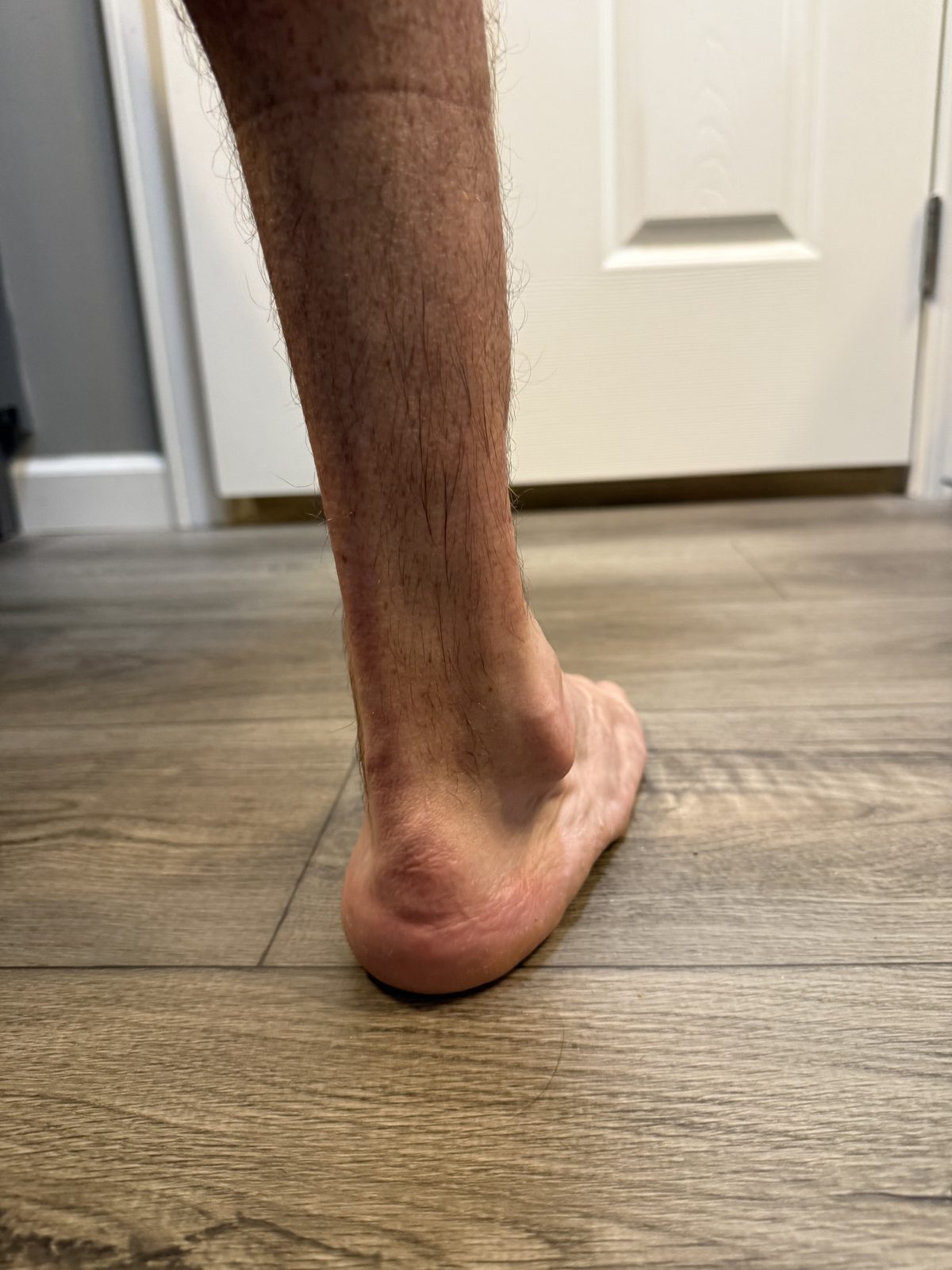
If it is still flexible
- The heel can be brought upright by hand
- It corrects when you stand on tiptoe
- Orthotics and bracing can hold position
- Tendon transfer is sometimes an option
- Strength work has something to act on
If it is rigid
- The heel will not move under your hands
- No change on tiptoe
- Insoles redistribute pressure but cannot realign
- Correction requires bone work, not soft tissue
- Fusion becomes the realistic option if it hurts
The flexible-versus-rigid distinction is the single most useful thing anyone can tell you about your own foot, and it takes a specialist about thirty seconds to establish. It is worth asking directly.
Equinus. The ankle will not bend up far enough Not really a deformity of the foot, and the one you feel every day. Component 42 min
Walking needs roughly ten degrees of upward ankle movement past neutral. Squatting and going downhill need considerably more. Equinus means you do not have it, whether because of a tight calf, a stiff ankle joint, or both.
Since the movement has to come from somewhere, the body borrows it. From the midfoot, which flattens and rolls, or from the knee, which stays bent, or from early heel lift, which is why you may push off before you should.
That last line is the practical test worth knowing. If a slightly raised heel makes an obvious difference to how your day feels, equinus is a live component of your foot, not a historical note. And a heel-to-toe drop in your everyday shoes is a legitimate intervention rather than a cheat.
Residual is not the same as failed
The aim of clubfoot treatment has never been an anatomically normal foot. It has been a plantigrade one: a foot that puts its sole on the ground, fits in a shoe, and does not hurt. Measured against that, a foot with residual components can be a complete success.
Radiographs of well-functioning adult clubfeet routinely look worse than the person walking on them, and the reverse happens too. What matters is what the foot does across a day, not what it measures.
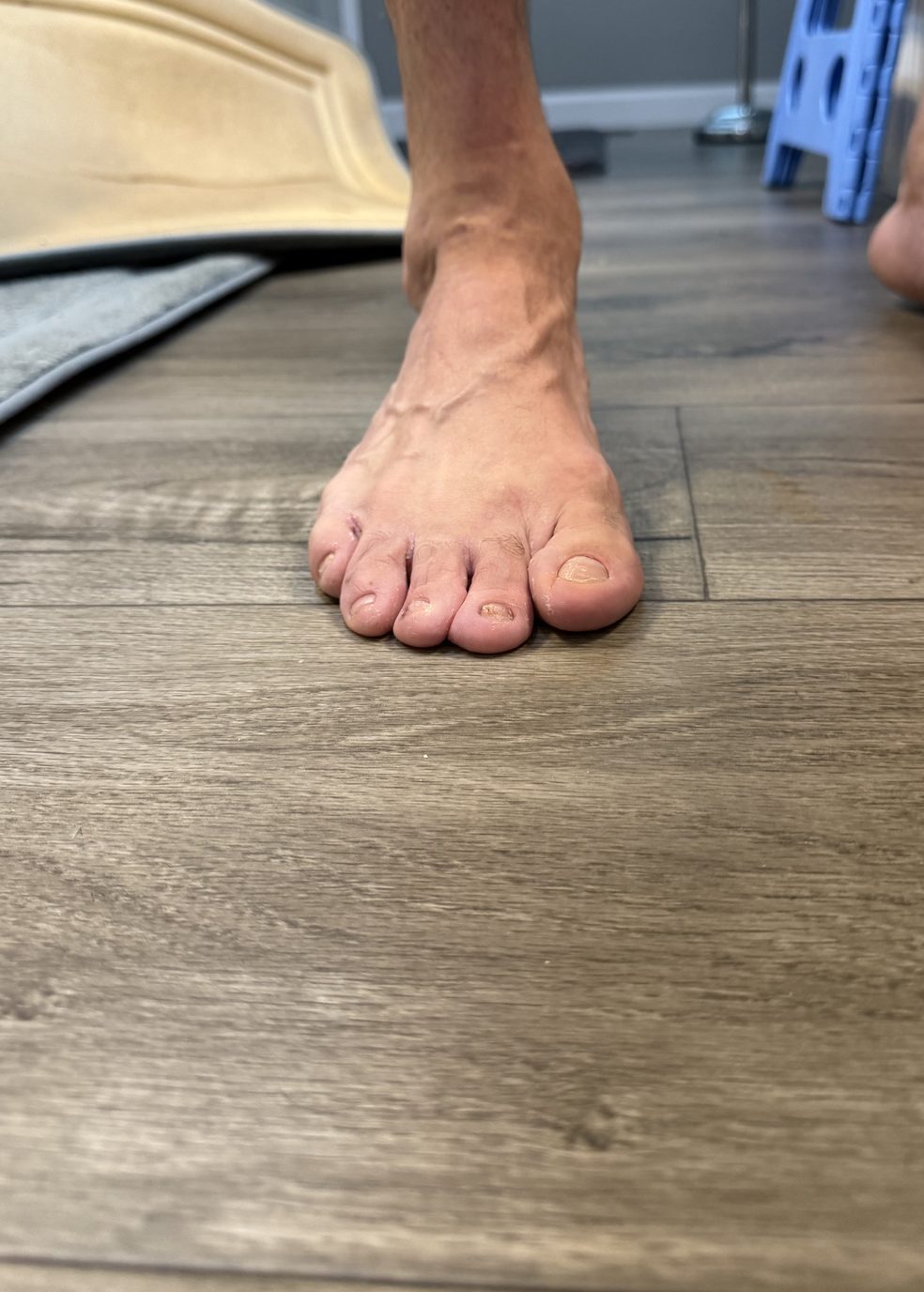
Here is what forty-one years of that looks like. Three scars, three operations, and a foot that has covered a lot of ground.
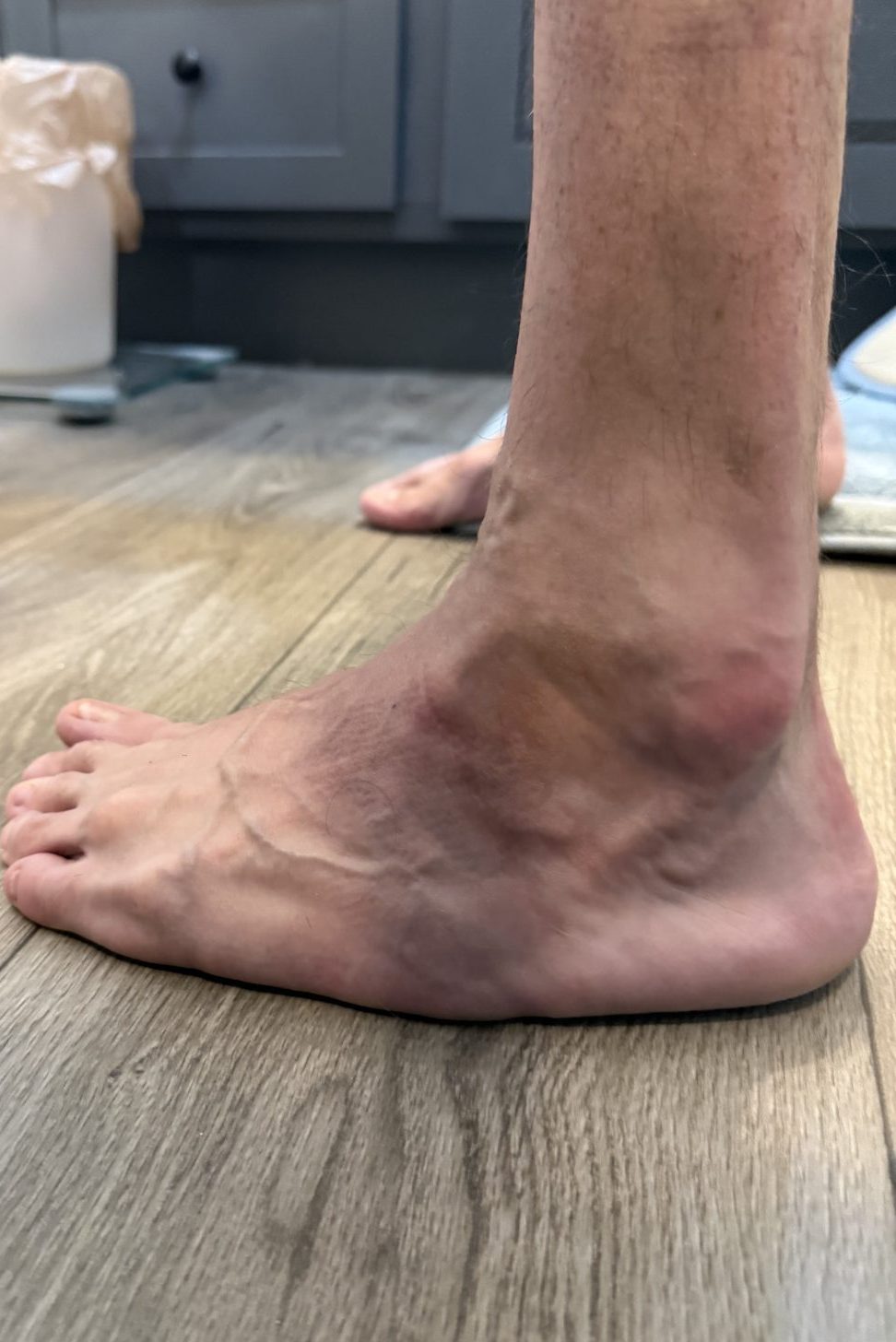
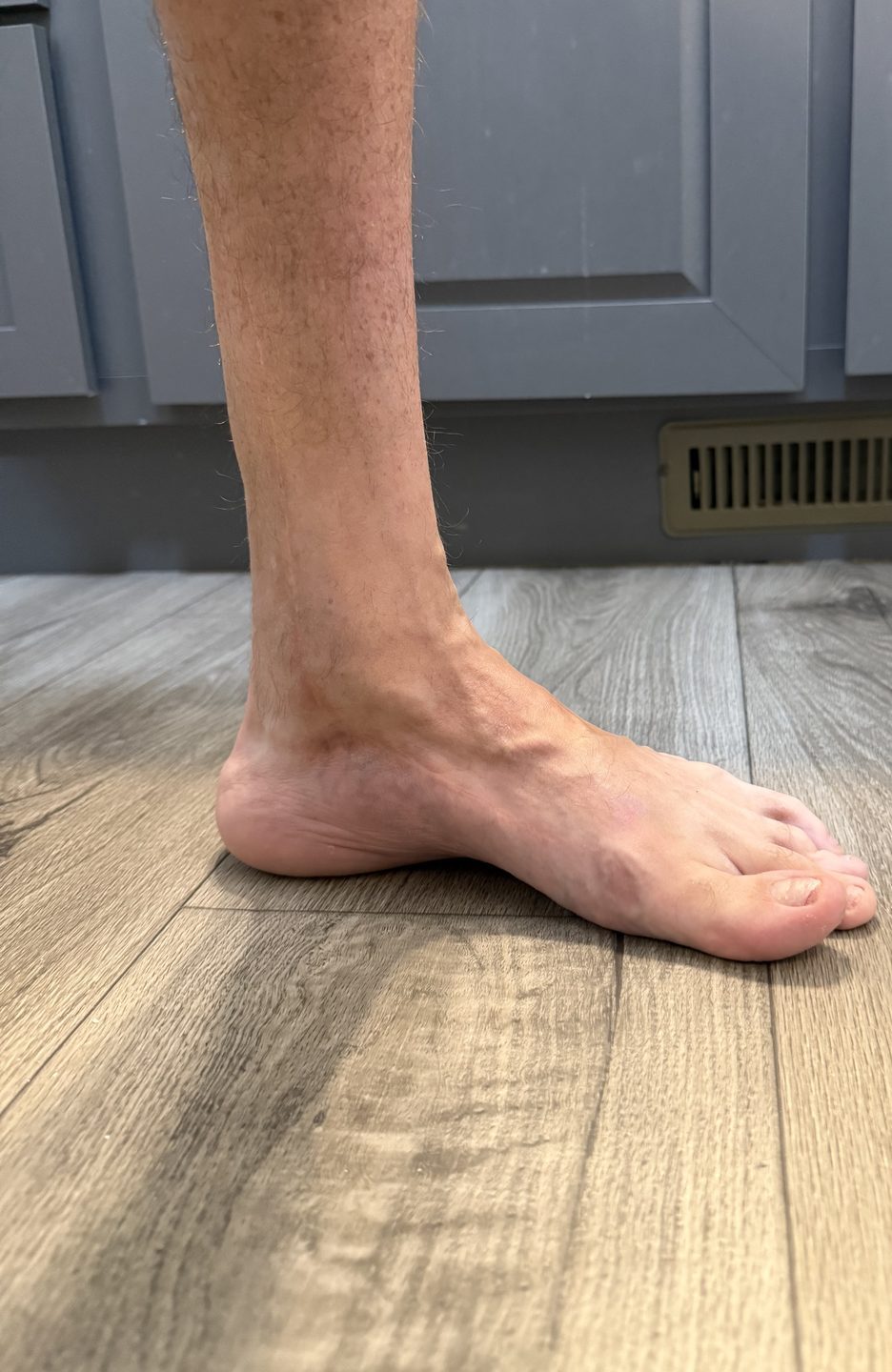
A flexible foot with visible deformity usually beats a straight foot that will not move.
Which leads to the one piece of advice that applies to almost everyone reading this: surgery for residual deformity is offered for pain and function. Not for the shape, not for the X-ray, and not because a component has a name. If your foot is comfortable and does what you need, having residual varus on paper changes nothing about what you should do next.
People also ask
Residual deformity
Can it be corrected in adults?
Can you develop clubfoot later in life?
Why do I walk on the outside of my foot?
Is a stiff foot worse than a deformed one?
What is residual clubfoot deformity?
Does residual deformity mean my treatment failed?
What do cavus, adductus, varus and equinus mean?
Does residual deformity get worse over time?
Can residual deformity be corrected in adults?
Should I have residual deformity treated if it does not hurt?
Sources
Where this comes from
Related