Two joints, one anxious search history
Does clubfoot (talipes equinovarus, CTEV) affect the hips? Only in a narrower way than the search results suggest. Parents find their way to this question within about a week of diagnosis, usually after reading that clubfoot is sometimes associated with hip dysplasia. There is something real underneath that, and it has been considerably overstated online. Six things people come away believing, checked against what is actually done about it.
Checked
What parents read about clubfoot and hips, and what applies
“Clubfoot means my baby will have hip problems.” What the association actually is
Isolated clubfoot, meaning clubfoot with no other differences, is a foot and ankle condition. It does not cause hip dysplasia, and the great majority of babies with it have entirely normal hips.
What exists is a question the literature has not settled. Pooled across studies, developmental dysplasia of the hip is found in about 4 percent of children with idiopathic clubfoot, which is close to the rate in the general population.1 A cohort of 101 children with CTEV produced a single case needing treatment, and its authors concluded there is no true association between the two.2
Two large cohorts published since then point in opposite directions. In 515 children who all had a hip ultrasound at six weeks, hip dysplasia was found in 4, or 0.78 percent, and the authors concluded that clubfoot alone does not justify routine hip ultrasound.6 In 250 Australian infants the rate was 52.9 per 1,000, five to ten times the rate in two state population datasets, and those authors concluded clubfoot should count as a risk factor where screening is selective.7
Both are single-center retrospective studies, and screening policy already differs between guidelines. So whether your baby has a hip ultrasound may depend on where you are treated, and it is a reasonable thing to ask about. The standard hip check at every baby visit matters either way.
“So the hip exam is just routine and I can skip worrying about it.” Why it is worth attending to
Every newborn gets a hip examination regardless of their feet, and that examination is where dysplasia is found.3 In a baby with clubfoot there is a practical reason to make sure it is not skipped: attention naturally concentrates on the obvious thing, and the obvious thing is the foot.
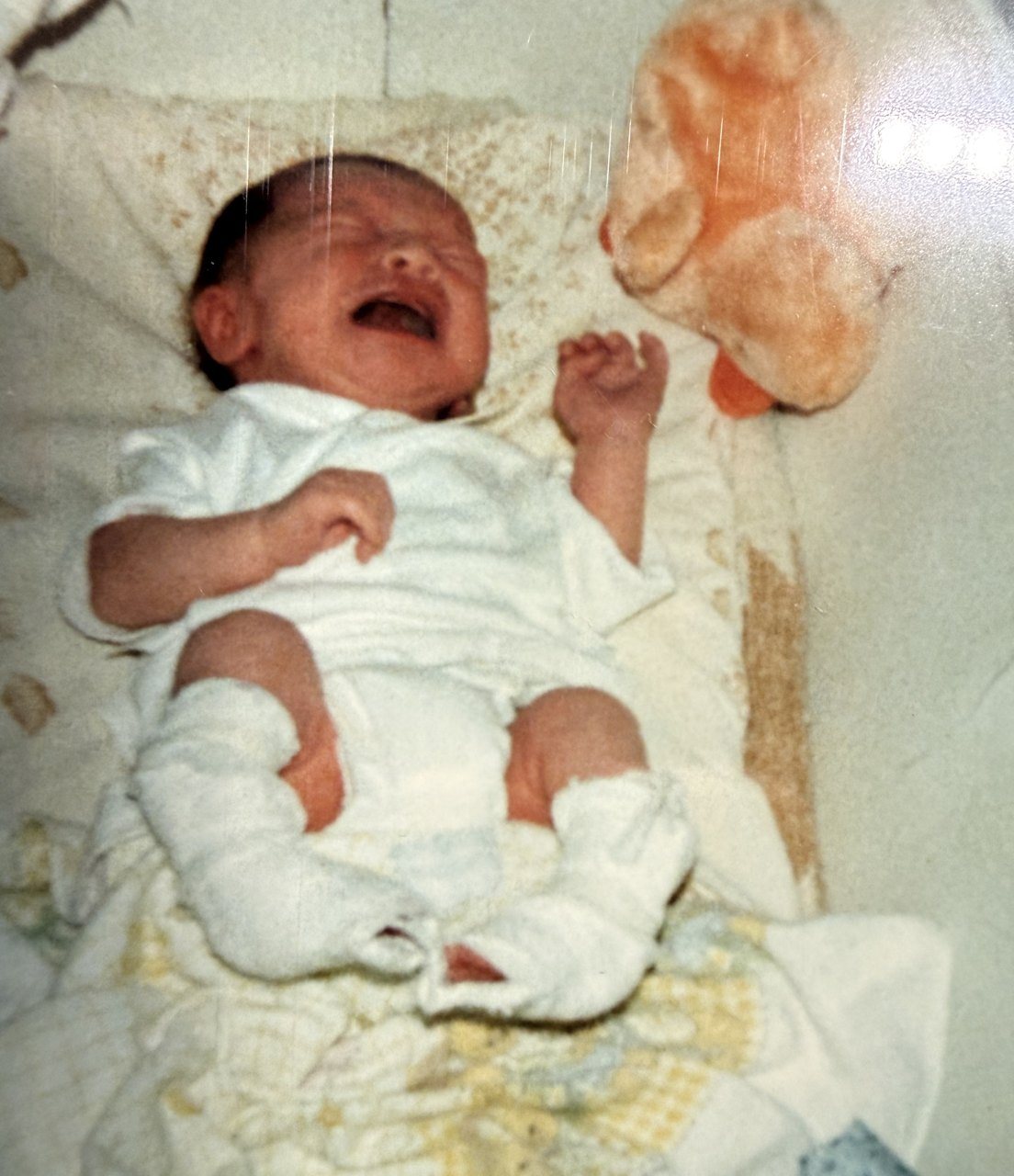
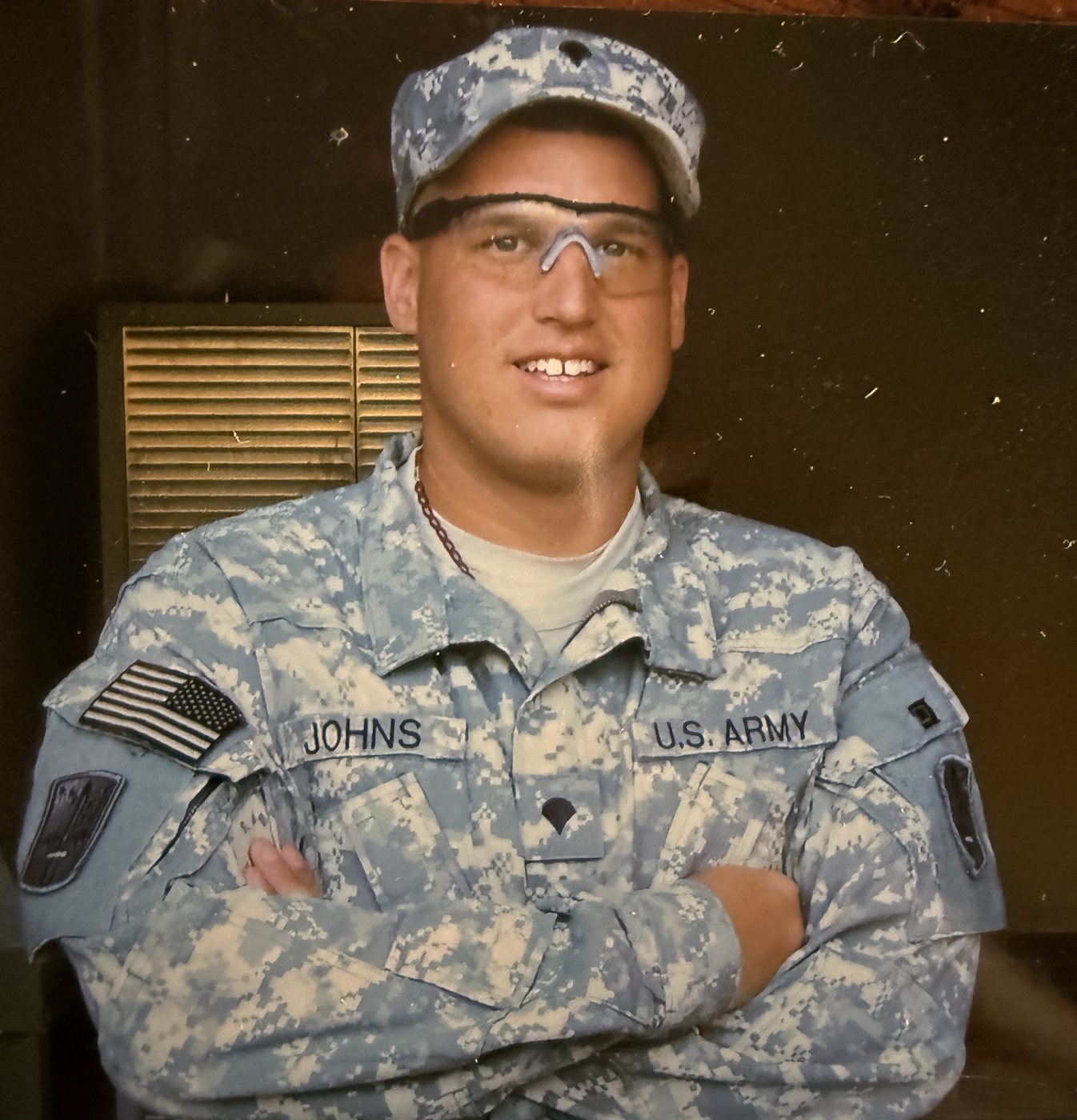
Mine were checked the same way. At four months, in the admission note written the day before my first foot operation, the hips are recorded as normal on examination, with an earlier pelvic X-ray noted as showing them properly seated. Forty-one years later that sentence is still sitting in the file, and it is the kind of sentence worth making sure exists for your own child.
Hip dysplasia caught in the first months is usually treated with a harness and resolves. Caught late it can need surgery. That gap is the entire reason anyone screens for it, and it costs you one question at an appointment: has the hip examination been done, and was it normal?
“Boots and bar will damage the hips.” What the position does
The brace holds the legs apart and turned outward. Hip-healthy positioning for infants is exactly that kind of abduction, the position a harness for dysplasia deliberately produces.3 The brace is not putting hips into a risky position.
What matters is that the bar is set to the width your provider specified, which is based on your child’s shoulder width and their hips. Adjusting it yourself to make things easier is where problems could arise, and it is worth resisting.
“If the hips were fine at birth, that is settled.” Why one check is not always enough
Some dysplasia develops or becomes detectable after the newborn period, which is why hip checks are repeated at subsequent reviews instead of done once. A normal examination at birth is reassuring rather than final.
The things worth mentioning later are asymmetry: uneven skin creases at the thigh or buttock, one leg that seems shorter, one hip that does not open as far during a diaper change, and, once walking, a persistent limp or waddle. Say those to the team looking after the feet; they will pass it on or check it themselves.
“I should ask for a hip ultrasound to be sure.” When imaging is actually used
Ultrasound is the imaging used for infant hips, and it is applied where there are risk factors or an abnormal examination, not to every baby.4 Practice varies between countries and between units, so what is standard where you are may differ from what a forum in another country describes.
Asking is entirely legitimate. Phrase it as a question instead of a demand. Ask whether your child has any indication for hip imaging, and what the local threshold is. You will get a more useful answer than an argument produces.
“Clubfoot in adults causes hip pain, so it must start in the hips.” Two different mechanisms
Adults with clubfoot do report hip and back symptoms more than average, and the mechanism has nothing to do with infant hip dysplasia. It is loading: a stiff clubfoot and a weaker calf mean the hip does more work per step, for decades, and load accumulates.
Keeping those two apart matters, because they call for opposite responses. The infant clubfoot question is answered by a screening examination. The adult one is answered by strength, footwear and load management, and it responds well to both.
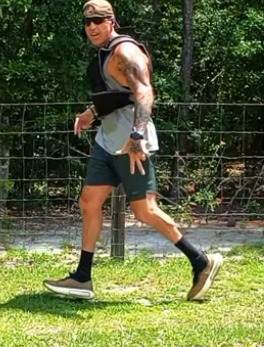
For what it is worth from one adult: the only break I have taken from running in six years was about a month for pain around the outside of my hip. Nobody diagnosed it and I managed it myself, so I am not going to tell you it came from my feet. That is exactly the kind of symptom that is easy to blame on clubfoot and hard to prove.
The two clubfoot and hip questions worth asking
Almost everything on this page reduces to two sentences you can say at your next appointment, and both are easier than the reading that brought you here.
The useful version of this worry fits into two questions. The unhelpful version fits into an evening of searching.
If a baby does have both
Uncommon, and it happens. Since roughly one child in twenty-five with clubfoot also has hip dysplasia, a pediatric orthopedic service sees the combination often enough to have a settled approach to it.
Both get treated, and usually at once
Neither condition waits for the other. Ponseti casting corrects the clubfoot on its own weekly schedule while the hip is managed on its own, and the two run in parallel instead of in sequence.
The harness and the casts coexist
A Pavlik harness holds the hips flexed and abducted; clubfoot casts hold the feet. They occupy different parts of the leg and are routinely used together, which surprises parents who assume one must be paused.3
Where the bar setting matters more
Once bracing starts, the boots and bar hold the legs apart and turned outward, which is already a hip-friendly position. Where dysplasia is also being treated, the bar setting becomes a shared decision between the two parts of the team, and it is not something to adjust at home.
What it does not mean
It does not make the clubfoot worse, harder to correct, or more likely to relapse. The two conditions are managed together because they happen to coexist, not because either drives the other.1
Sources
Where this comes from
People also ask