Life after a triple arthrodesis, with the paperwork attached
Most of what you can read about triple arthrodesis 25 years down the line is somebody remembering. This is the version with documents behind it. I hold my full childhood operative record, thirty-one pages of it. I have an x-ray report from 2023 that I never asked for. I completed a scored outcome questionnaire this month. And I have six years of device-recorded running. None of that makes me typical. It does mean that for once the claims on a page like this can be checked.
The record
Triple arthrodesis 25 years later: what the chart says
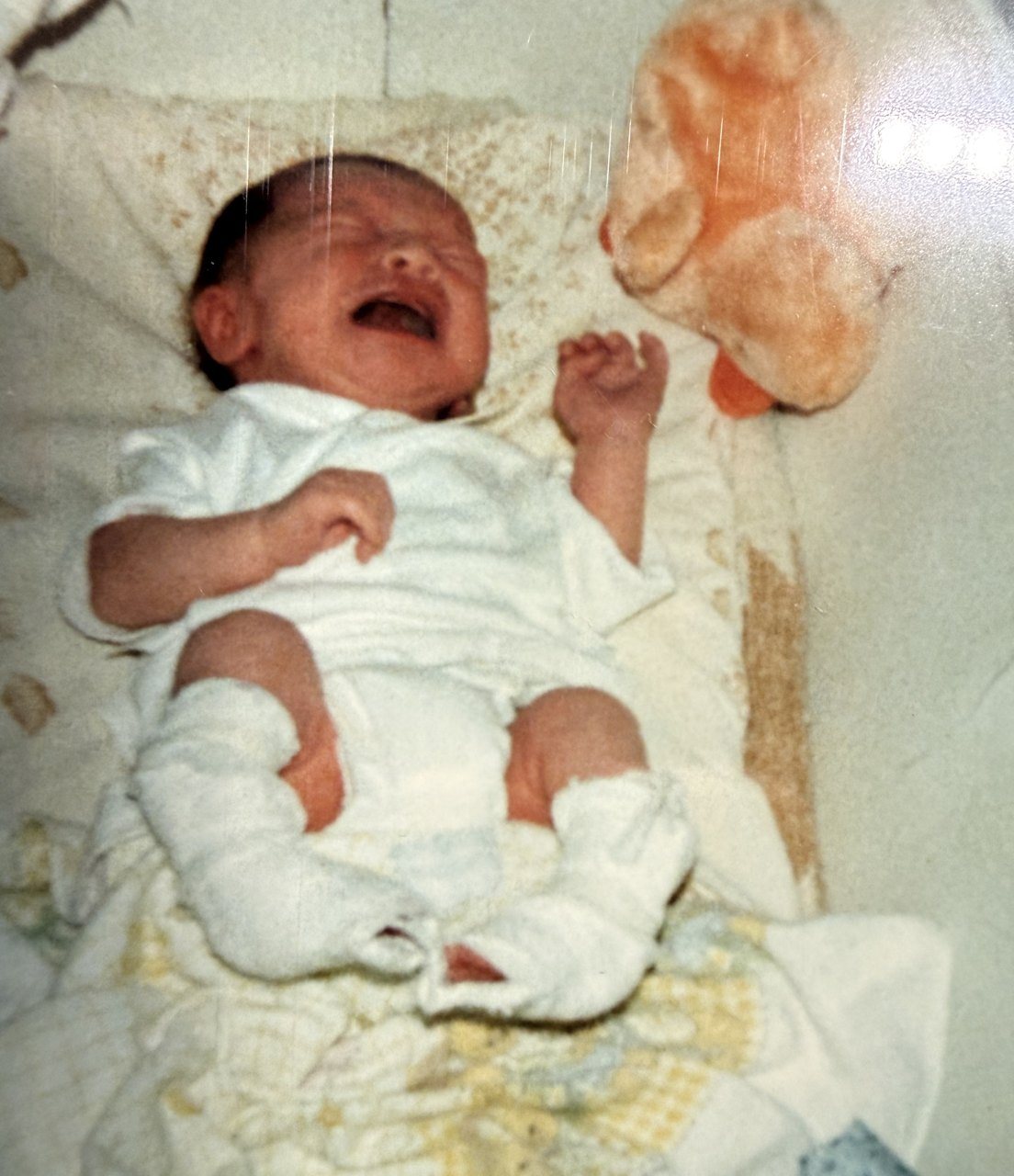
I was born in 1985 with severe bilateral clubfoot. Where my memory and the paper disagree, the paper wins, and it has already corrected me twice.
Casting started about four hours after I was born. Bilateral posteromedial releases, the Turco type, followed at around four months, then serial casting, straight laced shoes, derotation bars and twister cables at twenty-three hours a day. I first walked at fifteen months. The left foot kept its deformity and had a repeat posteromedial release at two years and ten months. That operation raised the lateral talocalcaneal angle from twenty-four degrees to thirty-five.
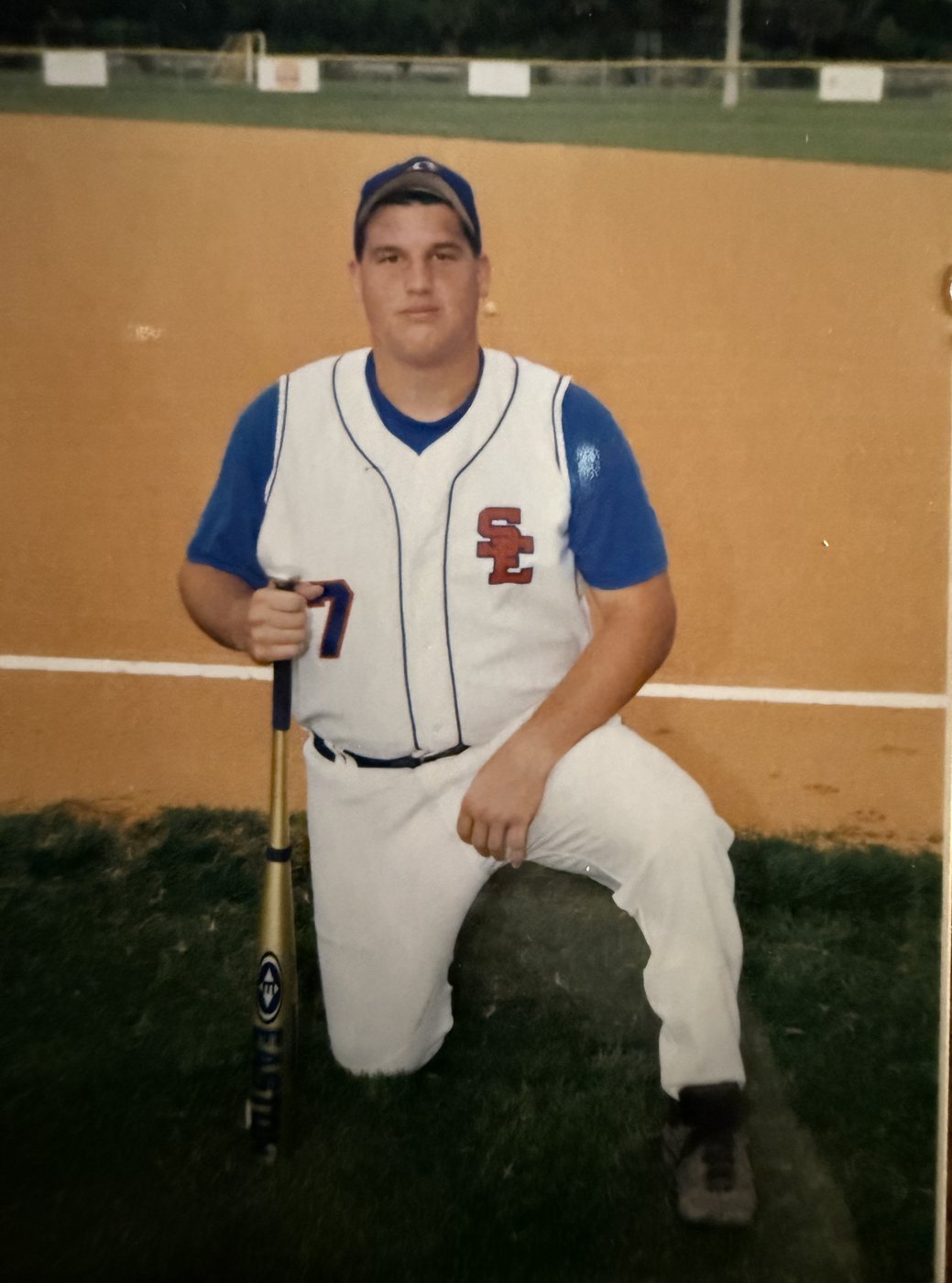
Then a long stretch where nothing much happened, which is the part nobody writes about. I played baseball. I made an all-star team at nine. The same year, a note records that there was “really no subtalar motion” in the left foot, and raises a triple arthrodesis for the first time.
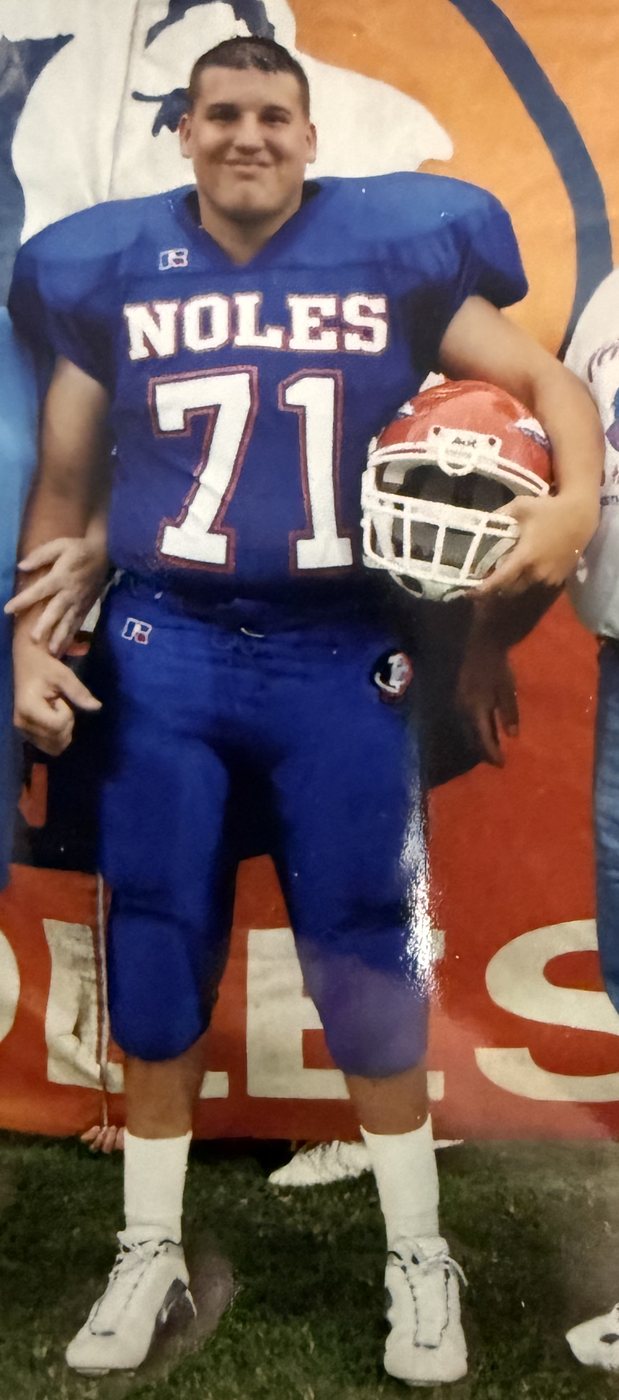
It was then deliberately not done for seven years. Scheduled at eleven for the following summer and not carried out. Discussed again at fifteen and explicitly deferred until skeletal maturity, with arch supports instead. What finally settled it was a fourth metatarsal stress fracture in October 2000 and six months of pain that stopped me doing what I wanted. X-rays showed beaking of the navicular and irregular joint spaces.
The left triple arthrodesis was done in August 2001, at sixteen, fixed with two staples. Cast for about twelve weeks, six of those non-weight-bearing. Released to full activity at five months with five to ten degrees of dorsiflexion and a normal heel-toe gait. Discharged at almost eighteen with the fusion solid and the staples intact.
The surgeon’s closing note in March 2003 said the foot was never going to be normal, but that it was extremely functional and should serve me well as an adult. That prediction has a date on it. Everything below is what happened next.
The first year
What the recovery was actually like
This is the part people look for and the part almost nobody writes down. What you find instead is the surgical protocol, which tells you the plan rather than the year. The plan my family was given before the operation was a cast for about twelve weeks, non-weight-bearing on crutches for six of those, and a warning that it would decrease subtalar motion. That is what was said in May 2001. Below is what the chart recorded afterwards, and then what it was like.
Now the version the chart does not hold. For the first two weeks I was close to bedridden, because letting the leg hang hurt. That eased. I was non-weight-bearing for around four months, on crutches, and in a wheelchair at school. I missed the first half of my junior year football season. The pain was hard for roughly the first two months.
The immobility was harder than the pain. That is my answer rather than a general claim, and it is still the thing I would tell anyone about to do this. I was genuinely out and doing things again at five or six months. A year after the operation I was playing baseball in full swing.
The surprise was not pain. It was the missing movement. Getting used to no dorsiflexion took far longer than the bone took to heal, and the two places it turned up were catching and squatting. Twenty-five years later, squatting is still the only thing the outcome questionnaire marks me down for, and it is marking me down for the operation working.
For what it is worth against other people: a prospective study that compared double with triple arthrodesis in patients aged fifteen to forty found every patient united by four months, with a mean time to union of 3.3 months after a triple.8 My chart has early callus at two months and consolidation at five. Different population, same order of magnitude.
Four records, one foot
Pick a source to see what it can and cannot tell you
The childhood operative record
Thirty-one pages covering casting from birth through the 2001 fusion and discharge in 2003.
The 2023 urgent care x-ray
Taken for a bruise, twenty-one years and five months after the fusion. It reported postoperative findings in the hindfoot with osteoarthritis.
The FAOS outcome score
Completed in September 2026: daily living 98.5, sport 90.0, pain 94.4, quality of life 68.8, symptoms 50.0.
Six years of running data
652 runs and about 2,147 miles logged since May 2020, almost all of the recent volume on a treadmill.
2023
The arthritis I found out about by accident
In January 2023 I bruised my left foot and went to urgent care. Three views were taken. The report says no acute injury, and then this: postoperative findings in the hindfoot, with osteoarthritis.
I was thirty-seven. That was twenty-one years and five months after the fusion, and I had not seen anyone about my feet in the intervening two decades. I was not looking for it. Nobody was. It turned up because I banged my foot on something.
It is also not a surprise, and that is the useful part. In one series with fifteen-year x-rays, ankle osteoarthritis increased in nineteen of forty feet after triple arthrodesis, and the patients stayed satisfied.1 Another found secondary arthrosis in more than half of tarsal joints and forty-four percent of ankle joints.2 Degeneration after this operation is the expected course. What I did not know until I read my own report is that you can have it for twenty years and never notice.
The same visit recorded no deformity, pulses present, and range of motion at my baseline. That last phrase matters: a doctor who had never met me wrote down that my restricted motion was my normal, not an injury.
Scored
The questionnaire marks me down for the surgery working
I completed a Foot and Ankle Outcome Score this month, all forty-two questions. Each section scores from zero to a hundred, where a hundred means no problems.6
Symptoms and stiffness: 50.0. Pain: 94.4. Daily living: 98.5. Sport and recreation: 90.0. Quality of life: 68.8.
Look at the two ends of that. Daily living is 98.5, which is about as close to unimpaired as the form allows. Symptoms is 50.0, the worst score on the sheet. So what dragged it down?
Three questions. Can you bend your foot and ankle fully: never. Can you straighten it fully: rarely. Morning stiffness: moderate.
Those are not complications. That is the operation. A triple arthrodesis removes hindfoot motion on purpose. An instrument that treats missing motion as a symptom will score a technically perfect fusion as a bad outcome, in a man who ran seven hundred miles this year. That is worth knowing if you are ever handed one of these forms and told what your number means.
One more thing fell out of it. The only deficit in the entire sport section was squatting. Twenty-four years ago, the thing I found hardest to get used to after the surgery was catching and squatting. I did not connect the two until the form was scored.
Measured
743 miles this year, and where they were run
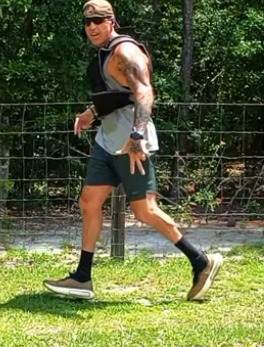
Since December: 177 runs, about 743 miles. Over the six years in my archive: 652 runs, about 2,147 miles. Average pace ten minutes two seconds a mile, average heart rate 148, cadence 161. This is watch data, not a number I estimated.
Two honest caveats, because they change what it means. Almost all of it is treadmill, so it is repetitive loading on a uniform surface rather than varied terrain. And the watch is worn on the wrist, so anything it reports about running mechanics is estimated from arm and trunk movement, is not specific to either foot, and tells you nothing about what my fused side is doing. Distance, pace, cadence and heart rate are real. Do not let anyone quote a stride metric off a wrist device as a measurement of a fused foot.
The only break this year was about a month off with hip and iliotibial band trouble on the left, which I managed myself and never had looked at. Worth saying plainly: in six years of recorded running, the one thing that stopped me was at the hip, not the foot.
The pattern
Three limits, and not one of them is in the foot
This is the part I did not expect to find, and it only appeared once all four sources were sitting next to each other.
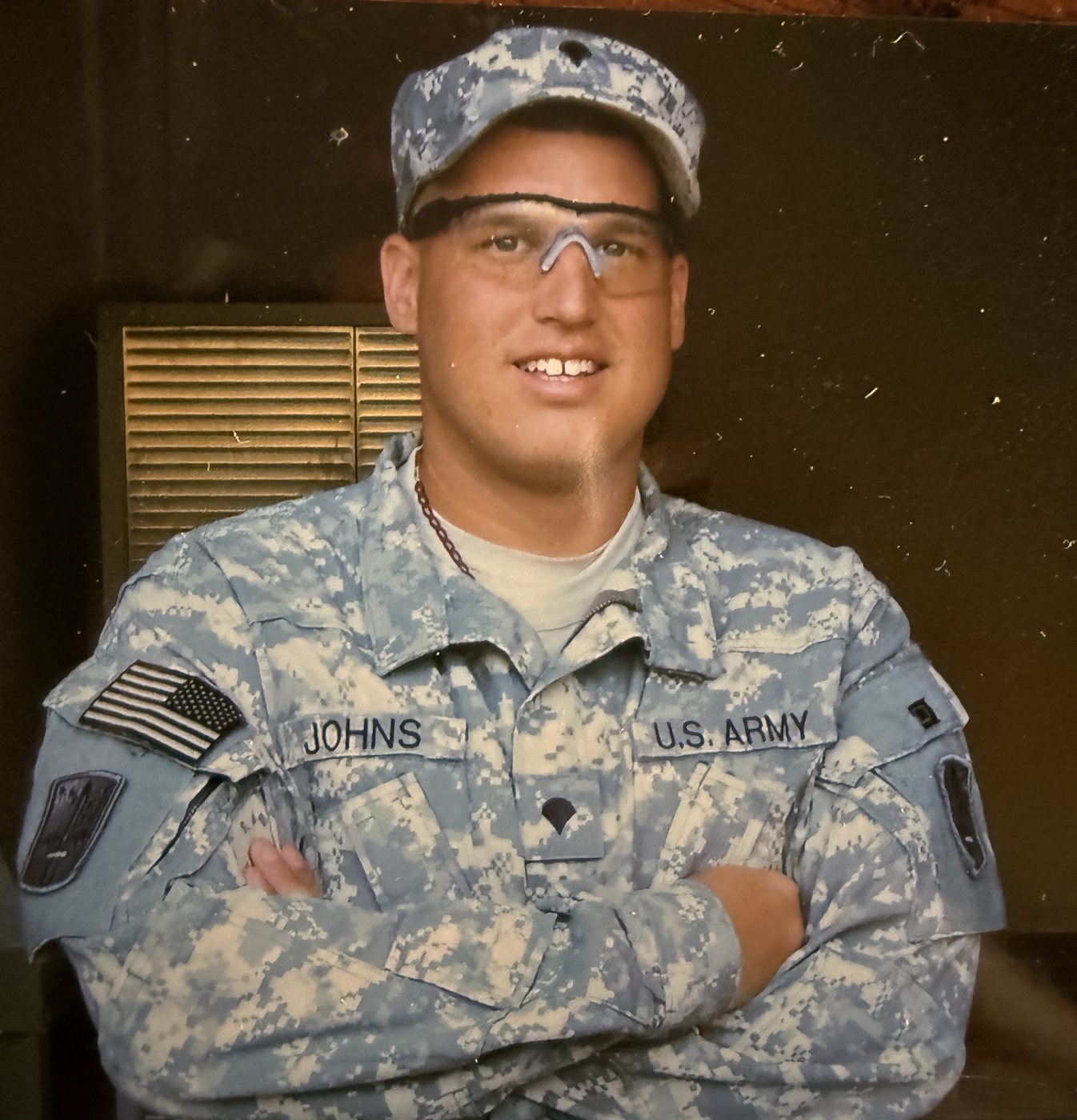
Boots. I served with this foot in standard-issue boots, unmodified, no insert, no orthosis, and no allowance made for it. Whether the boot works is what decides whether the foot can do the job.
Barefoot. Walking barefoot on a hard floor hurts. Both feet, worse on the left. It feels like walking directly on bone, like crossing the kitchen on Lego. In shoes, walking is painless.
Two things about that are worth being clear on, because it would be easy to blame the fusion and the fusion is not responsible. It happens in both feet, and only the left was fused. And on the left the worse side is a bony prominence on the outer border, which has been there my whole life and comes from the shape of the foot rather than from surgery. My records describe that shape from infancy: supination and forefoot adductus in both feet, walking on the outer edges at age two, and the same pattern noted again through childhood. A foot that curves inward puts its outer border on the floor. A note from June 2000, a year before the fusion, already describes a prominent and painful fifth metatarsal on that side. The arthrodesis fixed the hindfoot. It was never going to change the outer column.
Squatting. I cannot keep the foot flat through a squat. Past a certain depth the heel lifts, because the dorsiflexion is not there. Loaded squats are out entirely in flat shoes, and available with the heels elevated.
Boot, shoe, wedge. Every one of those limits is set at the point where the foot meets what it is standing in, and not one is set by any measurement of the foot itself. Meanwhile the one formal measure that exists for me, the outcome questionnaire, scores range of motion and marks me down for a range I had removed on purpose.
Limits
What this does not tell you
I am one person, and a favorable one. A study of triple arthrodesis in children followed to an average of seventeen years reported a mean daily-living score under forty percent, four patients at zero, and continuing pain in adulthood for more than half.3 That group was mostly neuromuscular, including children who could not walk before surgery, which is a different situation from an active teenager with idiopathic clubfoot. But those results are real, and they are the long-term evidence that exists.
The closest series to an adult reading this is different again, and sobering in its own way. Twenty-seven adults, thirty-one feet, operated at a mean age of forty-five for degenerative rather than neurological disease, followed a minimum of ten years and a mean of fourteen.7 Ninety-three percent were satisfied with the result. Only forty-one percent could do moderate activity with mild or no pain, and seventy-four percent reported moderate-to-severe difficulty on uneven surfaces. Their mean physical component score on the SF-36 was 35.2, against a United States population mean of 50.7 There were no nonunions and no revisions.7
The gap between ninety-three percent satisfied and forty-one percent comfortable is the honest shape of this operation, and it is the same gap my own questionnaire describes from the other side. Those patients were middle-aged with worn-out hindfeet, not teenagers with clubfoot, so it is the closest long series rather than the matching one. Do not read this page and expect my outcome.
My record after 2003 is also thin. No orthopedic exam, no weight-bearing x-rays, no outcome score until this month. The 2023 film was for a bruise. Not going to the doctor for twenty-three years tells you something, but it is not the same as being checked and found well.
For what a broader group reports, a 2026 study of skeletally mature patients treated at birth found most reporting good foot health, with reduced walking endurance in about a fifth, and concluded that outcomes later in adulthood still need studying.4 That gap is why I am writing mine up properly. For what current first-line treatment looks like, the 2022 clinical report is the place to start.5
This case is being prepared for submission as a formal case report. If you are a clinician who works on long-term clubfoot outcomes and this is useful to you, the records are complete, and I would rather they were in the literature than on a website.
Questions
What people ask about this
What is life like after a triple arthrodesis?
How long does it take to recover from a triple arthrodesis of the foot?
What physical therapy is recommended after a triple arthrodesis?
Is a triple arthrodesis worth it?
Can you run after a triple arthrodesis?
Does a triple arthrodesis cause arthritis later?
What does a triple arthrodesis actually take away?
Why does barefoot walking hurt more than running?
Is a fusion at sixteen too young?
Keep going
Related
What a triple arthrodesis is and what it costs covers the operation and the trade in general terms. Running after an arthrodesis is the practical side. Arthritis in adulthood covers what degeneration means for a foot that was treated. Fusion and military service covers serving with one.
Sources
Where this comes from
Clinical details on this page are read from my own operative and clinic records, my 2023 radiology report, my completed questionnaire and my own device data. No surgeon or hospital is named here. Nothing on this page is medical advice, and one person’s outcome is not a prediction of yours.