
Clubfoot Tendon Transfer Surgery Explained
Moving the anchor, not cutting the rope
A tendon transfer detaches a working tendon and reattaches it a little further across the foot, so the same muscle pulls in a more useful direction. Nothing is removed and nothing is fused. It is the commonest operation for a childhood foot that keeps turning back in, and it is widely misunderstood. Seven things people believe about it.
Checked
What people believe about tendon transfer
“They are cutting a tendon out of my child’s foot.” What is actually done
The tendon is detached from where it currently inserts and reattached at a different point on the foot, usually a little further toward the outside. The muscle, the tendon and the nerve supply all stay. What changes is the angle of pull.
Think of it as moving where a rope is tied instead of cutting the rope. The same muscle does the same amount of work, in a direction that helps and not one that drags the foot back inward.
“It is done because the casting failed.” What it is actually treating
Casting corrects position. A transfer addresses a muscle imbalance. A foot that sits correctly at rest but pulls inward whenever the child uses it. That is a dynamic problem, and no amount of casting fixes it because it only appears during movement.
It is a recognized part of the treatment pathway for relapse, not evidence that anything went wrong earlier. Relapse occurs in a meaningful proportion of feet even with excellent casting and good bracing compliance.
“Moving a tendon must weaken the foot.” Where the strength goes
The muscle keeps its strength; it simply applies it somewhere else. What changes is the balance between the muscles pulling the foot inward and those pulling it outward, which was the point.
There is a real trade: the original direction of pull is weakened because that tendon no longer acts there. In a foot where the inward pull was already too strong, giving some of it up is the benefit rather than the cost.
“It is major surgery.” Where it sits on the scale
It involves a general anesthetic, incisions and a cast afterwards, typically for several weeks while the tendon heals into its new attachment. That is not nothing.
It is also soft-tissue work with no bone cut and no joint removed, which puts it far closer to a tenotomy than to a fusion in both recovery and permanence. Children generally do well and get back to normal activity.
“It guarantees the foot will not relapse again.” What it does and does not settle
A transfer addresses the imbalance that was driving recurrence, and it substantially improves the odds. It does not switch off growth, and a foot can still tighten during a later growth phase.
Bracing after a transfer is usually continued for that reason, and stopping it because an operation has been done is a common and avoidable mistake.
“It has to be done as soon as possible.” Why timing is deliberate
Transfers are generally performed once a child is old enough for the bones of the midfoot to have developed sufficiently to hold the reattachment, which is why surgeons often wait, not operate at the first sign of drift.
Waiting is a clinical judgment and not a delay, and a surgeon who wants to review in six months instead of operating now is usually doing the right thing.
“My child will always know it happened.” What they actually carry
Done young, the operation itself is not remembered. What remains is a scar and a line in a history that becomes relevant decades later at a medical assessment, an accession review, or an orthopedic appointment.
Which is an argument for record-keeping, not for worry: get the operative note, keep it somewhere that is not a hospital, and hand it to your child when they are old enough to hold their own history.
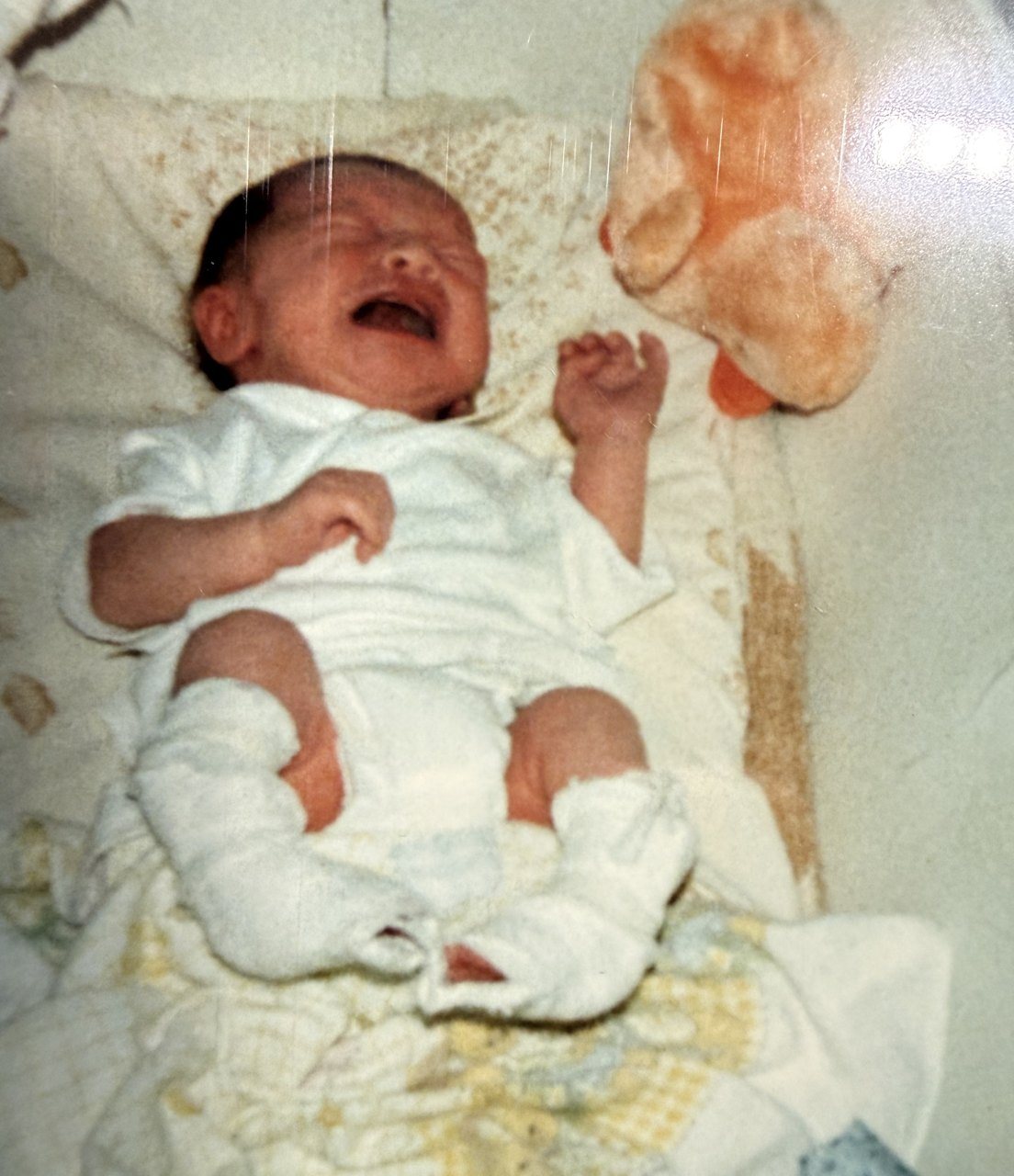
I can show what that looks like from my own file. The note from my operation at four months old describes my Achilles and the long tendons that bend the toes being lengthened, and the posterior tibial tendon being released from where it attaches. That is lengthening and releasing, which is a different operation from a transfer, even though a parent reading the note in a hurry could easily take one for the other.
What I cannot tell you from my own records is whether anything was transferred at my second operation, at almost three, because I do not have that level of detail for it. That is precisely the gap a copy of the operative note closes, and forty years later I still do not have it.
The imbalance it is correcting
In a treated clubfoot (CTEV) the muscles pulling the foot inward are often stronger than those pulling it outward: the peroneals, on the outside of the shin, having developed at a disadvantage. At rest that does not show. During walking, running or anything requiring push-off, the stronger inward pull wins and the foot drifts.
Parents usually notice it as a child whose foot looks fine standing still and turns in when they run. That specific pattern is what a transfer is for, and it is why the assessment involves watching a child move instead of only examining the foot on a couch.
A foot that looks fine standing and turns in when running is describing a muscle problem, not a shape problem.
People also ask
Tendon transfer surgery
What is a tendon transfer in clubfoot?
Why is it done?
Does it mean the casting failed?
Does the foot get weaker?
Will my child still need the brace afterwards?
Why is the surgeon waiting instead of operating now?
Sources
