Adult Clubfoot Running: Pace, Pain, Progress
Adult Clubfoot Life Post
Adult Clubfoot Running: Pace, Pain, Progress
Adult clubfoot running is not about pretending your feet are normal. It is about understanding pace, pain, progress, surfaces, shoes, training load, and recovery through the reality of a foot and ankle that were built differently from the start.
For some adults with clubfoot, running is possible. For others, it may not be worth the cost, or it may need to look more like run-walk intervals, short efforts, treadmill work, military test prep, fitness maintenance, or simply having enough confidence to run with your kids.
The mistake is assuming there is only one answer. Adult clubfoot running is not a universal yes or no. It depends on anatomy, treatment history, pain pattern, surgery history, stiffness, arthritis, strength, shoes, surfaces, and how honestly you manage load.
This post explains how to think about running with adult clubfoot without letting pace culture, ego, or fear make the decision for you.
Quick Answer
Some adults with clubfoot can run
But the plan has to respect the actual foot, not a generic runner with normal motion, normal push-off, and normal recovery.
Progress Reframe
Pace is not the only metric
Progress may mean less next-day pain, better consistency, fewer flare cycles, improved confidence, or more life outside the run.
Training Reality
Load matters more than ego
Weekly mileage, job demands, hard floors, shoes, hills, recovery, and daily life all count toward what the foot has to absorb.
Start Here
If running causes sharp pain, new swelling, skin breakdown, new deformity, or pain that changes how you walk, stop treating it like ordinary soreness and get checked by a qualified clinician.
Part Of
This post belongs inside the adult running and gait cluster with Running With Clubfoot, Adult Clubfoot Gait Compensation Hub, and Limited Dorsiflexion and Clubfoot Running.
Important: This post shares lived experience and education only. It is not medical advice, physical therapy, orthotic guidance, individualized training prescription, or clearance to run. If you have worsening pain, arthritis, prior fusion, major surgery history, skin breakdown, instability, or new symptoms, talk with a qualified clinician before starting or changing a running plan.
Jump To
Can adults run? | Pace | Training load | Surfaces | Shoes | Pain signals | Next-day test | Strength | Cross-training | When to stop | Lived experience | Related posts | External resources | FAQ | Quick links
Can You Run With Adult Clubfoot?
Some adults with clubfoot run at some level. That may mean regular 5Ks, treadmill runs, military fitness tests, trail hiking with short jogs, run-walk intervals, or simply being able to run across a parking lot without fear.
But running with adult clubfoot is not the same as running with a typical foot. The foot may be stiffer. Push-off may be limited. Calf strength may be asymmetrical. Prior surgery may change joint motion. The shoe fit may be harder. Recovery may cost more.
The real question is not only “can I run?” It is:
- What does running cost my body?
- Does pain settle or escalate?
- Can I recover between runs?
- Do I still function at work and home afterward?
- Does running improve my life, or does it steal the rest of it?
For the broad overview, read Running With Clubfoot.
Pace Is Different With Adult Clubfoot
Everything about adult clubfoot running can look wrong to a typical runner. The gait may be different. The stride may be shorter. The effort may be higher. The foot may not roll through normally. Push-off may come from somewhere else. The calf may not contribute the way a normal calf does.
That means pace cannot be judged only by the number on a watch. A pace that looks easy to someone else may feel like a much faster effort inside a clubfoot body.
A normal runner may look relaxed at a speed where an adult with clubfoot is already working harder because every step requires more compensation. That does not mean the clubfoot runner is failing. It means the mechanical cost is different.
Better progress metrics may include:
- less pain the next morning
- more consistent weekly movement
- less limping after runs
- better recovery between runs
- less fear around movement
- more control on hills or turns
- stronger aerobic fitness without constant flare cycles
Pacing Adult Clubfoot Running: Load, Not Ego
Running culture loves numbers: mileage, pace, splits, personal records, streaks, and weekly totals. For adult clubfoot running, the more important metric is total load — what your feet, ankles, knees, hips, and recovery system actually had to absorb.
Start Lower
Lower than you think
A plan built for a neutral runner may be too aggressive for a surgically altered, stiff, or scarred clubfoot. Short run-walk intervals may be the smarter start.
Build Slowly
Repeat weeks when needed
There is nothing wrong with holding the same mileage for several weeks if the feet are overloaded. Consistency beats a hero week followed by forced rest.
Count Everything
Workload is workload
Your feet do not care whether the load came from running, long shifts, standing on concrete, family errands, yard work, or training. It all counts.
A “light run day” after a ten-hour shift on hard floors may not be light. A short hill route may be harder than a longer flat treadmill run. A slow run on tired legs may cost more than a faster run on a recovered body.
Choosing Surfaces and Routes With Clubfoot
Surfaces can make or break adult clubfoot running. The same distance can feel completely different on a treadmill, track, soft path, tilted sidewalk, crowned road, gravel shoulder, or uneven trail.
- Tracks can be predictable, but repeated curves may irritate one side if you always run the same direction.
- Treadmills can control pace and surface, but they may change stride mechanics for some people.
- Smooth paths can be forgiving if they are level and not heavily cambered.
- Crowned roads can load one side differently over and over.
- Tilted sidewalks can quietly irritate ankles, knees, hips, and the outside of the foot.
- Trails may be enjoyable later, but uneven terrain demands more stabilization.
- Hills are a tool, not a default setting.
Many adults with clubfoot do better starting on flatter, predictable surfaces before adding hills, trails, uneven ground, or speed work.
Shoes for Adult Clubfoot Running
Running magnifies every shoe issue. A daily shoe that feels fine for errands may fail during repeated impact, swelling, fatigue, and higher forces.
Adults with clubfoot may need to think about:
- heel stability
- enough depth for orthotics or foot shape
- enough width where the clubfoot is shaped differently
- midsole firmness
- rocker shape
- pressure over bony areas
- how the shoe feels after several miles, not just in the store
- whether the shoe supports the actual gait instead of forcing a theoretical one
Many adult clubfoot runners do better in slightly more supportive models instead of the lightest, most flexible shoes. That is not a rule for everyone, but it is a common pattern worth exploring with a clinician, shoe specialist, or orthotist who understands your foot.
For the full footwear context, read Adult Clubfoot Shoes and Orthotics.
Pain Signals in Adult Clubfoot Running
Pain is part of the picture for many adults with clubfoot, but not all pain means the same thing. Learning the difference between normal training fatigue, familiar stiffness, and a real warning sign is a major part of running with clubfoot.
Useful questions include:
- Is the pain familiar or new?
- Is it dull soreness or sharp pain?
- Does it change how I walk?
- Does it settle after rest, or build day after day?
- Is there swelling, redness, warmth, pressure, or skin breakdown?
- Does the pain show up in the foot, ankle, knee, hip, back, or opposite side?
- Does the same pain happen after the same surface, shoe, hill, or distance?
If pain is becoming a pattern, read Adult Clubfoot Pain by Location and Adult Clubfoot Pain Flares and Relief.
The Next-Day Test
One of the simplest adult clubfoot running checks is the next-day test.
How do your feet feel the next morning?
- Mild soreness that warms up and fades may be normal training stress.
- Sharp pain, new swelling, worsening stiffness, or difficulty walking is a signal to change something.
- Pain that carries into several days may mean the load was too high.
- A limp after every run is not something to ignore.
The next-day test is not a diagnosis. It is a practical signal. If the body is not recovering between runs, the plan is too expensive.
Strength Work for Clubfoot Runners
Adult clubfoot running usually works best when running is not the only thing you do. Strength work can support the system around the foot, especially when the foot itself has limited motion or altered mechanics.
Depending on your history and clinician guidance, strength work may focus on:
- calf strength within available motion
- hip strength to reduce collapse and compensation
- glute strength for stability
- balance and single-leg control
- foot and ankle control where motion exists
- core strength for better whole-body mechanics
- gradual load tolerance instead of sudden jumps
If you have hardware, fusion, major surgical history, severe stiffness, or pain that changes gait, get a tailored plan instead of copying a generic runner strength routine.
Cross-Training Without Calling It Quitting
Cross-training is not failure. It is load management.
Cycling, rowing, swimming, elliptical work, walking, incline walking, or strength circuits may help maintain fitness while reducing impact load. On high-pain weeks, swapping a run for lower-impact conditioning may be the thing that keeps the whole month alive.
The goal is not to prove every fitness gain has to come from pounding the same joints. The goal is building a body that can keep moving over time.
When Running Should Pause Completely
Some symptoms should stop the run and trigger medical follow-up.
- sudden, severe pain in the foot, ankle, calf, knee, hip, or leg
- new swelling, redness, warmth, or significant tenderness
- open wounds, skin breakdown, or pressure sores
- new deformity or visible change in foot position
- inability to bear weight normally
- pain that changes gait and does not settle
- new instability, catching, locking, or repeated stumbling
- pain after surgery that feels different from your normal pattern
When in doubt, stop running and get checked. You deserve to protect the feet that already went through so much treatment work.
What Adult Clubfoot Running Looks Like for Me
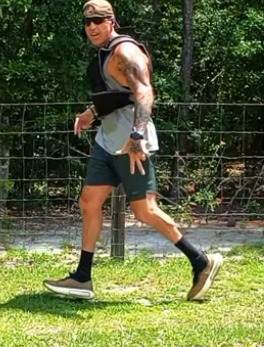
In my life, “runner” and “adult clubfoot” live in the same body. That means I do not evaluate running the way a typical runner does.
My gait, stride, push-off, and effort are different. What looks slow on paper can feel much harder inside my mechanics. There are times where a typical runner may look like they are cruising while my body is spending far more energy to move at a slower pace.
That does not make the run meaningless. It makes the progress different.
For me, progress can be a longer streak without a flare. Better recovery after a run. Less fear of movement. More control over pace. A better shoe setup. A route that lets me train without destroying the next day. A week where running adds to my life instead of draining everything else.
That is the standard I care about more now: not whether my running looks normal, but whether it is useful, sustainable, and honest.
For more of the lived-experience background, read Adult Bilateral Clubfoot Runner.
Helpful Resources on Exercise and Pain
These external resources are not clubfoot-specific running plans. They are broader references on activity, pain, pacing, and safe exercise conversations that can help you ask better questions with your own clinician.
- CDC: Adult physical activity guidelines
- Arthritis Foundation: What it really means to pace yourself
- Mayo Clinic: Exercise intensity and pacing basics
- AAOS OrthoInfo: Foot and ankle conditioning program
- AAOS OrthoInfo: Clubfoot overview
Authority takeaway: running with adult clubfoot should be treated as a load-management problem, not only a motivation problem. Pace, surfaces, shoes, pain response, strength, and recovery all matter.
Common Questions About Adult Clubfoot Running
Can adults with clubfoot run?
Some adults with clubfoot can run, but the answer depends on the person’s anatomy, surgery history, pain pattern, arthritis, stiffness, strength, shoes, orthotics, and medical guidance. Running should be built around the individual foot, not a generic running plan.
Why is pace different for adult clubfoot runners?
Pace may be different because adult clubfoot can involve stiffness, limited dorsiflexion, shorter stride mechanics, altered push-off, calf asymmetry, prior surgery, and compensation patterns that change how much effort each speed costs.
What is the safest way to start running with adult clubfoot?
A safer start often means medical clearance when appropriate, short run-walk intervals, flat and predictable surfaces, conservative weekly load increases, supportive shoes, pain tracking, and repeat weeks instead of forcing mileage jumps.
What pain means adults with clubfoot should back off running?
Adults with clubfoot should back off running when pain is sharp, worsening, changing gait, causing new swelling, creating skin breakdown, lasting into the next day, or making normal walking difficult.
What surfaces are best for adult clubfoot running?
Many adults with clubfoot do better starting on flatter, predictable surfaces such as a track, treadmill, or smooth path. Tilted sidewalks, crowned roads, uneven trails, and aggressive hills can increase load and compensation.
Do shoes matter more for adult clubfoot running?
Yes. Running magnifies shoe problems. Adults with clubfoot may need stable heel support, enough depth and width, orthotic compatibility, pressure control, and a shoe that works after fatigue and swelling build.
Can adults run after clubfoot surgery?
Some adults run after clubfoot surgery, but it depends on the procedure, healing, joint motion, pain, strength, surgeon guidance, and individual mechanics. Running after fusion or major reconstruction requires especially careful expectations.
Does slow running mean adult clubfoot running is failing?
No. For adult clubfoot runners, progress may mean better consistency, less next-day pain, improved recovery, more confidence, better endurance, or more control, not only faster pace.
Should adults with clubfoot cross-train?
Cross-training can help many adult clubfoot runners maintain fitness while reducing impact load. Cycling, swimming, rowing, elliptical work, and strength training may help when they fit the person’s medical situation.
Is this adult clubfoot running post medical advice?
No. This post is educational and lived-experience based. It is not medical advice, physical therapy, orthotic guidance, training prescription, or a substitute for evaluation by a qualified clinician.
Quick Path Links
- Clubfoot Article Archive
- Clubfoot Resource Hubs
- Adult Clubfoot Life Hub
- Adult Clubfoot Running: Pace, Pain, Progress
- Running With Clubfoot
- Adult Bilateral Clubfoot Runner
- Adult Clubfoot Gait Compensation Hub
- Limited Dorsiflexion and Clubfoot Running
- Push-Off With Clubfoot While Running
- Clubfoot Compensation Patterns While Running
- Clubfoot Calf Atrophy and Running
- Adult Clubfoot Pain Flares and Relief
- Adult Clubfoot Shoes and Orthotics
- Adult Clubfoot Pain by Location
- Adult Clubfoot Work: Standing, Shifts, and Survival
- Running After Clubfoot Surgery
- Running With Clubfoot After Arthrodesis
- Adult Clubfoot Surgery
- Featured Clubfoot Videos and Resources
- Clubfoot FAQ
- Clubfoot Editorial Policy
Next Step After Running Progress
Once pace, pain, and progress start making more sense, the next questions are usually gait mechanics, shoes, pain flares, and whether surgery history changes what running can realistically look like.
Continue with Adult Clubfoot Gait Compensation Hub, Adult Clubfoot Shoes and Orthotics, and Running After Clubfoot Surgery.
Critical Disclaimer
This post shares lived experience and education only. It is not medical advice, physical therapy, orthotic guidance, individualized training prescription, surgical guidance, injury diagnosis, or clearance to run.
If running worsens pain, changes gait, causes swelling, creates skin breakdown, triggers instability, or reduces normal function, stop and consult a qualified clinician. For site standards, see the Clubfoot Editorial Policy.