Free app · iPhone and Android

Clubfoot Forward is on the App Store and Google Play. For parents in the middle of treatment and adults who never stopped having it. Free, works with no signal, and stays on your phone.

What the app does

Adult Clubfoot Life

Why Adult Clubfoot Feels Worse at Work

Why the same body copes on Saturday and not on Tuesday

People assume work hurts because it involves more walking. Usually it involves less. What work actually does is remove variation, remove choice, and put you on surfaces chosen for hygiene and durability and not for feet. Tell it what your job is made of and it will name the mechanism, instead of the symptom.

What is your working day made of?

Pick everything that applies. Most jobs contain three or four of these, and the combination decides which mechanism dominates.

Your job

1
The calf pump stops
Walking alternates muscle contraction and relaxation, which pushes blood back up the leg. Standing still switches that off. Fluid pools, tissue pressure rises, and the same foot that manages a four-mile walk struggles with forty minutes at a counter. This is why standing is genuinely harder than walking, not merely feeling that way.
The single biggest difference between a working day and a day off, and the least intuitive.
The main one
2
The same tissue, unrelieved
Walking rotates pressure across different parts of the foot with every step, so no single area carries load continuously. Standing holds one contact pattern in place for hours. In a high, rigid arch that pattern is already concentrated onto the heel and the ball, and now it never lets up.
Explains why the pain is usually in one specific spot and not the whole foot.
Concentration
3
Footwear you did not choose
Safety boots, non-slip shoes, uniform footwear and clinical clogs are selected for grip, protection and washability. None of those criteria includes accommodating an unusual foot shape, and unlike your own shoes you cannot swap them at lunchtime when something starts complaining.
Usually the most fixable item on this list, via insoles or a documented request.
Most fixable
4
A floor that gives nothing back
Concrete, tile and epoxy do not deform. Every bit of force you put down returns up the leg, and a rigid foot cannot spread that impact across a broad contact area the way a mobile one does. Eight hours of small, unabsorbed impacts adds up to more than a run does.
Anti-fatigue matting addresses this directly and is a reasonable thing to ask for.
Surface
5
The micro-adjustments you normally make, gone
Outside work you constantly self-manage without noticing: shifting weight, sitting for a minute, slowing down, taking the stairs differently on a bad day. Those adjustments are doing far more than people realize. A pace set by a line or a rotation removes almost all of them.
The foot has not changed. The management system around it has been switched off.
Loss of control
6
Recovery that never arrives
A single long day is absorbable. Four in a row is a different demand, because the tissue never gets back to baseline before the next one starts. Shift work compounds it: broken sleep reduces recovery capacity independently of what the foot did.
Explains why the fourth shift is disproportionately worse than the first, instead of merely cumulative.
Why day four
7
Heat, moisture and friction
Enclosed work footwear worn for ten hours gets warm and damp. Softened skin has a fraction of its usual resistance to rubbing, so a pressure point that would take weeks to break down does it in days. It is the least dramatic mechanism here and the one that most often ends in time off.
Sock choice and a mid-shift change address this for almost nothing.
Underrated

The comparison that confuses everybody

A runner with clubfoot (talipes equinovarus, CTEV) might cover ten miles on Sunday and feel fine on Monday, then be wrecked by Wednesday after three shifts that involved barely two miles of walking each. The distance says one thing and the foot says another, and the foot is right.

Intensity and duration are different demands. Running is high intensity, short, and moving. Load rotates, circulation works, and it is over in an hour. A shift is low intensity, very long, and largely static. For tissue, the second is harder, and no fitness measure captures it.

RunningAn hour. Load rotates between tissues. Circulation working throughout.
A shiftTen hours. One contact pattern, hard floor, calf pump largely off.
The conclusionBeing unfit is rarely the explanation. Being differently loaded is.

You are not unfit. You are doing the harder of the two things, and nobody counts it as exercise.

Naming it accurately at work

Understanding the mechanism changes what you can ask for. “My foot hurts” invites sympathy and no action. “I do better on shifts where I am moving than on static ones, and a mat at that station would help” names a mechanism and proposes something small and specific.

That framing gets adjustments agreed far more often, because it asks for a change and not for allowance. What to actually put in place is a separate list.

People also ask

Why work makes clubfoot worse

Why does adult clubfoot feel worse at work?
Because work removes variation and choice. Standing still switches off the calf pump, hard floors return every impact, required footwear cannot be swapped, and the small self-adjustments you make everywhere else are unavailable.
Why is standing harder than walking?
Walking alternates muscle contraction and relaxation, which pushes blood back up the leg and rotates pressure across the foot. Standing does neither, so fluid pools and one contact pattern carries load continuously.
I run without trouble but work wrecks me. Why?
Intensity and duration are different demands. Running is high intensity, short and moving; a shift is low intensity, very long and largely static. For tissue the second is harder, and no fitness measure captures it.
Why is the fourth shift so much worse than the first?
Because tissue never returns to baseline between them. Consecutive long days compound, and shift work adds broken sleep, which reduces recovery capacity independently of what the foot did.
Does required work footwear really matter that much?
Yes. Safety and hygiene footwear is chosen for grip, protection and washability, none of which accommodates an unusual foot shape, and unlike your own shoes you cannot change it partway through the day.
How should I raise it with my employer?
Name the mechanism and propose something specific. Better on moving shifts than static ones, and a mat at that station would help. Asking for a change works better than asking for allowance.
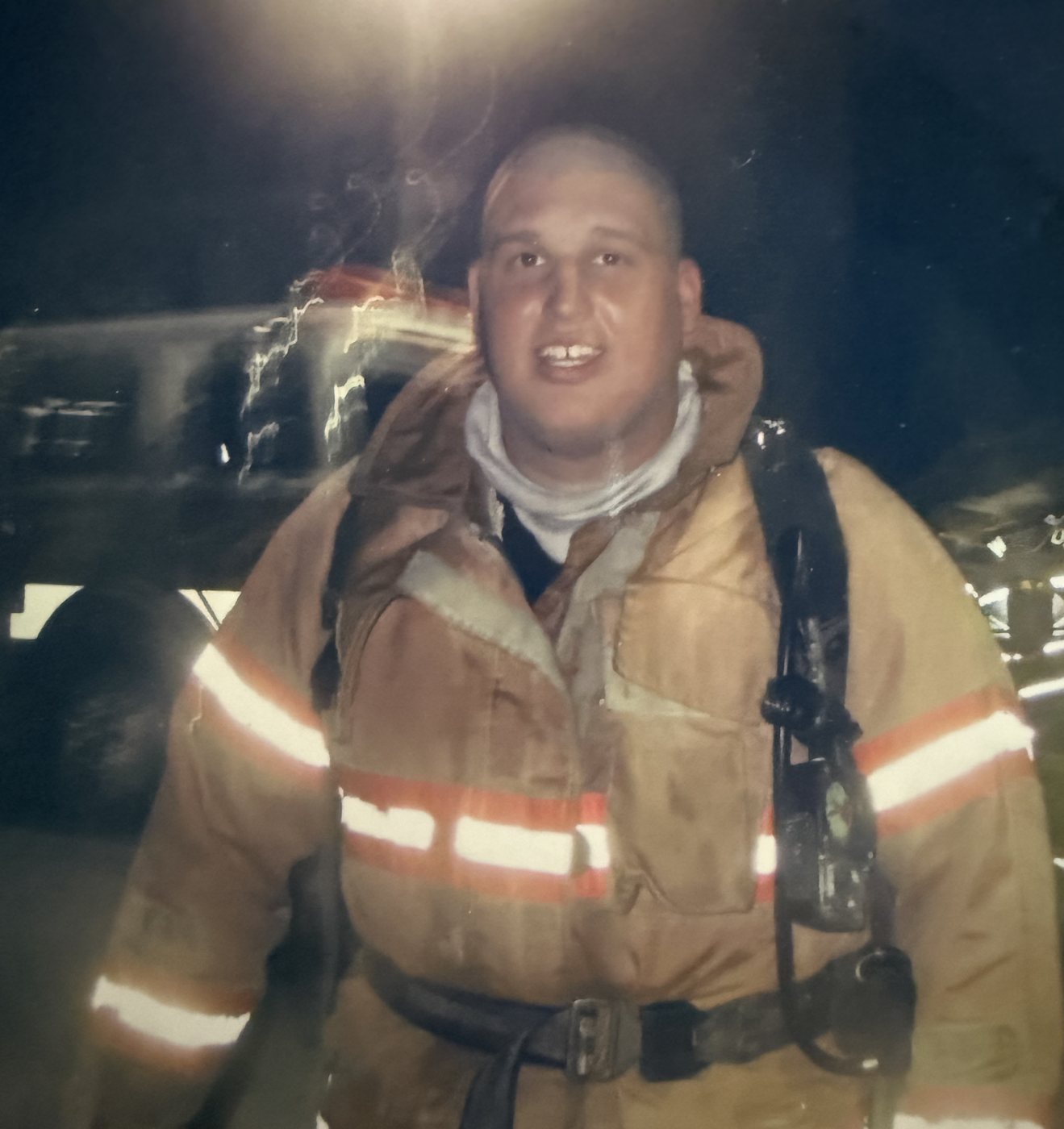
Heath in a firefighter turnout coat and harness, at night
About 2003 to 04 · the authorFirefighting straight out of high school, in turnout gear, about two years after my left hindfoot was fused. Physical work on that foot started well before the Army did.

Sources

Where this comes from

What I actually wear for a long shift, and why, is on video . Watch it on YouTube, or see the rest of the channel.

Compiled by Heath, founder of Clubfoot Forward, an adult with bilateral clubfoot. Explains the mechanisms behind work-related foot pain; it is not medical advice, not an occupational health assessment, and workplace safety requirements always take precedence over anything here. Reviewed September 2026. See the editorial policy.

Hi, I’m Heath

Leave a Reply

Your email address will not be published. Required fields are marked *