
Mine came back slowly enough that nobody called it anything
Recurrence is usually described as an event: the foot relapsed, it was treated, here is what happened. My left foot did not do that. It gave ground over years, in increments too small to name, while I carried on being a person who could do everything. Until the accumulated total was a triple arthrodesis. This is that arc, from the inside.

Five stages, told in order. Open whichever matches where you or your child are now. The later ones are not a prediction, they are one person’s route.
Childhood, the first return The only stage where anyone used the word relapse. Stage 12 min
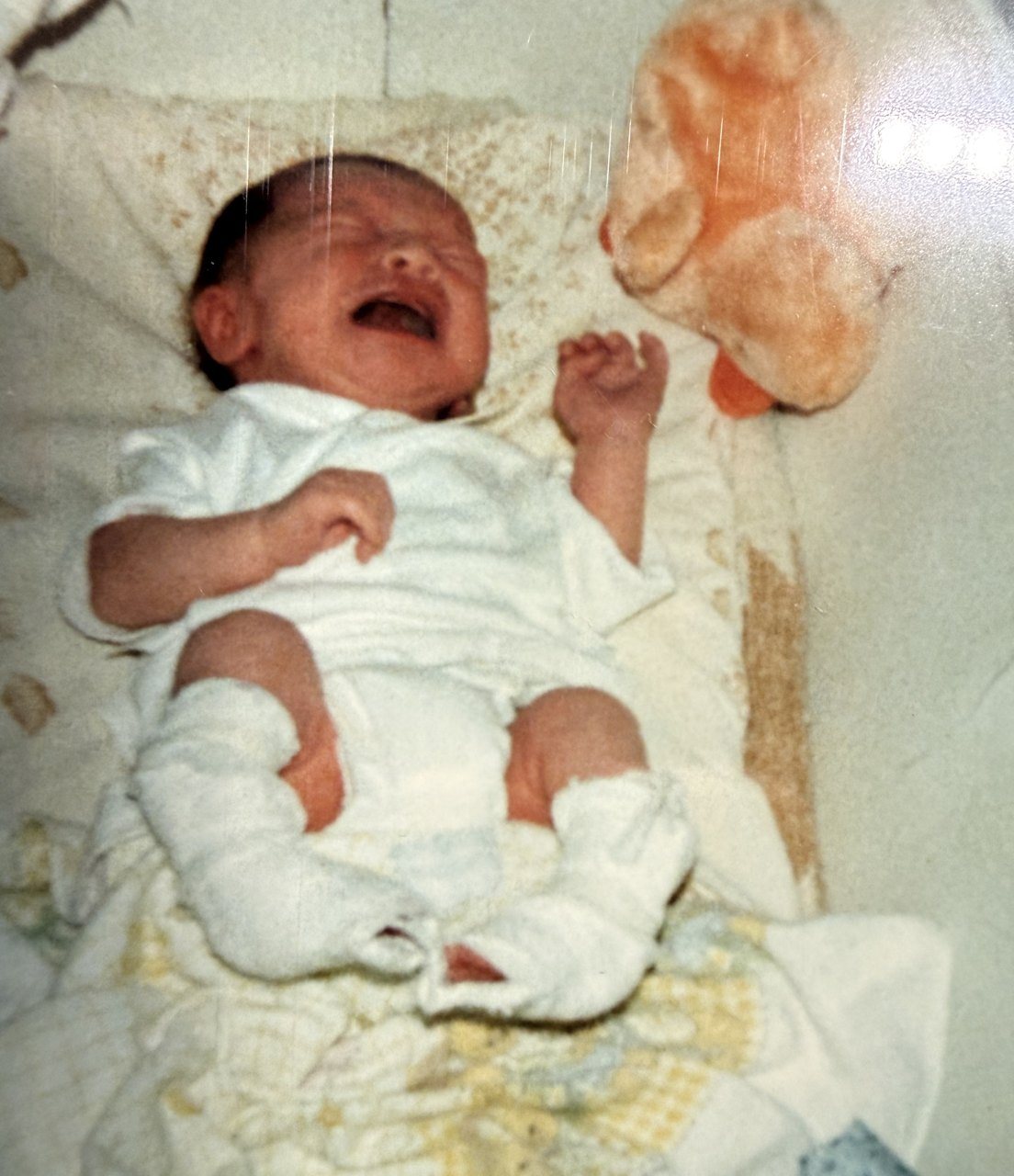
I was treated in the surgical era: casts from birth, then an extensive release on both feet at four months, because that was the standard where and when I was born. The right foot settled and behaved. The left one drifted back, needed further intervention, and has been the worse side ever since.
This is the textbook picture of relapse: childhood, identifiable, treated. It matches what the literature describes, and it is the version parents are warned about. Everything after this point is the part nobody warned anybody about.
Teens and twenties, the good years Full function, and no clue that anything was accumulating. Stage 22 min
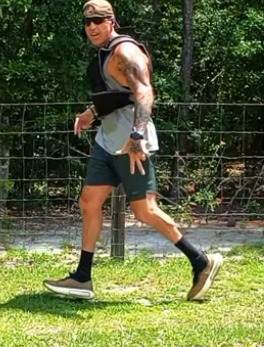
I served in the military on these feet, ran, carried weight, did everything asked of me. Nothing hurt in a way that registered as information. If anyone had asked whether my clubfoot (club foot, or talipes equinovarus) was a problem, I would have said no, and I would have meant it.
What I understand now is that a foot can be fully functional and mechanically compromised at the same time. The left hindfoot was moving less than the right, the left calf was doing less work, and the joints picking up that slack were doing it every single day. None of that produces a symptom worth mentioning at twenty-two. All of it produces a bill.
If there is one practical thing in this page, it is that. See when to get assessed. A single set of measurements in your twenties costs almost nothing and is impossible to reconstruct later.
Thirties (the arithmetic changes) Recovery lengthens first. Pain arrives afterwards. Stage 32 min
The first real change was not pain, it was recovery time. Things I used to shrug off started taking a day, then two. Long days on my feet had a cost attached where they previously had not. Nothing hurt during; everything hurt afterwards, later, for longer.
That progression, recovery lengthening before pain appears, seems to be common and it is almost never described to people. It is the earliest genuinely actionable signal, and it arrives years before anything that would send you to a doctor. I did not act on it, because a foot that only complains on Tuesdays does not feel like a medical problem.
When it stopped being deniable The point where the options had already narrowed. Stage 42 min
By the time I was in front of a foot and ankle surgeon, the hindfoot was arthritic, stiff and painful in a way that no longer settled with rest. The conversation was not about restoring anything. It was about which trade I wanted.
That is worth stating plainly for anyone reading this in stage three: the treatments available to you depend on when you arrive. Earlier in that arc, the options include strengthening, footwear, orthotics and smaller procedures. Later, the realistic options are fewer and larger. Nothing about the deterioration was fast, and by the time it was obvious, the early interventions had aged out.
After the fusion, where I actually am A good outcome, honestly described, including what it cost. Stage 52 min
I had a triple arthrodesis on the left. The pain that drove me there is largely gone, the foot is a stable platform, and I run distance on it. By any reasonable measure that is a good result and I would have it done again.
What it cost is motion I do not get back, and a foot that is noticeably worse on uneven ground than on a path. The joints next to the fusion now do work they were not designed for, and that is a known long-term consideration, not a surprise. I write about this so that people arriving at the same decision have something more honest than a leaflet.
Three words that get used interchangeably
The vocabulary is genuinely muddled, including among clinicians, and it matters because the words carry different implications.
Relapse usually means a corrected foot losing its correction, typically in childhood, typically identifiable as an event. Residual deformity means the part that was never fully corrected in the first place, not a return, but a remainder. Recurrence gets used for both, and often for the slow adult decline that is really neither.
What I had was probably a childhood relapse, incompletely corrected, leaving residual deformity that then loaded the foot badly through childhood and into my teens. Calling that recurrence is not wrong, and it is imprecise enough to hide the actual mechanism, which was ordinary wear on a joint that was never quite right.
What I would tell my younger self
Get a baseline in your twenties, while everything is fine. Range of motion in degrees, calf circumference, a set of weight-bearing images. It takes one appointment and it makes every later conversation a comparison rather than a guess.
Treat lengthening recovery as information, not as age. It is the earliest signal available and the easiest to dismiss.
And do not let a foot that works convince you it is not compensating. Full function and quiet mechanical decline coexist comfortably for decades. That is precisely the trap. Mine worked right up until it did not.
Nothing about my foot failed suddenly. It just ran out of margin, slowly, while I was not counting.
People also ask
Recurrence over time
What is the first sign of decline in an adult?
What is the difference between relapse, recurrence and residual deformity?
Can a foot be fully functional and still deteriorating?
Does arriving late change the treatment?
What should I do if my foot works fine now?
Can clubfoot come back gradually and not suddenly?
Sources