Long-Term Adult Clubfoot Outcome
Adult Clubfoot Outcome: 10, 20, and 30 Years Later
Adult clubfoot outcome is not measured by whether the foot becomes normal. The real question is whether the foot remains stable, plantigrade, usable, and durable enough to support adult life across work, walking, pain, fatigue, shoes, activity, surgery history, and compensation.
This page documents a real long-term adult clubfoot outcome across a 30-year span: extensive childhood clubfoot surgery, structural relapse, triple arthrodesis, military service, chronic stiffness, pain management, gait compensation, and ongoing adult function.
It is built for people searching phrases like adult clubfoot outcome, clubfoot 10 years later, clubfoot 20 years later, clubfoot 30 years later, long term clubfoot outcome, adult clubfoot surgery outcome, and triple arthrodesis for clubfoot outcome.
The functional reality is simple: an adult clubfoot can be anatomically abnormal, surgically altered, stiff, painful at times, and still highly functional. A successful outcome does not always look normal. Sometimes it looks like a durable structure that keeps working despite permanent mechanical limits.
Plain-Language Summary
Outcome means durability, not perfection
A 30-year clubfoot outcome should be judged by real-life durability: walking, work, military service, stairs, pain flares, recovery, shoes, running, and whether the structure keeps supporting life.
Adult Truth
High function can coexist with real damage
Adult clubfoot can support demanding activity while still carrying stiffness, arthritis risk, altered loading, limited push-off, and compensation up the kinetic chain.
E-E-A-T Context
This is lived experience plus medical context
This page does not pretend one adult outcome predicts every case. It uses a real multi-decade case to explain what long-term clubfoot durability can look like under adult load.
Direct Answer
A good adult clubfoot outcome can still involve stiffness, pain, residual deformity, fusion, and compensation. The better question is whether the foot remains stable enough to support the life being asked of it.
Best Framing
Long-term success is not cosmetic symmetry. It is whether the foot can remain usable through decades of loading, even when the mechanics are abnormal and the cost of movement is higher.
Best first click: If you want the surgery-specific background, read Long-Term Effects of Childhood Clubfoot Surgery. If the fusion outcome is the main question, read Triple Arthrodesis for Clubfoot: Real Long-Term Outcome. If you need the larger adult map, return to the Adult Clubfoot Life Hub.
Jump To
Short answer | Why tracking matters | Outcome map | Baseline history | 10 years later | Military stress test | 20 years later | 30 years later | What stayed true | Parent takeaways | Adult takeaways | Evidence | FAQ | Quick path links
Short Answer: What Does Adult Clubfoot Outcome Really Mean?
Adult clubfoot outcome means how the treated or surgically altered foot performs after years of real use. That includes pain, stiffness, shoe tolerance, work capacity, gait, running, military service, surgery history, arthritis, balance, and whether the foot remains stable enough for daily life.
At 10 years, the question may be whether the surgical result is holding. At 20 years, the question becomes durability under adult load. At 30 years, the question becomes whether the entire kinetic chain has adapted well enough to keep functioning despite permanent structural limits.
The answer is not always clean. A foot can be successful and still be limited. It can be functional and still be painful. It can survive decades of hard use and still require careful management.
Why Long-Term Tracking Matters
Most clubfoot resources focus on diagnosis, casting, bracing, relapse, or childhood surgery. Those topics matter, but they do not answer the adult question: what happens after the treated foot has lived through work, sports, weight changes, aging, injury, military service, and millions of loading cycles?
That is why long-term tracking matters. A childhood correction can look successful early and still leave adult tradeoffs. Those tradeoffs may include stiffness, reduced dorsiflexion, altered loading, smaller calf size, residual deformity, joint degeneration, shoe problems, and compensation elsewhere in the body.
Long-term outcome is not a single X-ray or a single pain score. It is the practical record of whether the foot keeps working after the easy follow-up window is over.
Adult Clubfoot Outcome Map: Where This Page Fits
This page is the multi-decade outcome page. It connects surgery history, function, pain, gait, military service, arthrodesis, and long-term adult durability into one timeline.
Surgery History
If childhood surgery is the main issue
Start with Long-Term Effects of Childhood Clubfoot Surgery.
Fusion Outcome
If triple arthrodesis is the focus
Read Triple Arthrodesis for Clubfoot: Real Long-Term Outcome.
Timeline
If you need birth-to-adult context
Baseline Structural History
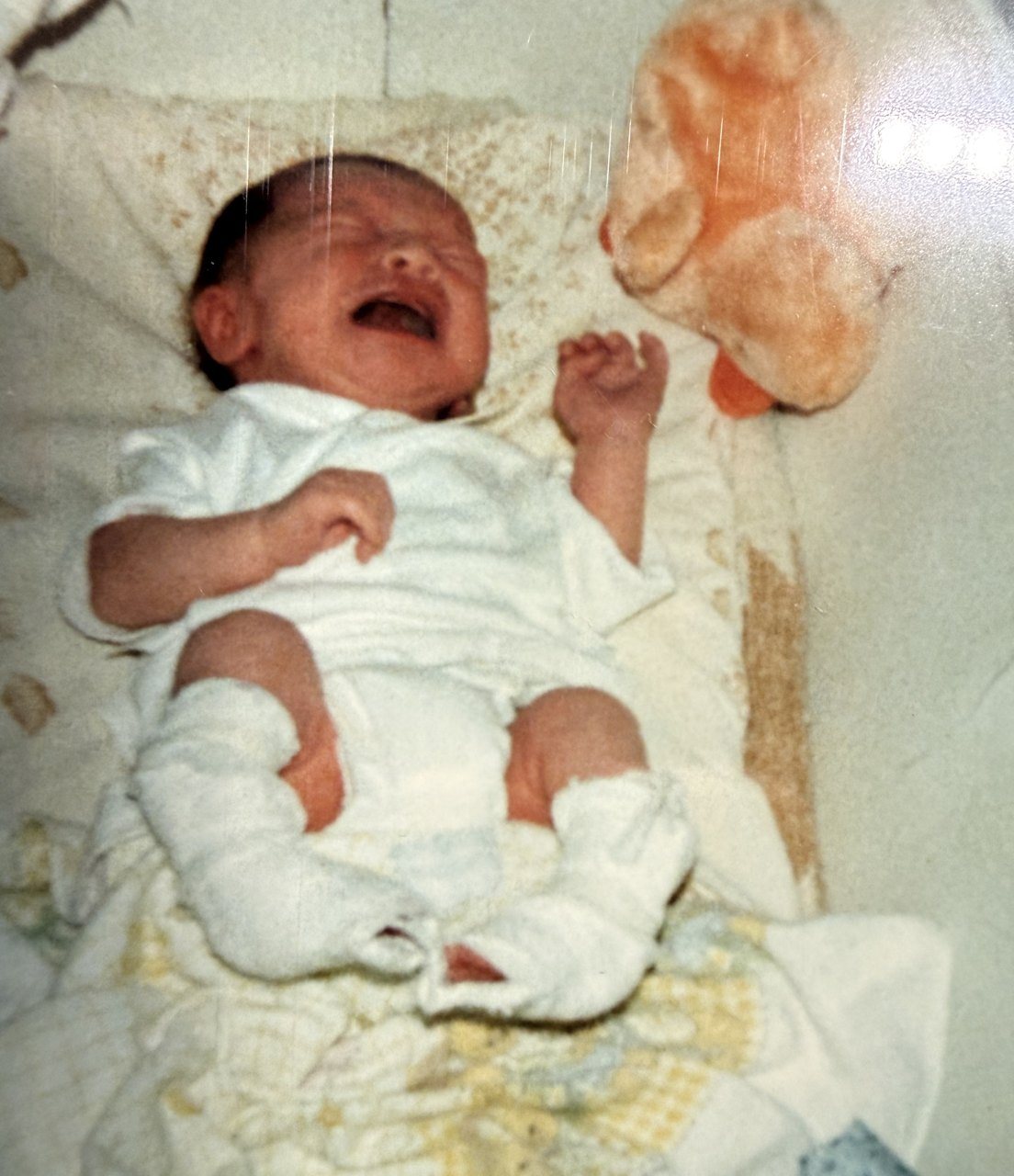
My baseline was severe bilateral congenital clubfoot treated with extensive open soft-tissue surgery in infancy. The early procedures improved alignment, but they did not create normal feet. They left permanent structural limits: scar tissue, stiffness, altered mechanics, reduced compliance, and clear differences between the two sides.
The left side became the more rigid and problematic side. It developed early structural recurrence and required additional open revision surgery in childhood. That matters because adult outcome is not only shaped by the original clubfoot. It is shaped by the full operative history, how the foot healed, how much motion remained, and how the body learned to compensate.
Even with fixed abnormalities, I adapted well enough to play youth sports and stay active. That is an important reality for parents: structural abnormality does not automatically eliminate function. But it also does not disappear. The same altered structure that functions well in youth may become more expensive to maintain under adult loading.
The Biomechanical Reframe
Long-term adult clubfoot function is not determined by birth severity alone.
It is shaped by treatment history, remaining motion, residual deformity, scar tissue, muscle development, footwear, pain tolerance, activity exposure, compensation, and how the foot handles repeated loading over decades.
10 Years Later: The First Real Outcome Window
The first major long-term window after my 2001 triple arthrodesis was not just about whether the surgery healed. It was about whether the fused hindfoot could become a usable adult structure.
For me, the fusion created a more stable base. It reduced the severe localized joint pain that had made the foot increasingly difficult to trust. It did not restore normal motion. It did not create a normal foot. But it changed the adult baseline from unstable and painful to rigid, stable, and usable.
That distinction matters. A fused clubfoot can be mechanically limited but functionally valuable. The tradeoff is that the motion has to come from somewhere else: ankle, knee, hip, back, opposite side, shoes, pacing, and recovery strategy.
Military Service as a Real-World Stress Test
Military service tested the outcome in a way ordinary clinical follow-up never could. It added prolonged standing, marching, load carriage, hard surfaces, field conditions, fatigue, boots, time pressure, and repeated physical stress without the luxury of building every day around the foot.
That experience proved two things at once. First, the altered clubfoot structure could support high-demand adult function. Second, the function was not free. It required compensation, recovery management, footwear tolerance, pain control, and a willingness to operate inside fixed mechanical boundaries.
This is the functional reality many adult clubfoot pages miss: “able to do it” and “able to do it without cost” are not the same thing.
What Military Service Proved and What It Cost
- Functional validation: The surgically altered bilateral clubfoot structure could tolerate high-demand, high-repetition adult loading.
- Durability over appearance: The outcome was not cosmetic normality. It was a stable enough platform to keep functioning under real pressure.
- Compensation exposure: The lack of normal hindfoot motion shifted work into the ankle, knee, hip, back, and opposite-side mechanics.
- Energy cost: High function required more effort, more recovery, and more deliberate management than a typical foot would require.
- Footwear reality: Military boots made fit, stiffness, pressure, and repeated loading part of the outcome story.
20 Years Later: Outcome Measured by Durability
At 20 years, the question changes. The issue is no longer whether a procedure reduced pain in the short term. The issue is whether the modified structure has survived decades of adult work, training, standing, walking, compensation, and fatigue.
This is where long-term outcome becomes more useful than early success language. A foot can be “corrected” in childhood and still become painful later. A fusion can be successful and still shift stress elsewhere. A person can remain active while also carrying structural consequences.
For me, the 20-year window confirmed that the fusion and the broader surgically altered structure were durable enough to support adult life, but only inside the reality of stiffness, compensation, and pain management.
The Definition of Long-Term Outcome
True long-term success is not a perfect X-ray, a normal-looking foot, or a temporary pain score.
It is whether the altered foot can keep supporting real adult life through work, fatigue, activity, aging, and the natural wear of repeated loading.
30 Years Later: Evaluating Cumulative Lifelong Function
By 30 years, the outcome is no longer about one surgery. It is about the whole system: the foot, ankle, knee, hip, back, footwear, activity choices, recovery habits, and the person living inside those mechanics.
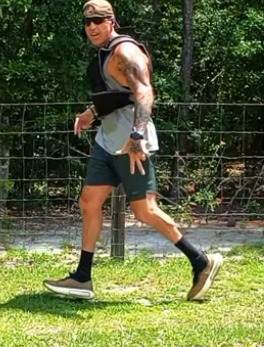
The mature outcome is not “normal.” It is a highly modified structure that remained functional enough to support a demanding life. That includes military service, running, work, parenting, chronic stiffness, pain flares, and a constant need to manage load intelligently.
The most honest summary is this: anatomically abnormal, mechanically limited, but distinctively functional.
What Stayed True Across Three Decades
- The foot never became normal: adult clubfoot success did not mean normal anatomy, normal motion, or symmetrical mechanics.
- Function mattered more than appearance: the practical standard was whether the foot could support work, activity, and daily life.
- Stiffness remained permanent: motion limits shaped walking, running, footwear, fatigue, and compensation.
- Compensation became lifelong: the rest of the kinetic chain had to help absorb what the foot could not do normally.
- Fusion was a tradeoff: triple arthrodesis improved stability and pain in one area while permanently reducing motion.
- Durability required management: shoes, pacing, recovery, pain tracking, and load decisions became part of the long-term outcome.
What Parents Should Take From This Outcome
This kind of adult outcome should not scare parents into thinking every child with clubfoot is headed for failure. That is not the lesson. The lesson is that early correction matters, but the story does not end when the casts come off or the child starts walking.
Children with clubfoot can grow into adults with strong function, sports participation, demanding work, military service, and meaningful physical lives. But parents should also understand that treated clubfoot may remain smaller, stiffer, weaker, or mechanically different. Long-term monitoring matters because growth, activity, shoes, pain, and recurrence can change the picture over time.
The goal is not fear. The goal is realistic confidence: treat early, brace seriously, monitor honestly, and understand that function can be excellent without the foot ever becoming normal.
What This Demands of Adults Living With Clubfoot
For adults, the value of a 30-year outcome is perspective. A successful adult clubfoot outcome can still include pain, stiffness, arthritis risk, surgery history, shoe limitations, and gait compensation. Those realities do not erase success. They define the maintenance plan.
Adults with clubfoot should stop measuring themselves against normal-foot mechanics. The better standard is whether the foot is stable, manageable, and durable enough for the life being built around it.
That means paying attention to pain by location, shoe failure, worsening stiffness, limp, fatigue, work tolerance, running tolerance, and when symptoms have crossed from normal-for-you into needing evaluation.
Evidence Snapshot
AAOS notes that the affected foot and leg in clubfoot may be smaller and that the calf may be thinner due to underdeveloped muscles. That supports the long-term reality that treated clubfoot often remains structurally different even when treatment works.
Adult clubfoot arthrodesis literature reports that operative treatment in adults previously treated for congenital clubfoot includes hindfoot arthrodesis and osteotomy procedures. Long-term surgically treated clubfoot literature also supports the presence of residual deformity, stiffness, and reduced physical function in some cases.
Long-term posteromedial release literature helps explain why older surgical pathways can leave motion limits decades later. This matters because adult outcome is shaped not only by clubfoot itself, but by the treatment era, surgical approach, remaining motion, and later loading history.
- AAOS OrthoInfo: Clubfoot overview
- PMC: Arthrodesis of the Foot or Ankle in Adult Patients with Congenital Clubfoot
- PubMed: Long-Term Results of Posteromedial Release in Idiopathic Clubfoot
- PMC: Long-Term Follow-Up of Children With a Surgically Treated Clubfoot
- PubMed: Long-Term Retrospective Study of Extensive Soft-Tissue Release
Authority takeaway: adult clubfoot outcome is best understood as a durability question. A foot can remain structurally abnormal while still supporting strong adult function, but stiffness, pain, arthrodesis, residual deformity, and compensation may remain part of the long-term reality.
Common Questions About Adult Clubfoot Outcome
What is a realistic adult clubfoot outcome 10, 20, and 30 years later?
A realistic adult clubfoot outcome can include strong function, work capacity, sports, or military-level durability while still having stiffness, pain flares, asymmetry, limited motion, residual deformity, gait compensation, or later surgery.
Does a good adult clubfoot outcome mean the foot becomes normal?
No. A good adult outcome does not require anatomical normality. Many adults remain structurally different but functional, stable, and capable when pain, footwear, loading, and compensation are managed well.
Can childhood clubfoot surgery affect adult function decades later?
Yes. Childhood surgery can improve alignment and function, but it may also leave stiffness, scar tissue, reduced motion, altered loading, residual deformity, or joint stress that becomes more important in adulthood.
Can an adult with clubfoot need triple arthrodesis later in life?
Some adults with previously treated clubfoot may later need hindfoot arthrodesis or other reconstructive procedures when pain, arthritis, instability, or structural breakdown becomes severe enough.
Can someone with adult clubfoot still have high physical function?
Yes. Some adults with clubfoot maintain high physical function, including demanding work, running, or military service. The tradeoff is often higher mechanical cost, more compensation, stricter footwear needs, and more deliberate recovery.
What should parents take from a 30-year adult clubfoot outcome?
Parents should take away that early correction matters, but long-term monitoring matters too. A child can become a highly functional adult while still having structural differences that need attention across growth and adulthood.
Quick Path Links
- Adult Clubfoot Life Hub
- Clubfoot Treatment Timeline: Birth to Adult Surgery
- Long-Term Effects of Childhood Clubfoot Surgery
- Triple Arthrodesis for Clubfoot: Real Long-Term Outcome
- How Clubfoot Recurrence Developed Over Time
- Adult Residual Clubfoot Deformity
- Revision Clubfoot Surgery in Adulthood
- Why Adult Clubfoot Pain Gets Worse Over Time
- Adult Clubfoot Operative History and Long-Term Function
- Adult Clubfoot Pain by Location
- Adult Clubfoot Shoes and Orthotics
- When Adults With Clubfoot Should See Ortho
- About Clubfoot Forward
- Clubfoot Editorial Policy
Return to the Full Structural Story
To understand how multi-decade outcomes are built, the next best step is the full child-to-adult medical timeline.
Go back to Clubfoot Treatment Timeline: Birth to Adult Surgery.
Critical Disclaimer
This resource page provides educational analysis, published-source context, and lived-experience mechanical framing only. It does not constitute medical care, clinical diagnosis, gait analysis, or individualized treatment planning.
Questions about joint function loss, worsening pain, degenerative arthritis, surgical planning, fusion, gait change, or long-term reconstruction should be discussed with a qualified orthopedic specialist, podiatrist, physical therapist, or adult lower-extremity reconstruction professional. For site-wide quality, editorial, and citation standards, review the Clubfoot Editorial Policy.