The clubfoot has a job, and it will do it somehow
Untreated clubfoot, written club foot by many families and recorded clinically as talipes equinovarus or CTEV, does not stop somebody walking. It makes them walk on a surface that was never designed to carry weight: the outer edge, and eventually the top of the foot. Everything that follows comes from that one substitution, compounding across a life. This is the progression, stage by stage, and it is the reason treatment is not optional.
The progression
What happens, and when
This describes genuinely untreated clubfoot, which in countries with established care is now rare.3 It is included because it is the honest answer to the question, and because it is still a living reality in much of the world.
The period when clubfoot correction is easiest
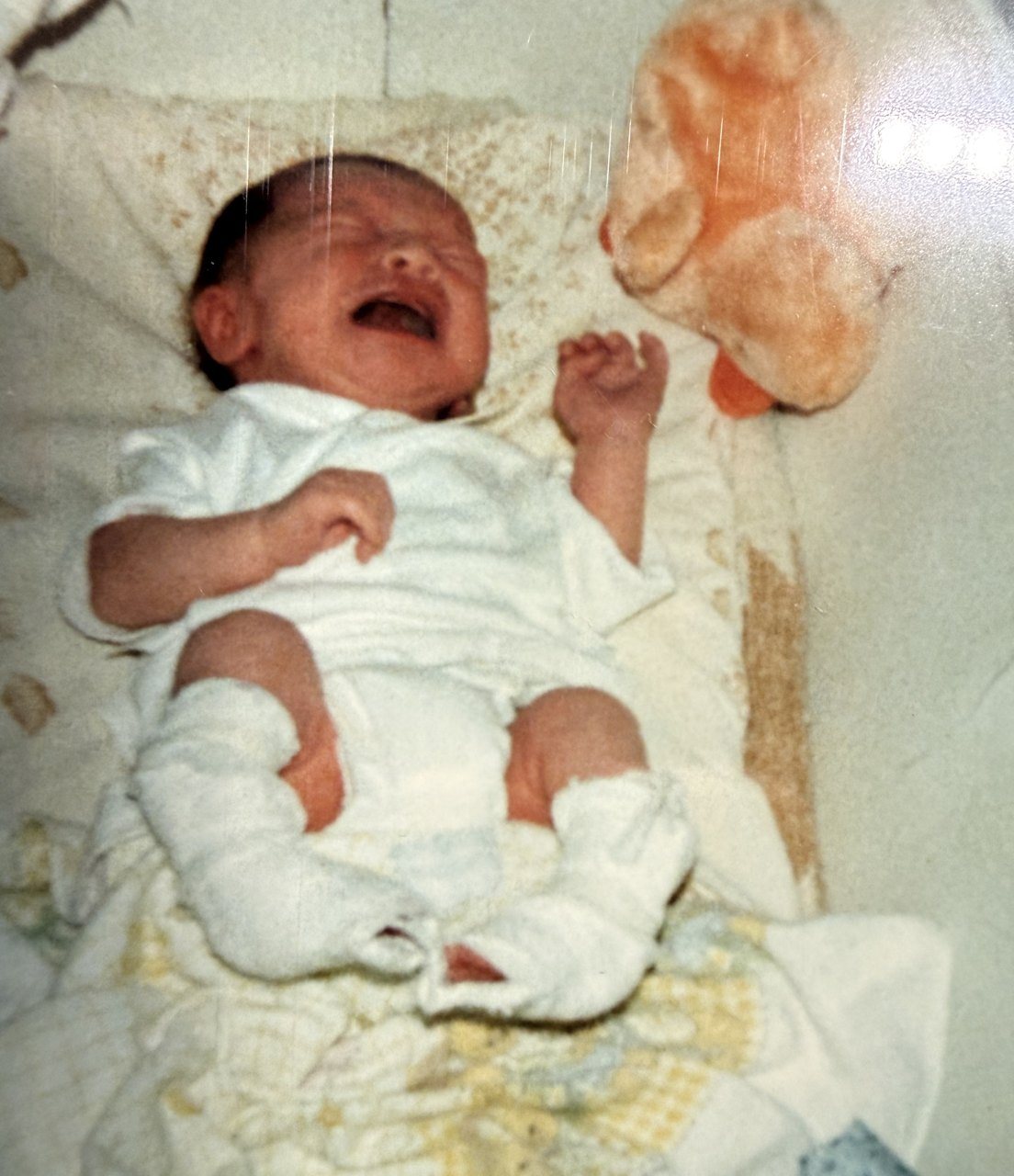
In the first weeks the tissues are at their most responsive and the bones are largely cartilage4. This is why Ponseti casting works so well and so quickly at this age.4 A series of casts over roughly a month or two can achieve what becomes progressively harder later.
Nothing visibly bad is happening yet. The foot is not painful and the baby is not distressed by it, which is exactly what makes delay feel reasonable. The cost of waiting is not paid now; it is paid in how much harder correction becomes.
Clubfoot weight goes somewhere it should not
A child with untreated clubfoot walks. That surprises people, and it is the root of the misunderstanding. Walking is not evidence that a foot is functioning correctly. Because the foot is turned inward and downward, weight goes onto the outer border instead of the sole.
Skin on the outer border is ordinary skin, not the thickened, padded tissue of a sole. Put a body’s weight through it thousands of times a day and it responds the only way it can: it thickens, then calluses, then breaks down. Meanwhile the bones, which are still forming, begin adapting to the position they are being loaded in.
Clubfoot callus, then skin breakdown
Through childhood the callus over the weight-bearing area becomes thick and hard, and beneath it a bursa often forms. Where the pressure is high enough and constant enough, the skin ulcerates. An open wound on the weight-bearing surface of a foot that must keep being walked on is a difficult problem to heal and prone to infection.
By this stage the bones have grown into the deformed position instead of merely being held there. Correction is still possible and it is no longer a matter of casting alone.3 It becomes reconstructive surgery on bones that have formed differently.
Rigid, and the shape is now structural
By adolescence the foot is typically rigid. The soft tissue has contracted permanently, the joint surfaces have adapted to their abnormal positions, and the bones themselves are the wrong shape, not merely the wrong orientation. What was a positional problem is now an architectural one.
Surgery at this stage is major reconstruction: osteotomies, fusions, sometimes external fixation, with long recoveries and results that are functional improvements, not normal feet. It works, and it is a completely different undertaking from a series of casts in infancy.
The full accumulated cost of untreated clubfoot
Adults with untreated clubfoot commonly live with chronic pain, ulceration over the weight-bearing area, marked limitation in how far they can walk, difficulty finding any footwear8 that fits, and arthritis in the foot, ankle, knee and hip from decades of abnormal loading. In many parts of the world it is also a barrier to employment, education and marriage.
Treatment at this stage is salvage: relieving pain and creating a foot that can bear weight on a plantar surface. That is a worthwhile goal and a long way from what a month of casting achieves in a newborn.
Why waiting on a clubfoot is the expensive choice
The difficulty is that nothing feels urgent in the first weeks. The baby is comfortable, the foot does not hurt, and the visible problem is a shape. Everything expensive about untreated clubfoot happens later, which makes the early window easy to miss and impossible to get back.
The cheapest treatment for clubfoot lasts about six weeks1 and happens before anybody feels any urgency at all.
Two things this page is not saying
It is not describing a treated foot. If your child is in casts or a brace, or if you were treated as a baby, none of the above is your trajectory. Treated clubfoot and untreated clubfoot are different situations with different outcomes, and the images that circulate online are almost always of the latter.
It is also not describing relapse. A foot that relapses after treatment loses some correction and is dealt with by further treatment7; it does not restart this progression from the beginning. Relapse is a setback, not a return to square one.
The other half of the question
What can still be done for an untreated clubfoot in adulthood
Everything above is what happens when nothing is done. It is only half of what people are asking, and the half that gets left out is the one with better news in it than the word untreated suggests. Correction is not an infant-only proposition. What changes with age is the method, the length of it, and how much of the result holds.
Those two studies are not describing the same patient and it matters which one you are. The casting figures come from children, mostly around three years old, who had simply never been treated. The frame figures come from adolescents and adults with feet that had been walked on for years and had gone rigid, which is the group this page has been describing.
The honest reading of the second study is that it is a real option and not a tidy one. Half the feet recurred to some degree. One patient lost toes to an arterial injury.10 What the authors argue is subtler than a success rate: even where a corrective fusion is needed in the end, doing the frame first means that fusion can be done with minimal bone removed, because the severe deformity has already been taken out of the foot.10
The upper age limit for casting has never actually been defined in the literature, which is a more interesting statement than it looks.11 The reason older feet get operated on instead is stiffness, not a birthday.
People also ask
Untreated clubfoot
What is untreated clubfoot in adults?
Can untreated clubfoot be corrected in adulthood?
What is the treatment for untreated clubfoot in adults?
What happens if clubfoot is left untreated?
What happens if you do not treat clubfoot?
Can a person with untreated clubfoot walk?
Does clubfoot correct itself over time?
Is it too late to treat an older child?
Does this describe my treated child?
Is untreated clubfoot still common?
Sources