Adult Running Hub
Running With Clubfoot
Running with clubfoot is possible for many people, but the honest answer is bigger than yes or no. Treatment history, long-term mechanics, pain tolerance, footwear, recovery, and lived reality all shape whether running works.
For parents, running often represents freedom, play, sports, confidence, and a future that still feels open. For adults, the question can feel different: whether running is still worth the pain cost, whether the body can tolerate training, whether the pace still counts, or whether a changing gait needs attention.
This page is the main running hub inside Clubfoot Forward’s adult cluster. It connects pain, shoes, orthotics, biomechanics, surfaces, recovery, return-to-running, surgery history, arthrodesis, and the practical question of whether running still works for your body.
The most honest answer is not always or never. It is often possible, but rarely identical.
What Matters
Clubfoot does not automatically rule running out
Many treated children and adults walk, run, train, and stay active. The harder question is usually what running costs the body, not whether it is theoretically allowed.
What Changes
Functional does not always mean normal
Some runners still deal with stiffness, calf asymmetry, altered push-off, pain flares, shoe needs, surgery history, or more recovery cost than other runners.
Why This Page Exists
This is the main running doorway
Use this as the starting point for shoes, orthotics, readiness, biomechanics, surfaces, pain patterns, surgery history, and return-to-running decisions.
Part of the Hub
This page sits inside the Adult Clubfoot Life Hub, alongside pain, shoes, work, military questions, long-term function, surgery, gait compensation, and adult outcome pages.
Best Framing
Running success with clubfoot is usually built through adaptation: treatment history, load management, surfaces, shoe setup, honest expectations, and paying attention when the body starts changing.
Important: This page is educational, not medical clearance or a training prescription. Running decisions should be discussed with a qualified orthopedic, sports medicine, physical therapy, podiatry, or orthotic professional if pain is worsening, swelling appears, limping develops, recovery is getting harder, or symptoms are changing.
Jump To
Plain-language answer | Quick answer | Why it matters | What shapes outcomes | Real life running | Common challenges | Biomechanics | Pain and recovery | Shoes, surfaces, recovery | Surgery history | Parents and adults | Related pages | Evidence | FAQ | Quick links
Running With Clubfoot in Plain English
In plain English, many people with clubfoot can run, but the experience may not look or feel the same as running with a typical foot and ankle. The foot may be stiffer. The calf may be smaller. Push-off may feel weaker. Recovery may take longer. Shoes may matter more.
That does not make running fake, pointless, or automatically unsafe. It means the body may be using a different mechanical strategy to accomplish the same activity.
The better question is not only “can I run?” The better question is: can my body tolerate this version of running, recover from it, and keep returning to baseline?
Quick Answer: Can People With Clubfoot Run?
- Yes, many can: a clubfoot diagnosis does not automatically rule out running, sports, or an active life.
- Outcomes vary: some people run comfortably, while others deal with stiffness, pain flares, lower endurance, recovery cost, or shoe-fit problems.
- Treatment history matters: correction quality, relapse prevention, bracing follow-through, and surgery history all influence long-term function.
- Mechanics matter: ankle motion, calf size, push-off, stride asymmetry, and compensation can shape how running feels.
- Adaptation matters too: footwear, surfaces, orthotics, pacing, strength work, and recovery habits often shape whether running stays sustainable.
Why This Question Matters So Much
Parents do not usually ask about running because they are obsessed with sports. They ask because running stands for something bigger: freedom, independence, play, confidence, normal childhood, and an open future.
Adults ask it differently. They may be asking whether their body still has enough left for training, whether the pain cost is worth it, whether their pace still counts, or whether they are pushing into a version of running their body no longer tolerates well.
Both versions of the question deserve an honest answer, not a motivational cliché and not an automatic limitation.
The Anchor Truth
The most honest long-term line for clubfoot running is still this: not normal, but functional.
That is not a small thing. It means many people can still move, train, play, and stay athletic even when the body does not behave like an untouched foot and ankle.
What Usually Shapes Running Outcomes Later
Treatment History
Running outcomes begin long before a first jog
Quality of correction, relapse prevention, brace follow-through, and later surgery history all influence what the foot can tolerate years later.
Range of Motion
Ankle stiffness changes how force moves
Reduced dorsiflexion or a rigid foot can alter mechanics, cadence, push-off, stride length, and how fatigue shows up over distance.
Strength and Asymmetry
Calf and side-to-side differences matter
Running with clubfoot often means one side does not contribute exactly like the other, especially under fatigue.
Footwear Setup
Shoes and orthotics can help or complicate things
Some runners need more structure, some need different shape, and some discover orthotics help one problem while creating another.
Surface Choice
The same body can feel different on different ground
Pavement, treadmills, tracks, trails, hills, and uneven ground do not load the body the same way.
Recovery Cost
The issue is often what happens after
Some adults can complete the run but pay for it later through pain flares, stiffness, fatigue, or a longer recovery window.
Treatment History Still Shapes Running Later
Running outcomes do not begin with a first training block. They begin much earlier with the quality of correction, long-term follow-through, relapse prevention, and what happened if the foot later broke down.
For many people, that means the Ponseti path: casting, tenotomy, and bracing. For others, especially older adults or more complex histories, it may also include tendon transfer, osteotomy, arthrodesis, fusion, external fixation, or revision surgery.
If you want the earlier treatment background behind this question, see the Ponseti Casting Schedule, Clubfoot Tenotomy Guide, and Ponseti Bracing Guide.
What Running With Clubfoot Looks Like in Real Life
Running with clubfoot often means learning your own mechanics instead of chasing somebody else’s. Some people run short distances comfortably. Some run longer. Some do better on trails than roads. Some need orthotics, while others feel worse in them. Some need extra recovery between harder efforts. Some eventually decide another sport fits better.
The value of running does not disappear just because it looks different. Different pace, different gait, different recovery, different pain budget, different limits – that is still real movement.
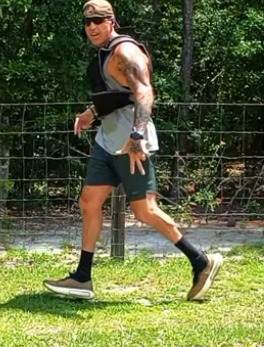
This page is grounded partly in exactly that lived perspective from an adult with bilateral clubfoot who still runs.
Common Challenges When Running With Clubfoot
- reduced ankle flexibility
- limited dorsiflexion or blocked ankle motion
- calf asymmetry or strength imbalance
- weak, flat, or delayed push-off
- foot fatigue during longer efforts
- pain flares after higher mileage or harder surfaces
- balance differences or altered stride mechanics
- shoe-fit or orthotic problems
- lateral foot loading or outside-border pressure
- slower recovery after harder sessions
- compensation symptoms in the knee, hip, back, or opposite leg
Why Biomechanics Matter When Running With Clubfoot
Running is repeated force. The foot has to land, absorb load, stabilize, transition, and push off again and again. Clubfoot can change any part of that process.
The mechanics may still work, but they may not be symmetrical or typical. A smaller calf may fatigue faster. A stiffer ankle may shorten the stride. A weaker push-off may shift work to the opposite leg. A fused or surgically altered foot may rely more on shoes, orthotics, hip strategy, or compensation.
The goal is not to shame the difference. The goal is to understand it well enough to make running more sustainable.
For the deeper map, read Running Biomechanics With Clubfoot, Push-Off With Clubfoot While Running, and Clubfoot Compensation Patterns While Running.
Pain and Recovery Matter More Than the Run Alone
A run can feel possible in the moment and still cost too much afterward. That is especially important with clubfoot because pain and stiffness may show up later that day or the next morning.
For adults, the useful question is not only whether the run was completed. It is whether the body returned to baseline afterward.
- Does pain get sharper or last longer after each run?
- Does stiffness make the next morning worse than normal?
- Does one side fatigue far earlier than the other?
- Does knee, hip, back, or opposite-leg pain show up from compensation?
- Does shoe pressure keep repeating in the same place?
- Does recovery fail to reset before the next run?
For more detail, read Pain After Running With Clubfoot and Adult Clubfoot Pain Flares and Relief.
Why Shoes, Surfaces, and Recovery Matter So Much
For runners with clubfoot, details other people barely notice can decide whether a run feels sustainable or expensive. Heel stability, shoe structure, toe-box shape, rocker geometry, orthotics, surface type, and recovery habits all matter.
Some runners do well in neutral shoes. Others need more structure. Some rotate shoes depending on distance, terrain, or pain pattern. Some discover pavement beats them up while trails, tracks, or treadmills feel better. Some need orthotics reviewed because the foot has changed or the running load has changed.
- Judge shoes by the run and the next-day response.
- Do not change shoes, orthotics, mileage, terrain, and pace all at once.
- Watch whether shoes reduce or increase lateral foot loading.
- Notice whether a surface changes pain, stiffness, or fatigue patterns.
- Use recovery as part of the decision, not just comfort during the run.
A good place to go deeper is the Adult Clubfoot Shoes and Orthotics Guide, the Best Running Shoes for Adult Clubfoot, and Adult Clubfoot Work and Standing Shifts.
How Surgery History Changes the Running Question
Surgery history matters because it can change motion, alignment, stiffness, pain, push-off, and how force moves through the foot. A runner with a childhood tenotomy, a tendon transfer, an osteotomy, arthrodesis, fusion, or revision surgery may need a different running expectation than someone with a mild, flexible, well-corrected foot.
Surgery may improve function by reducing pain or improving alignment. It may also create lasting tradeoffs: less motion, different shock absorption, more reliance on shoes, or more compensation through nearby joints.
For surgery-specific context, read Running After Clubfoot Surgery, Running With Clubfoot After Arthrodesis, and Adult Clubfoot Surgery Later in Life.
What Parents Should Take From This
Clubfoot does not automatically close the door on running, sports, or active life. Many children treated well early do go on to walk, run, jump, and play.
That does not mean every child ends up with the same comfort, same body, or same athletic path. But the diagnosis itself is not a sentence to lifelong inactivity.
If you are still early in treatment, start with the Ponseti Parent Guide and Can My Child Play Sports With Clubfoot?.
What Adults Should Take From This
You may not be asking whether running is technically possible. You may be asking whether it is worth the pain cost, whether your pace still counts, whether your gait looks strange, or whether you are pushing too hard.
The answer here is not pressure. It is permission to define success honestly. Running with clubfoot may mean shorter distances, different footwear, more recovery, slower progress, or changing goals over time.
Related reads: Adult Clubfoot Running Pace, Pain, and Progress, Adult Clubfoot Pain, and Adult Clubfoot Shoes and Orthotics.
Evidence Snapshot
Long-term clubfoot research generally supports a more hopeful view than many families first expect. Many treated children show meaningful functional outcomes in walking, sports, and participation.
But strong function does not always mean identical function. Some people still deal with reduced ankle motion, smaller calves, lower endurance, altered mechanics, pain flares, residual deformity, stiffness, shoe issues, or more recovery cost after harder activity.
That supports the practical standard of this page: running with clubfoot should be judged by function, comfort, consistency, pain response, recovery, mechanics, shoes, and long-term tolerance rather than by a simple yes-or-no label.
- AAOS OrthoInfo: Clubfoot overview and Ponseti treatment context
- PMC: Sport ability during walking age in clubfoot-affected children treated with Ponseti method
- PubMed: Sports ability after Ponseti treatment
- PMC: Functional evaluation of the treated clubfoot
- PMC: Long-term follow-up of surgically treated clubfoot
- PMC: Long-term results of comprehensive clubfoot release versus Ponseti treatment
- PubMed: Athletic ability after satisfactory treatment of clubfoot
Authority takeaway: clubfoot does not automatically prevent running, but running should be understood through the actual foot, the actual history, the actual pain response, and the actual recovery pattern.
Common Questions About Running With Clubfoot
Can adults with clubfoot run?
Yes, many adults with clubfoot can run. The real answer depends on treatment history, residual stiffness, pain, shoe tolerance, calf asymmetry, surgery history, recovery cost, and how the foot handles repeated load over time.
Can people with clubfoot run as children or teenagers?
Many children and teenagers with treated clubfoot can run, play, and participate in sports. Function varies by correction, relapse history, bracing, stiffness, strength, pain, and whether the foot remains stable over time.
Does clubfoot always cause running pain?
No. Some adults run with relatively low pain, while others deal with stiffness, fatigue, pressure problems, lateral foot pain, or pain flares after harder efforts. Outcomes vary widely.
Why does running with clubfoot feel different?
Running with clubfoot can feel different because the ankle may be stiffer, the calf may be smaller, push-off may be weaker, foot loading may be altered, and the rest of the body may compensate through the knee, hip, trunk, or opposite leg.
Do runners with clubfoot always need special shoes or orthotics?
Not always. Some runners do well in standard shoes, while others benefit from more structure, different shoe shapes, rocker geometry, custom orthotics, or shoe rotation. The best setup depends on the actual mechanics and pain pattern.
What running problems are common with adult clubfoot?
Common issues include limited dorsiflexion, calf asymmetry, weaker push-off, stride asymmetry, fatigue on one side, shoe pressure, lateral foot loading, pain after running, and compensation symptoms in the knee, hip, back, or opposite leg.
How should adults return to running with clubfoot?
Adults with clubfoot should usually return gradually, start below their ambition level, progress one variable at a time, and judge progress by the run itself plus the 24- to 48-hour recovery response afterward.
Can adults run after clubfoot surgery or arthrodesis?
Some adults can run after clubfoot surgery or arthrodesis, but it depends on the procedure, healing, pain, alignment, motion loss, strength, shoes, compensation, and whether repeated impact is tolerated without worsening symptoms.
When should someone with clubfoot be cautious about running?
Running deserves reassessment when pain is worsening, gait is changing, swelling appears, limping develops, recovery is getting harder, lateral foot pressure keeps repeating, or shoe and orthotic changes are no longer keeping symptoms manageable.
What should parents understand about clubfoot and running?
Parents should understand that clubfoot does not automatically close the door on running, sports, or active life. Many children do run and play, but long-term function may involve different mechanics, recovery needs, footwear, or pain awareness.
Quick Path Links
- Clubfoot Resources Guide
- Adult Clubfoot Life Hub
- Adult Bilateral Clubfoot Runner
- Adult Clubfoot Gait Compensation Hub
- Running With Clubfoot
- Running Biomechanics With Clubfoot
- Pain After Running With Clubfoot
- Limited Dorsiflexion With Clubfoot While Running
- Push-Off With Clubfoot While Running
- Stride Asymmetry With Clubfoot While Running
- Clubfoot Running Fatigue on One Leg
- Clubfoot Compensation Patterns While Running
- Return to Running With Clubfoot
- Adult Clubfoot Running Pace, Pain, and Progress
- Running After Clubfoot Surgery
- Running With Clubfoot After Arthrodesis
- Adult Clubfoot Pain Flares and Relief
- Adult Clubfoot Pain by Location
- Adult Clubfoot Shoes and Orthotics
- Best Running Shoes for Adult Clubfoot
- Adult Clubfoot Work and Standing Shifts
- Adult Clubfoot Surgery Later in Life
- When Adults With Clubfoot Should See Ortho
- Can My Child Play Sports With Clubfoot?
- Ponseti Clubfoot Parent Guide
- Ponseti Casting Schedule
- Clubfoot Tenotomy Guide
- Ponseti Bracing Guide
- Clubfoot FAQ
- Featured Clubfoot Videos and Resources
- Clubfoot Article Archive
- Clubfoot Editorial Policy
Best Next Step After This Page
If this page helped answer whether running with clubfoot is possible, the next step is choosing the part of running that is actually limiting you: pain, mechanics, shoes, recovery, surgery history, or return-to-running tolerance.
Continue with Running Biomechanics With Clubfoot, Pain After Running With Clubfoot, or Adult Clubfoot Shoes and Orthotics.
Critical Disclaimer
This page summarizes research, standard treatment principles, and lived experience for educational purposes only. It is not medical advice, diagnosis, gait analysis, physical therapy, orthotic fitting, surgical advice, or a training prescription.
Activity, sports, and running decisions should be made with your orthopedic team or clinician, especially if pain, limp changes, swelling, repeated injuries, worsening function, surgery history, or relapse concerns are present. For site standards, see the Clubfoot Editorial Policy.